Should I Mention Personal Reasons for Needing to Close My Round Fast?
Sharing personal reasons for closing a round quickly signals desperation to investors. Here is what to say instead.
No. Mentioning personal reasons to close a round fast almost always works against you. Investors fund businesses, not founder situations. The moment urgency turns personal, the deal becomes about your needs rather than the company's potential.
Founders sometimes feel the pressure is obvious enough to mention. A mortgage due, a co-founder who needs a salary, and a visa deadline approaching. These feel real and legitimate. But investors hear hundreds of pitches and filter quickly for signals that suggest the deal is driven by founder need rather than business momentum.
Why Personal Urgency Backfires in Fundraising
When you frame closing pressure around personal circumstances, a few things happen at once:
• Investors wonder whether the company would exist without the personal crisis.
• They question whether you have the runway to walk away from a bad deal.
• Negotiating power shifts entirely to their side.
• It signals you might accept worse terms just to close.
A founder who needs to close for personal reasons is more likely to accept unfavorable conditions. Investors know this. The information you share does not stay neutral. It gets used.
What Investors Hear When You Mention Personal Urgency
There is a real gap between what you mean and what lands. Founders usually intend to signal transparency and build trust. Investors often hear something different:
• "I cannot afford to wait, so I will take whatever you offer."
• "My personal situation is affecting my judgment right now."
• "This company may not survive without this specific round."
That last read is the most damaging. It raises a question investors will not ask out loud: if the company cannot outlast one founder's personal situation, what does that say about the business itself?
Understand how time pressure reads in investor conversations before deciding what to share.
What Urgency Is Actually Acceptable to Mention
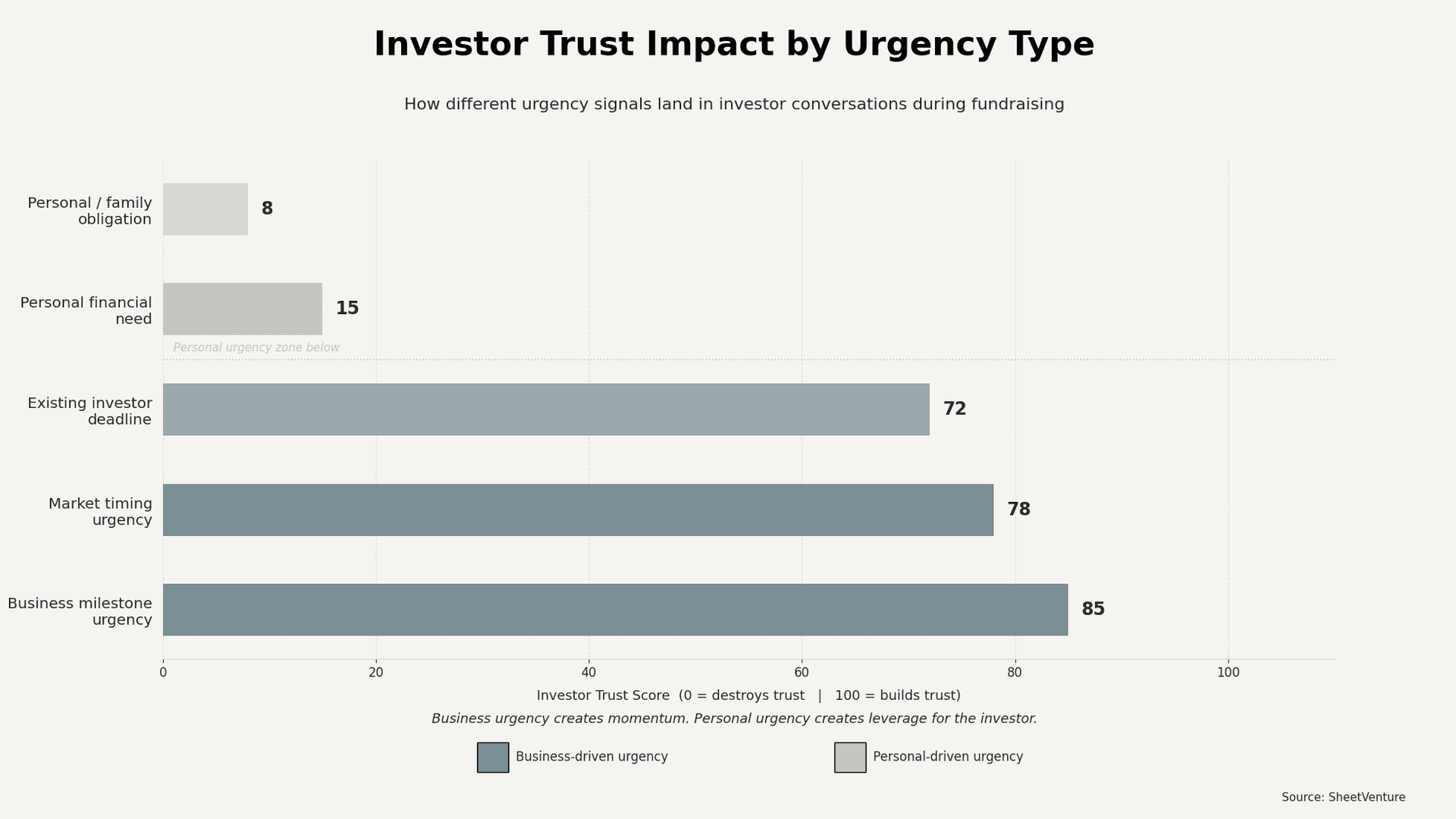
Not all urgency is equal. Business-driven urgency creates momentum. Personal urgency creates leverage for the investor, not you.
Urgency signals that work:
• A customer contract that requires hiring before it starts.
• A competitor moving fast in a market you are claiming.
• An existing investor with a committed deadline attached.
• A product launch window tied to a specific market event.
Sharing a market window or customer pressure also shows you understand your business well enough to know what is time-sensitive. That is a different kind of founder than one chasing a personal deadline.
Does Radical Transparency Help Here?
Not with personal reasons. There is a widespread belief that full openness builds investor trust. In some contexts, it does. But personal financial pressure is different. A term sheet is not an act of kindness. Investors are not in the business of rescuing founders from personal situations.
Experienced VCs have seen emotional appeals before. They usually backfire. The ones that do the most damage come from founders who mention it without thinking, because it reads as inexperience layered on top of desperation.
Before adjusting your narrative, check whether your fundraising timeline is creating pressure you could eliminate with better planning.
How to Create Real Urgency Without Oversharing
If you have a legitimate deadline, build urgency into your process rather than your pitch language.
• Run parallel conversations with multiple investors to compress the timeline naturally.
• Set a soft close date anchored to a business milestone, not a personal need.
• Let's deal with the velocity signal momentum instead of trying to explain it verbally.
• Reference real investor interest without fabricating term sheet pressure.
On that last point: never claim term sheets that do not exist. Fabricated term sheets destroy trust faster than any personal admission ever would.
The Bottom Line
Personal urgency belongs outside the fundraising conversation. Business urgency, handled correctly, creates real momentum. Milestone timelines, competitive pressure, and existing investor traction all work. What does not work is anything that signals you need this round more than the company does.
Use investor intelligence from SheetVenture to identify investors actively deploying capital right now so your timing works for you, not against you.
SheetVenture helps founders identify which investors are actively writing checks so outreach reaches the right people at the right time, not after a fund has already committed its capital.
Publication Date: