What Email Deliverability Tools Prevent Investor Emails From Hitting Spam?
Stop investor emails from hitting spam. The right deliverability tools get your cold outreach noticed, opened, and replied to.
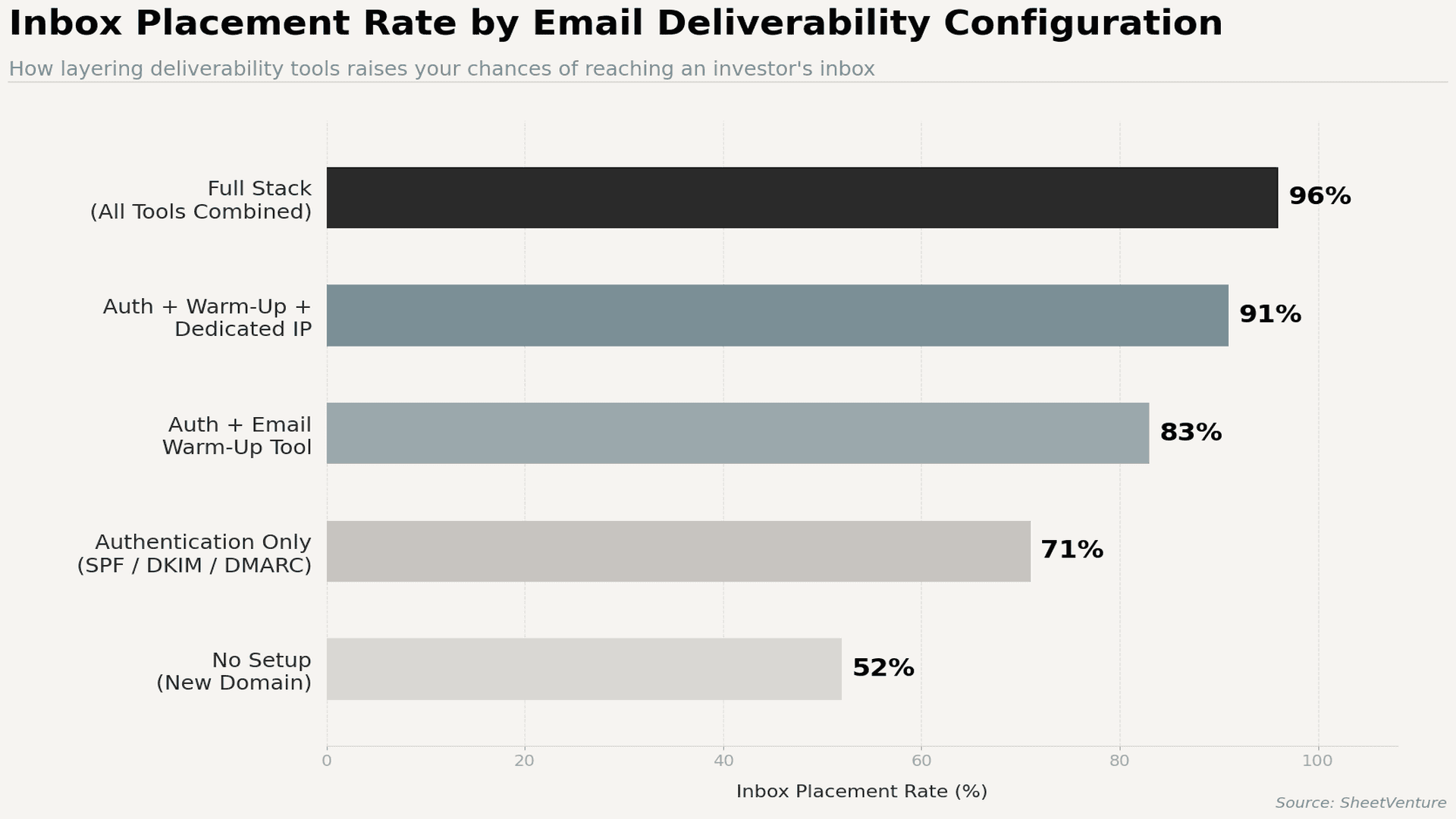
The tools that consistently work are domain authentication (SPF, DKIM, DMARC) paired with an email warm-up platform. Together, they push inbox placement rates from below 60% to above 90% before you send a single cold outreach.
Most founders assume their cold email problem is the pitch. It's usually the plumbing.
An investor who never sees your email can't respond to it. Email deliverability, the share of emails that actually reach the inbox instead of spam, is where most cold outreach campaigns fail silently. The good news: it's entirely fixable with the right setup.
Why Do Investor Emails Land in Spam?
Spam filters evaluate three things: whether you are who you claim to be, how trustworthy your sending history looks, and whether your email content raises red flags.
A new domain with no email history, sending 40 cold outreach emails in one day, looks almost identical to a spam operation. Filters act accordingly.
The most common triggers:
• No SPF, DKIM, or DMARC DNS records configured.
• Sending from a domain with zero prior activity.
• High bounce rates from unverified contact lists.
• Generic tracking links that spam filters recognize.
• Send volume that spikes with no warm-up period.
Understanding why VC cold emails fail to get responses starts with understanding whether they were ever actually seen.
The Authentication Layer: SPF, DKIM, and DMARC
These three DNS records are the minimum. No exceptions.
• SPF tells receiving mail servers which IP addresses are authorized to send email from your domain. Without it, anyone can spoof your domain, and filters know it.
• DKIM adds a cryptographic signature to each email. The receiving server checks it against your public DNS record to confirm the email was not tampered with in transit.
• DMARC ties both together and instructs receiving servers on what to do when checks fail. It also sends you reports so you can see what is being rejected, spoofed, or filtered.
Most enterprise VC firms use mail servers that enforce DMARC strictly. An email that fails DMARC simply does not arrive. Tools like MXToolbox and DMARC Analyzer let you verify your records are correctly configured before you send a single email.
What Email Warm-Up Tools Actually Do
A domain with no email history is a red flag. Warm-up tools address this by simulating real email activity, sending and receiving small batches between real accounts, gradually building sender reputation before your outreach starts.
Tools worth using:
• Lemwarm and Warmbox are purpose-built for cold outreach senders.
• Mailreach scores your deliverability in real time alongside the warming process.
• Instantly and Smartlead combine warm-up with outreach sequencing in one platform.
The standard approach: warm a new domain for 3 to 4 weeks before sending to investors. Start with 10 to 20 emails per day and increase by roughly 20% each week. Most founders skip this step entirely. It explains a lot about why open rates stay stuck.
Choosing the right email subject lines matters too, but only once your emails are landing in inboxes.
Dedicated vs. Shared IP Sending Infrastructure
Shared IP addresses carry the reputation of every sender using them. If another user on your email provider's shared pool gets flagged for spam, your placement rate drops too. You have no control over it.
Ways to reduce this risk:
• Dedicated IPs through providers like SendGrid, Mailgun, or Postmark give you sole ownership of your sender reputation.
• Custom tracking domains replace provider-generic tracking links with a branded domain, reducing spam filter flags.
• Secondary sending domains (e.g., getacme.io alongside acme.com) protect your primary domain from reputation damage during high-volume outreach phases.
Combining this infrastructure with a cold vs. warm outreach analysis helps founders understand which channel earns responses, not just which one shows up in the inbox.
Monitoring Deliverability Before It Costs You
Set up infrastructure once. Monitor it permanently.
A single spike in bounce rates, one spam complaint, or a DNS misconfiguration can quietly tank your inbox placement for weeks before you notice. These tools keep you ahead of it:
• Google Postmaster Tools tracks your spam rate, domain reputation, and IP reputation for Gmail users.
• Glockapps tests your email against 90+ inbox providers before you send.
• Mail-Tester scores your email setup and flags specific issues to fix.
• Bouncer and ZeroBounce clean contact lists to remove invalid addresses before sending.
SheetVenture's investor intelligence platform also helps by delivering verified investor contact data, which reduces bounce rates that damage sender reputation over time.
The Bottom Line
Domain authentication, email warm-up, dedicated infrastructure, and deliverability monitoring are not optional. They are the precondition for everything else working.
Founders who skip this layer wonder why a 1% response rate is the ceiling. The inbox is the first gate. Fix it before you optimize anything else.
SheetVenture helps founders reach investors who are actively deploying capital, with verified contact data that protects sender reputation and ensures cold outreach lands where it can actually convert.
Publication Date: