What Slack Communities Connect Founders With Investors?
Discover which Slack communities give founders real access to active investors and the conversations that lead to funding.
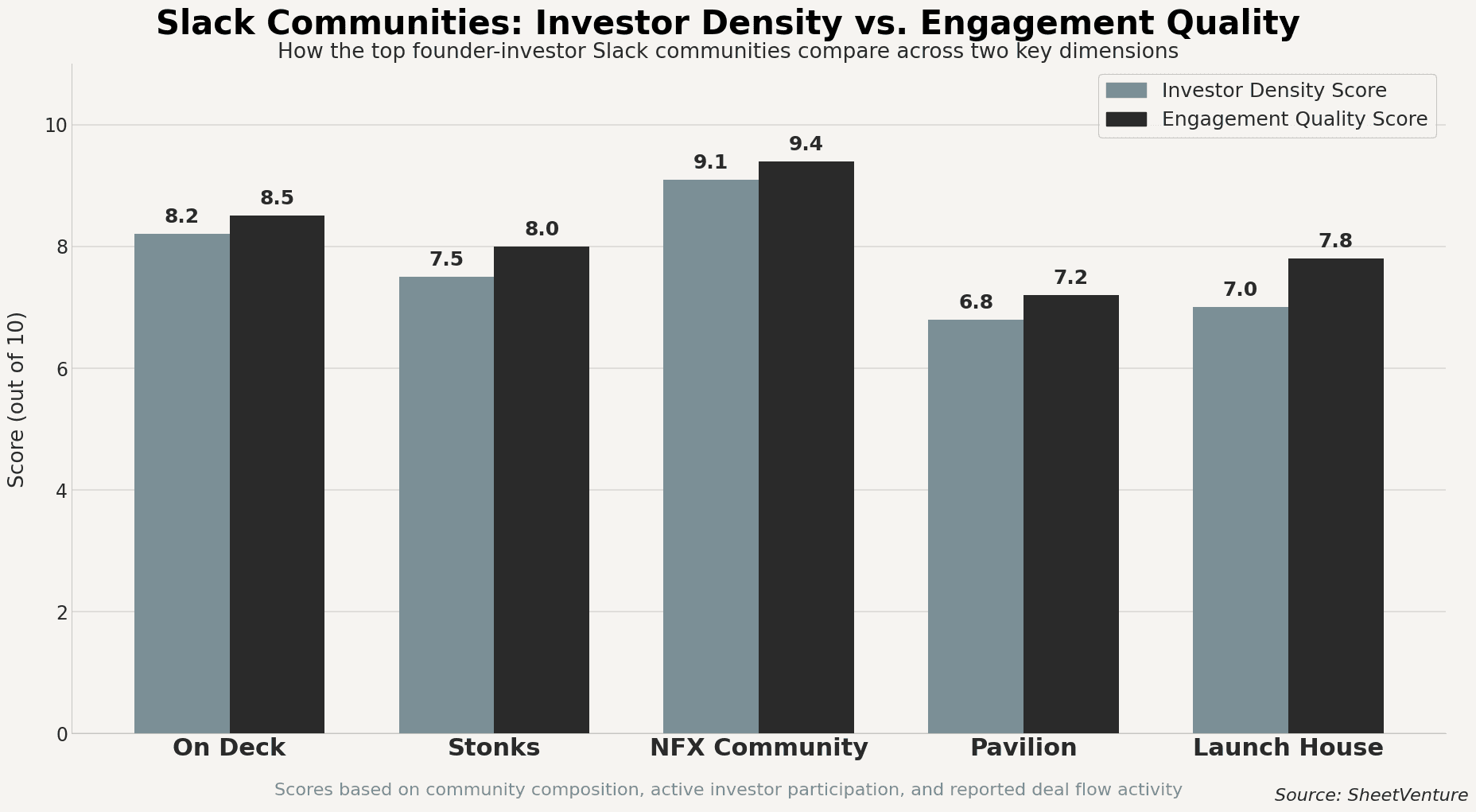
The best Slack communities for connecting founders with investors include On Deck, Stonks, NFX Community, Pavilion, and Launch House. These groups host thousands of active members, many of whom are GPs, angels, and scouts actively looking at deals. Joining the right one can put you inside a conversation that a cold email never gets you into.
Most founders spend months crafting outreach emails that never get opened. The founders who actually get meetings often take a different route: they show up where investors already gather. Slack communities have become one of the most efficient ways to do that, but not all groups are built the same.
Some are ghost towns. Others are job boards wearing a community costume. A handful are genuinely high-signal spaces where investors post deal flow requests, founders share traction updates, and real connections form before any formal pitch happens.
Communities Worth Your Time
On Deck is one of the most respected networks for early-stage founders. Its Slack workspace runs alongside cohort programs and includes a steady mix of founders, operators, and investors. The advantage here is context: people know who you are before you DM them, which changes how those conversations land.
Stonks is a direct-to-investor community where founders can pitch, ask questions, and get in front of angels and micro-VCs. It runs AMAs with active investors and has channels specifically built for deal flow. If you want investor eyes on your company without a formal intro, this is one of the few places it happens organically.
NFX Community is tighter and more curated. The NFX firm runs it, and while access is selective, the quality of investor engagement inside is noticeably higher than open communities. It is less about volume and more about reaching the right five people.
Pavilion started as a revenue leaders community but has grown to include a significant investor and VC operator base. For B2B founders, this can be surprisingly useful. Investors inside Pavilion tend to care about go-to-market evidence, so showing up with a real GTM signal makes conversations move faster.
Launch House consistently attracts angels and emerging fund managers who are active investors in early-stage companies. The community skews younger and moves quickly, which suits founders who are still figuring out their pitch through real conversations.
What Separates Useful Communities from Noise
The size of a Slack community tells you almost nothing. A 50,000-person server with no investment activity is worth less than a 300-person group where two GPs post deal flow requests weekly.
What actually matters:
• Investor verification. Are the investors in the community actively deploying capital, or are they lurking for market research?
• Founder-to-investor ratio. Communities with 95% founders and 5% investors produce a lot of pitching to other founders.
• Engagement format. AMAs, demo days, and structured intro threads produce far more real connections than passive channels where everyone posts, and nobody replies.
Building relationships through community channels is one of the fastest ways to bypass the cold outreach filter. If you want a practical guide on doing that without a strong existing network, this article on warm intros walks through the exact approach.
How to Actually Get Value Out of These Groups
Joining is not the hard part. Most founders join, read a few threads, and never post. The ones who build real investor relationships inside these communities do three things differently.
• They contribute before they ask. Sharing a useful data point, answering a question, or tagging someone in a relevant thread builds recognition without pitching.
• They post with a hook. A short traction update with a number gets more responses than a vague intro post. Investors scroll fast.
• They follow the thread, not the DM. Starting in public channels and moving to DMs after someone engages feels natural. Cold-DMing someone who has never seen you in the community reads exactly like a cold email.
Understanding what makes investors say yes to a first meeting matters just as much as finding the right room. The founders who do well in these communities arrive prepared, not just present.
It also helps to know how VC inboxes work, because the same filtering logic applies in community DMs. Investors inside Slack are just as pattern-matching as they are in email.
Use investor intelligence from SheetVenture to cross-reference which investors from these communities are actively deploying capital right now. That way, you are not spending six months nurturing relationships with funds that are between raises.
The Bottom Line
The right Slack communities give founders access to investors in a context that cold email cannot replicate. On Deck, Stonks, NFX Community, Pavilion, and Launch House are where real connections happen regularly. Showing up with clarity, traction, and a genuine reason to engage matters more than just being in the room.
Community size is a distraction. Investor density and engagement quality are what actually count. Pick the groups that fit your stage and sector, then contribute before you pitch.
SheetVenture helps founders identify which investors inside these communities are actively writing checks, so every community conversation starts from real intelligence rather than guesswork.
Publication Date:
