Investors question your burn rate. Here's how to respond with data that builds confidence and closes your raise.
When an investor questions your burn rate, respond with context, not defense. Explain what the spending is driving, show your runway, and tie every dollar to a specific outcome. Investors don't fear burn; they fear founders who can't explain it.
Burn rate questions catch founders off guard more often than they should. The instinct is to justify or apologize, but that signals the kind of uncertainty investors are screening for. They want someone who understands the business and owns the number.
What investors are really asking when they probe your burn rate is whether you have control. A precise, confident answer here can move a deal forward faster than most things you say in the room.
What Investors Are Really Asking
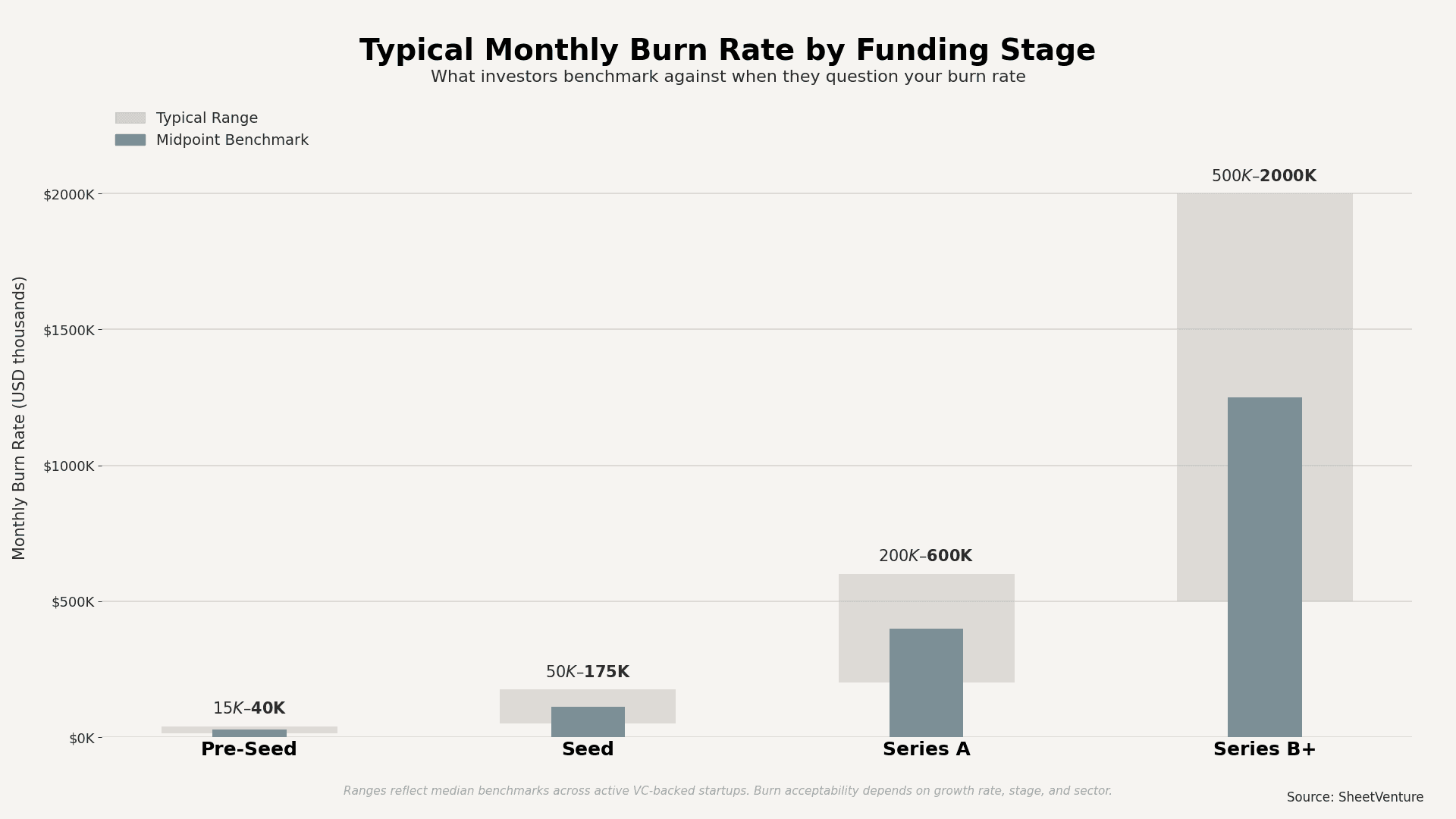
The question is rarely about the number itself. A $150K monthly burn can be reasonable or a serious red flag, depending on what it's producing.
When an investor asks about burn, they want to know:
• Whether you understand your unit economics.
• How long is your runway before you need to raise again?
• Whether spending is concentrated in areas that drive growth.
• What happens to the business if you cut 30% of costs tomorrow?
• Whether you've thought seriously about capital efficiency
Investors who fund early-stage companies treat money as fuel, not padding. They want founders who see it the same way.
How to Structure Your Response
The strongest responses follow a simple pattern: current state, what it's driving, and what comes next.
State the number first. Don't wait for them to pry it out. State your burn rate upfront, then move immediately into context.
Connect the burn to outputs. Every line of spending should map to a result. Engineering headcount drives product velocity. Sales headcount drives pipeline. Show that relationship directly.
Name your runway. Investors want to know exactly how many months you have. Give them a specific number, not a range.
Show what changes the math. Explain what happens when you hit your next milestone. If a contract closes or a hire lands, how does efficiency shift? This shows forward thinking, not just backward reporting.
Stay calm, stay factual. Founders who get defensive make investors nervous. Treat the question as routine because, for them, it is.
The Numbers You Need Ready
Before any investor meeting, know these cold:
• Monthly gross burn and net burn.
• Runway in months at current rate.
• Your three largest spend categories.
• Cost per acquired customer (if applicable).
• Payback period on sales and marketing spend.
Investor confidence signals often hinge on small moments. Not knowing your burn breakdown on the spot is one of the fastest ways to lose credibility mid-meeting.
How to Reframe a High Burn Rate
If your burn is genuinely high relative to the stage, don't hide from it. Acknowledge it and explain the logic.
Phrases that work in the room:
• "We front-loaded a key hire to capture a specific market window. That's why burn is elevated now."
• "We modeled a learner path but chose this route for a specific reason. Once that milestone hits, burn drops to [number]."
• "This is peak burn. The efficiency curve improves after our next milestone."
What doesn't work: vague statements about investing in growth without specifics. That's the answer investors have heard from startups that burned through capital before finding product-market fit.
To find investors who fund companies at your burn-to-growth profile, SheetVenture maps active deployment history so your outreach targets capital that fits your current numbers.
Reading the Room After You Answer
Watch what happens when you finish. If the investor moves on, you passed. If they follow up with questions about unit economics or sales pipeline, they're leaning in. Learn how to handle rejections if the conversation takes a harder turn.
Investors worth backing want founders who've already stress-tested their numbers. Use SheetVenture's intelligence to target firms that prioritize capital-efficient growth at your stage.
The Bottom Line
Burn rate questions are a test of clarity, not just financial management. Respond with the number, the context, the runway, and the plan. Don't defend; explain.
Founders who answer well don't just survive the question. They use it to show they're running a real business with accountability. SheetVenture helps founders match with investors who understand early-stage capital deployment, so your burn rate story reaches people built to evaluate it.
Last Update:
Everything you need to understand private markets
Understand your market in real-time.
Filter by stage, sector, and exact geography.
Access 30,000+ verified, daily-updated active