Most founders miss follow-ups that close rounds. Here are the investor reminder systems that actually keep deals moving.
Set up investor meeting reminder systems by combining a CRM or pipeline tracker with timed calendar triggers that fire before and after every investor touchpoint. The goal is to prevent warm conversations from going cold because a follow-up got lost in the noise. Three things drive the system: a live status tracker, automated nudges at set intervals, and pre-written follow-up templates ready to send.
Fundraising runs on momentum, and momentum dies without follow-through. A VC who was genuinely interested on Tuesday can be unreachable by Friday, not because their interest faded, but because another deal occupied their calendar. The founders who close rounds are typically the ones who stayed consistently visible without crossing into annoying.
Building a reminder system is not about pressure tactics. It is about showing up reliably at the right moments. Most investors actually respect founders who follow through consistently and on time.
Why Most Founders Skip This Step
Pitching feels like the real work. Follow-up feels like admin overhead, so founders deprioritize it. That framing costs deals. Studies consistently show 60 to 80% of eventual funding commitments trace back to a second or third touchpoint, not the initial meeting. Without a system, those touchpoints simply disappear.
The problem is not effort or intention. It is the absence of structure.
The 4 Core Components
Every working investor reminder system shares four elements:
• Pipeline tracker: One row per investor with meeting date, current status, and next action date clearly visible at all times
• Calendar triggers: Reminders set 24 hours before each meeting, 24 hours after, and 5 to 7 days post-meeting for follow-up
• Email templates: Pre-written messages for each stage so you are never drafting cold under time pressure
• Status labels: Simple tags like warm, waiting, cold, and passed so you can see where every relationship stands at a glance
None of this requires expensive tooling. A well-organized Google Sheet or Notion database handles it cleanly. What matters is that the system runs on structure, not memory.
Choosing the Right Tool
Tool | Best For | Reminder Type | Cost |
Notion | Custom pipelines | Manual or automation | Free / $16 per month |
Airtable | Data-heavy tracking | Automated email alerts | Free / $20 per month |
Streak (Gmail) | Email-native outreach | Trigger-based nudges | Free / $49 per month |
HubSpot CRM | Scaling large pipelines | Full sequence automation | Free tier available |
Google Sheets + Calendar | Early-stage lean ops | Manual calendar blocks | Free |
Choosing the right tool depends on outreach volume. Under 50 active investors, Google Sheets with calendar blocks works cleanly. Over 50, a CRM with sequence automation becomes worth the setup time. Understanding fundraising pace also shapes how tightly your reminder cadence needs to run at each stage of the process.
How to Build It in One Sitting
Open a spreadsheet with six columns: investor name, firm name, last contact date, status, next action, and next action date.
For every meeting you schedule:
• Set a Google Calendar block 24 hours before the meeting, with the investor's name and one prep note.
• Set a second block 24 hours after as a follow-up trigger.
• Set a third block 7 days out as a check-in if no reply has come through.
That three-trigger sequence covers most of what founders miss. For investors who showed real interest, add a 30-day nurture reminder. Then decide whether it is still worth staying in contact or whether to redirect energy to more active conversations.
What to Write in Each Follow-Up
Your post-meeting message should land within 24 hours. Three sentences are enough: reference something specific the investor raised, state the next step clearly, and close without over-selling. For detailed frameworks on following up after investor meetings, the guide covers the language that keeps conversations alive.
Your 7-day nudge should be one sentence. A short question about whether they have any further thoughts lands far better than a long re-pitch. Knowing when to wait before following up is the difference between coming across as persistent and coming across as annoying.
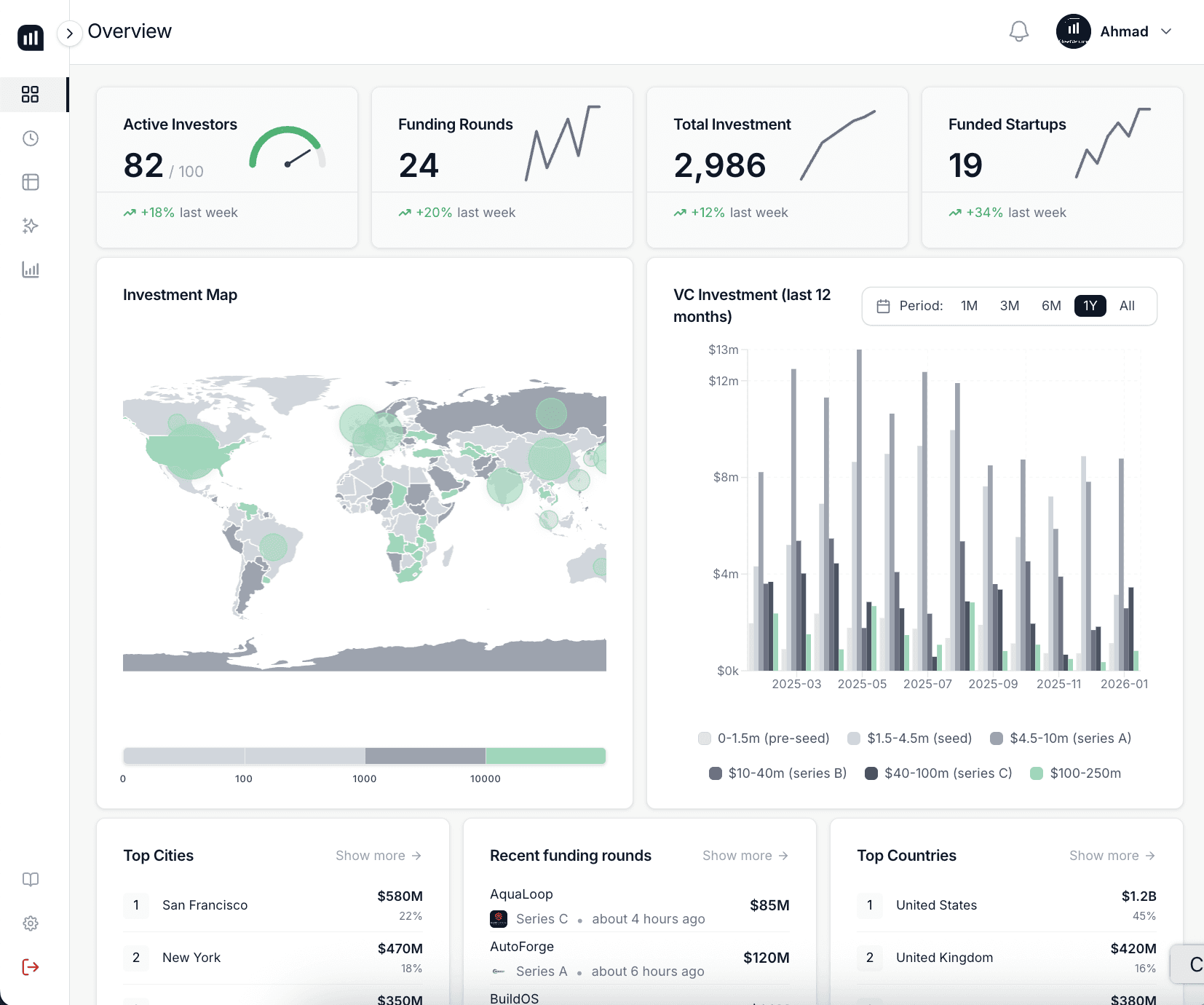
Before building reminder sequences, use SheetVenture's data to identify which investors are currently active and responding to outreach. Pairing your system with live investor intelligence means your follow-ups land where the deal is most likely to move, not just everywhere at once.
The Bottom Line
The best reminder system is the one you will actually use. Start with a basic status tracker and three calendar triggers per investor. Add automation only when volume demands it. Most deals do not fall apart because the pitch was bad. They fall apart because founders went quiet at exactly the wrong moment.
SheetVenture helps founders identify which investors are actively deploying capital right now, so every follow-up lands in an inbox that is actually open.
Last Update:
Everything you need to understand private markets
Understand your market in real-time.
Filter by stage, sector, and exact geography.
Access 30,000+ verified, daily-updated active