Waiting for better investor terms often kills the round you already have. Here is exactly when to close.
Close the offer you have unless a competing term sheet is actively in progress. Waiting without a real competing interest rarely produces better terms. It usually produces expired offers and a round that quietly falls apart.
Most founders who delay closing do so because the current terms feel suboptimal. "Suboptimal" and "bad" are two different problems, and only one of them justifies a delay. The question is not whether better terms exist somewhere out there. It is whether you have real evidence that they are coming to you specifically, on a defined timeline.
Investor offers have a shelf life. Attention moves fast in venture, and an investor who writes a term sheet today is often mentally committed to a different deal four weeks later. Understanding what fundraising pace signals to investors matters here, because every week you wait sends a message about your conviction and your pipeline.
What Waiting Actually Costs
Founders treat waiting as a neutral action. It is not.
• Offer expiry: Most term sheets expire in 5 to 14 days. Extensions are often granted, but each one quietly signals that your round lacks momentum.
• Traction aging: Your metrics are strongest when freshest. A six-week-old ARR figure lands differently in an investment memo than a two-week-old one.
• Attention drift: Investors evaluate 10 to 20 active deals at once. Your opportunity competes for internal bandwidth every day you delay closing.
• Negotiating position: The longer you wait without a concrete competing signal, the weaker your actual leverage becomes, even if it feels like patience.
The founders who close well are not the ones who waited longest. They are the ones who moved fastest with the best information available to them at the time. Waiting is a strategy only when you have a real reason to believe the next offer will arrive on a defined timeline.
When Waiting Is Justified
Waiting makes sense in a narrow set of situations. Every one of them involves a concrete competing signal, not a hypothetical one.
• A second term sheet is in active diligence and expected within 10 to 14 days.
• You have a written soft-circle commitment from a second qualified investor.
• One specific term in the current offer is demonstrably below market rate, not just below your ideal.
• The current valuation cap creates downstream dilution math that materially damages your Series A story.
If none of those apply, you are not waiting for better terms. You are hoping for them. That distinction matters because hope does not reset an offer's expiry clock or keep an investor's attention on your deal. For context on how timing shapes investor conviction, read what investor delay patterns look like from inside a VC firm, because the same dynamics work in reverse on your side of the table.
Close vs. Wait: A Decision Guide
Situation | Recommended Action | Risk of Waiting |
One term sheet, no competing interest | Close. Negotiate 1-2 specific terms only | High |
One term sheet, second in active diligence | Request a 7-10 day extension with a stated reason | Moderate |
Two term sheets in hand | Use the first as an anchor for valuation or pro-rata | Low |
Soft interest, but no second term sheet yet | Close current offer | High |
One unfavorable term (e.g., full-stack veto) | Negotiate that specific term only | Low |
Renegotiating the entire sheet at once signals inexperience. Focus on the terms that directly affect your outcome at Series A or exit: dilution percentage, pro-rata rights, and board seat composition. These matter more than headline valuation at early stages. For a closer look at how deal structure shapes long-term outcomes, see equity vs convertible notes and how founders choose between them.
How to Negotiate Without Stalling the Deal
• State the specific term you want changed, not a vague request for "better terms."
• Anchor your ask to actual market data, not personal preference.
• Give the investor a defined decision date and hold to it.
• Do not manufacture urgency. Experienced investors recognise the pattern immediately.
• Every negotiation conversation after a term sheet is issued shortens the relationship's goodwill bank. Use that currency on what actually moves the needle.
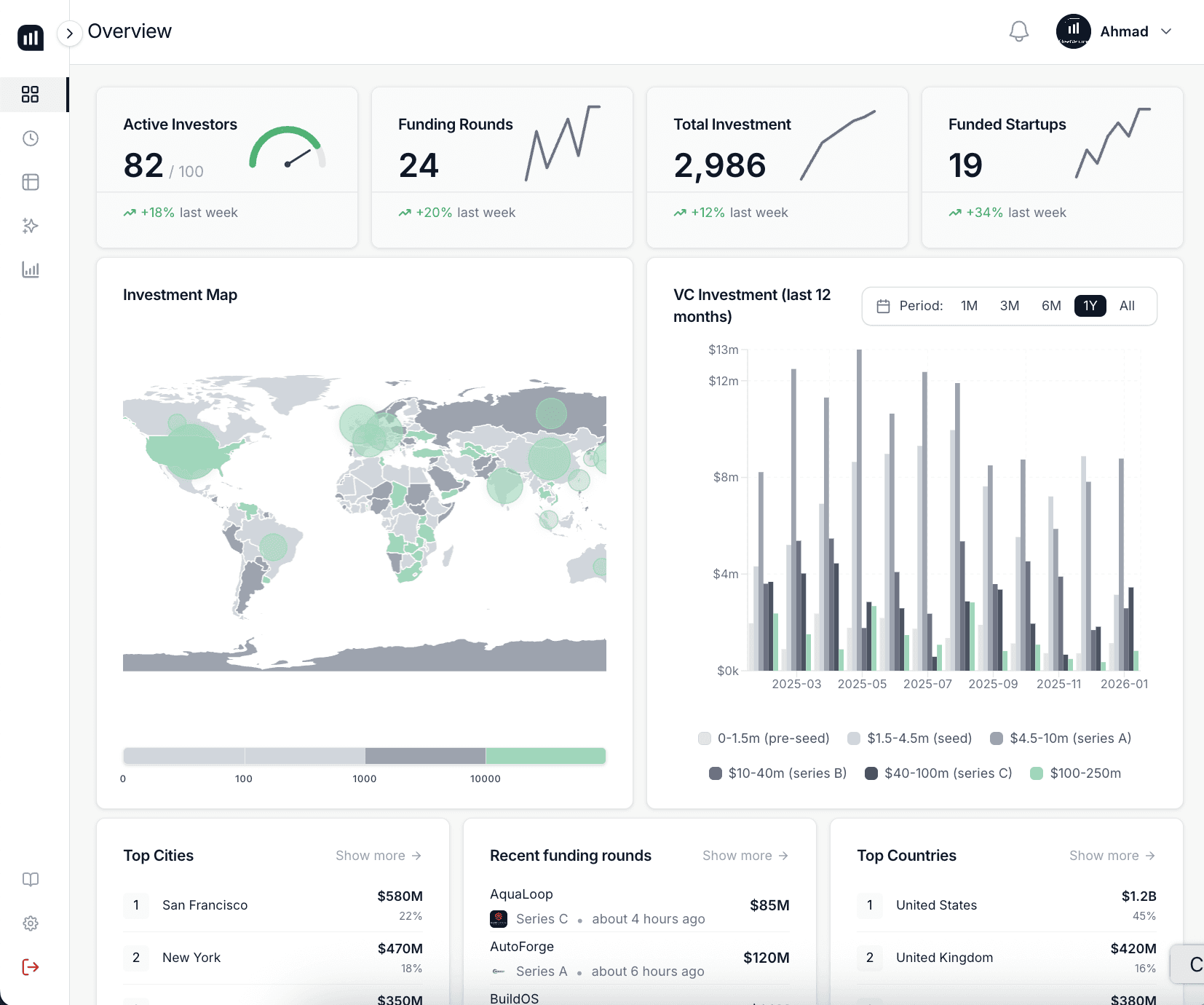
Use investor intelligence on SheetVenture to benchmark the offer you are evaluating against what active investors are actually writing in your sector and stage right now.
The Bottom Line
Close the offer in front of you unless you have a real competing interest, not just a feeling that something better might come. Negotiate one or two specific terms, not the entire sheet. Time kills deals more reliably than suboptimal terms do.
SheetVenture helps founders benchmark term sheets against live market data so every negotiation decision is grounded in what investors are actually offering right now, not what founders hope to get.
Last Update:
Everything you need to understand private markets
Understand your market in real-time.
Filter by stage, sector, and exact geography.
Access 30,000+ verified, daily-updated active