Most VCs pass on strong startups for portfolio balance reasons. Learn the five filters they quietly apply.
VCs reject up to 60% of fundable startups because of portfolio construction constraints, not quality. Every new deal is evaluated against sector concentration limits, stage allocation targets, follow-on reserve math, and check size boundaries before merit is even considered. Understanding these filters helps founders avoid pitching funds that structurally cannot say yes.
What Is Portfolio Construction in Venture Capital?
Portfolio construction is how a VC fund allocates capital across deals to maximize returns while managing risk. It is not a loose preference. It is a binding framework agreed upon with LPs before the fund starts deploying.
• Total fund size determines the number of initial checks and reserves.
• Target ownership percentage shapes check size ranges.
• Sector limits prevent overexposure to any single market.
• Stage allocation balances early bets against later, safer ones.
• Follow-on reserves hold 40-60% of the fund for winning companies.
A founder can have the perfect pitch but get passed if the fund already has three fintech companies or has exhausted its seed allocation. Learn how VCs make investment decisions beyond just startup quality.
How Do VCs Weigh Portfolio Filters Against Deal Quality?
Not every filter carries the same weight. Some are hard constraints that cannot be overridden. Others are flexible guidelines that a strong enough deal can bend.
Portfolio Filter Weight by Constraint Type
Portfolio Filter | Hard / Soft | Override Rate | Typical Threshold | Impact on Pass |
Sector concentration | Hard | 5-8% | Max 3-4 per sector | Very high |
Follow-on reserves | Hard | 2-5% | 40-60% of the fund is held | Very high |
Stage allocation | Soft | 15-20% | 70% seed, 30% A | High |
Check size range | Soft | 10-15% | $250K-$2M typical | Moderate |
Geographic spread | Soft | 20-30% | 2-3 region cap | Low to moderate |
Co-investor overlap | Soft | 25-35% | Avoid repeat syndicates | Low |
Source: SheetVenture
Hard constraints rarely budge. Soft constraints bend for exceptional deals, but bending too many at once signals portfolio drift to LPs.
Why Do VCs Pass on Good Startups for Portfolio Reasons?
When a fund says "great company, not for us right now," portfolio construction is usually the real reason. Here is how it plays out:
• The fund already deployed 3 of 4 allowed fintech deals this vintage.
• Follow-on reserves dropped below 45%, so no new initial checks are approved.
• The round size pushes ownership below target, making the economics unworkable.
• Recent markdowns in similar companies made partners cautious about sector overlap.
Understanding concentration risk in VC portfolios explains why even a perfect startup can get a structural no.
How Does Fund Size Change Portfolio Construction Logic?
Fund size fundamentally reshapes every portfolio filter. A $30M micro fund operates on entirely different math than a $500M growth fund.
Portfolio Construction Math by Fund Size
Fund Size | Initial Checks | Check Range | Follow-on % | Total Portfolio Cos |
$30M micro | 15-20 | $500K-$1.5M | 40-50% | 15-20 |
$100M seed | 25-35 | $1M-$3M | 45-55% | 25-35 |
$250M multi-stage | 20-30 | $3M-$8M | 50-60% | 20-30 |
$500M growth | 15-20 | $10M-$25M | 50-60% | 15-25 |
Source: SheetVenture
Smaller funds have tighter sector limits and less room for check size exceptions. Larger funds have more flexibility per deal but higher ownership requirements that eliminate smaller rounds. Finding the right VC match means understanding the structural math behind each fund.
When Do VCs Override Portfolio Constraints for a Deal?
Overrides happen, but rarely and only when specific conditions align:
• Breakout traction that signals a generational company (10x growth metrics).
• Strong co-investor syndicate offering access to future deals.
• Founder with proven exit history in the same space.
• LP-specific strategic interest that justifies concentration.
• Early fund vintage with room to adjust strategy forward.
Even in override situations, VCs document justifications for LP review. Partners rarely override more than 1-2 constraints per deal. If your startup requires bending three filters, expect a pass regardless of quality.
How Should Founders Use Portfolio Construction Knowledge?
Smart founders research portfolio construction before pitching. This saves months of wasted outreach:
• Check a fund's existing portfolio for sector overlap before reaching out.
• Match your round size to the fund's check size range.
• Confirm the fund is still actively deploying, not in reserve mode.
• Target funds where your company fills a gap rather than adds overlap.
• Use market intelligence tools to map fund activity, deployment pace, and sector exposure before outreach
The Bottom Line
VCs do not evaluate deals in isolation. Every startup is weighed against the fund's existing portfolio, remaining capital, sector exposure, and stage allocation targets. Up to 60% of passes have nothing to do with startup quality and everything to do with structural fit. Founders who understand portfolio construction avoid wasting months pitching funds that cannot structurally invest. Research the fund's constraints first. Pitch where you fill a gap, not where you add overlap.
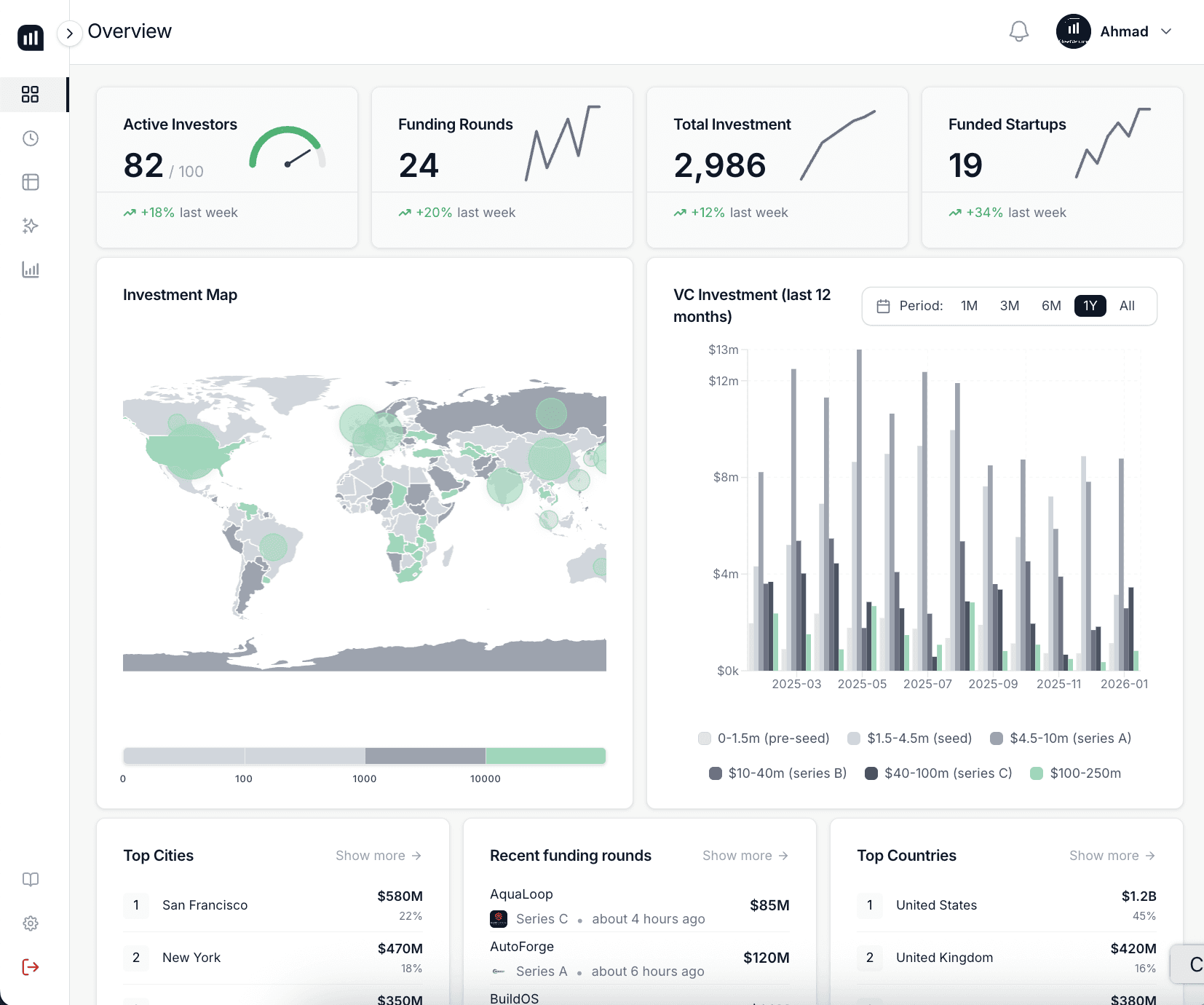
SheetVenture helps founders map VC portfolio construction in real time so every pitch targets a fund with structural room to say yes.
Last Update:
Everything you need to understand private markets
Understand your market in real-time.
Filter by stage, sector, and exact geography.
Access 30,000+ verified, daily-updated active