Most founders waste weeks researching investors before a single pitch. Here is exactly how to compress that timeline.
Most founders spend 4 to 6 weeks manually researching investors before sending a single outreach email. The right system, combining filtered databases, thesis matching, and real-time activity signals, compresses that entire process to 3 to 5 focused days.
The gap between informed fundraising and blind outreach usually comes down to research efficiency. Founders who reach the right investors faster raise capital sooner. Those who spend months building spreadsheets from LinkedIn profiles and Crunchbase pages burn runway before a single pitch goes out. The difference is not working harder. It is working with a better data infrastructure. When research drags on, momentum stalls, timing shifts, and the fundraising window narrows before conversations even begin.
Why Does Investor Research Take So Long for Most Founders
Traditional investor research breaks down into four time-consuming stages:
• Identifying relevant firms by stage, sector, and geography.
• Verifying whether each firm is actively deploying capital right now.
• Cross-referencing recent portfolio investments for thesis alignment.
• Finding the right partner contact and building a personalized outreach context.
Each stage involves manual searching across multiple platforms, social profiles, and news sources. Founders typically piece together information from LinkedIn, Crunchbase, PitchBook, Twitter, and portfolio company websites. Without a unified system, the same research tasks repeat for every single investor on the list.
Building target VC lists this way consumes 25 to 40 hours before any outreach begins. That is the time most early-stage founders cannot afford to lose.
What Slows Down Investor Research the Most
Some bottlenecks cost more time than others. Here are the five that consistently add weeks to the research phase:
• Outdated databases list investors who stopped deploying capital months ago.
• Fund size and stage preferences are rarely updated in public sources.
• Thesis descriptions on firm websites are vague, generic, or years old.
• Contact information is scattered across platforms, buried, or gated behind paywalls.
• No single source combines deal activity, check sizes, and sector focus together.
The biggest time sink is not finding investor names. It is confirming whether those investors are actually relevant and active right now. Identifying active investors eliminates the largest source of wasted research hours and keeps your outreach focused on people who can actually write checks.
How Founders Can Cut Research Time by 80%
Compressing weeks into days requires replacing manual steps with structured data workflows.
• Start with a pre-filtered database that tags investors by stage, sector, check size, and geography.
• Use recent deal activity signals from the last 6 to 12 months to confirm active deployment.
• Match your startup profile against stated and revealed investment theses automatically.
• Export prioritized lists directly instead of building spreadsheets from scratch.
• Personalize outreach using portfolio overlap and partner-level interest data.
The critical shift is moving from "search and compile" to "filter and export." Every manual step you automate saves 5 to 8 hours per fundraising cycle. Founders who make this switch spend less time on spreadsheets and more time in actual investor conversations.
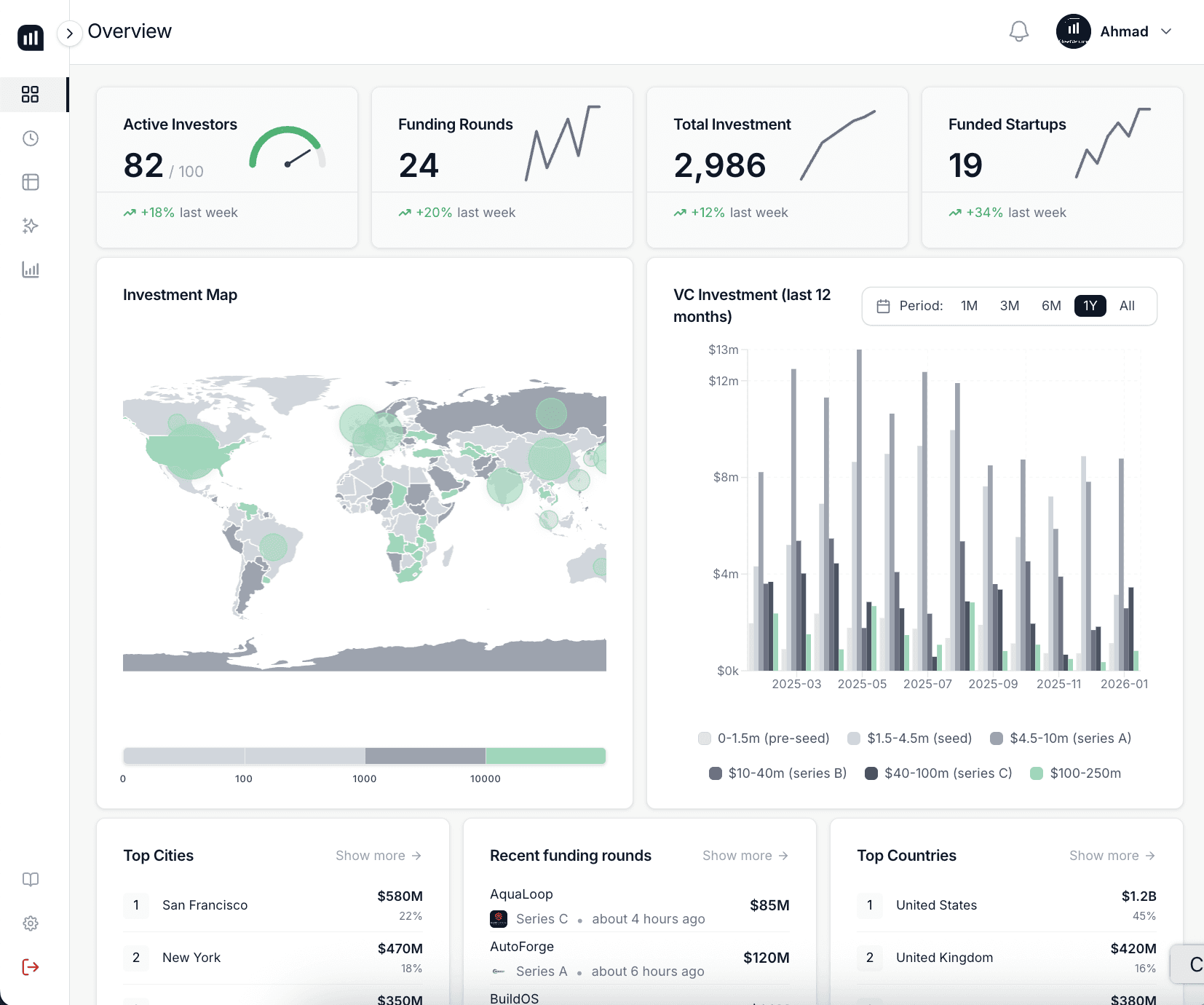
Platforms focused on investor intelligence make this possible by centralizing the signals that founders otherwise collect from dozens of scattered sources into one searchable, exportable system.
Research Time Comparison: Traditional vs. Structured Approach
Research Task | Traditional Method | Structured Database | Time Saved |
Identifying relevant firms | 10 to 15 hours | 1 to 2 hours | 85% |
Verifying active deployment | 8 to 12 hours | 30 minutes | 95% |
Thesis alignment check | 5 to 8 hours | 1 hour | 80% |
Contact discovery | 5 to 7 hours | 30 minutes | 90% |
List export and organization | 3 to 5 hours | 15 minutes | 95% |
Total per cycle | 31 to 47 hours | 3.5 to 4.25 hours | ~88% |
What Should a Research Workflow Look Like in Practice
A streamlined investor research workflow follows five steps:
• Define your raise parameters: stage, sector, geography, and target check size.
• Filter an investor database using those parameters plus recent activity signals.
• Review the short list for thesis alignment and portfolio fit.
• Export the final list with contact details and personalization notes.
• Begin outreach within 48 hours of starting research.
Founders who follow this workflow consistently report cutting total research time from 4 to 6 weeks down to under one week. The key is investor list building with structured filters rather than open-ended browsing across multiple tabs and platforms.
When your research phase shrinks, your entire fundraising timeline accelerates. You start conversations earlier, build momentum faster, and avoid the fatigue that comes from spending a month just preparing to pitch. Compressed research also means you enter conversations with sharper context, which makes every meeting more productive.
The Bottom Line
Investor research does not need to take weeks. The founders, raising capital efficiently, use filtered databases, real-time activity signals, and structured export tools to compress what used to take a month into a few focused days. Stop building investor lists from scratch. Start with data that is already organized, verified, and current.
SheetVenture helps founders cut investor research from weeks to days by combining real-time deal activity, thesis matching, and exportable investor lists in one platform.
Last Update: