Wondering if you should mention co-founder tension to investors? Here is exactly what experienced VCs want to hear.
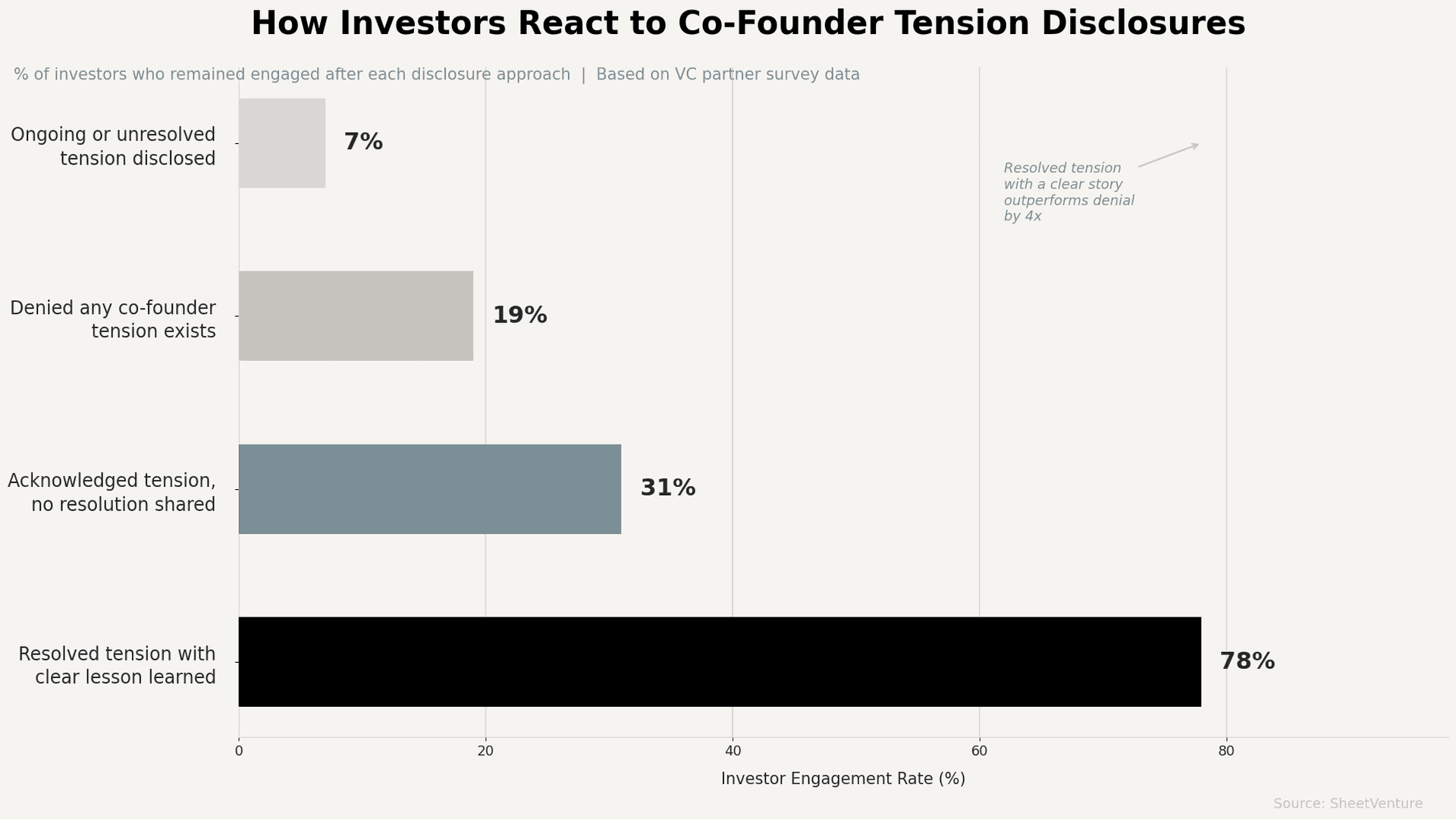
No. Not unless the tension has been resolved and you can explain what you learned from it. Investors fund teams as much as ideas. Unresolved co-founder conflict is one of the top deal-killers at the seed and pre-seed stage. The goal is not to hide your history, but to show that your team has the self-awareness and communication skills that survive pressure.
Why Investors Pay Close Attention to Founder Dynamics
Most VCs have watched co-founder breakups kill otherwise solid companies. They know friction happens. They are not naive about it. What they are measuring is not whether your team is perfect; it is whether the cracks in it are manageable.
When investors sit across from a founding team, they are running a quiet background check on team cohesion. They are watching:
• How co-founders talk about each other in the room.
• Whether one founder dominates while the other goes quiet.
• If there is unspoken tension that spills into body language.
• How quickly they disagree, and how they handle it.
These signals matter more than anything you say out loud. You can tell an investor everything is fine while the room tells a different story. Check how investors assess team dynamics to understand exactly what they are measuring before your first meeting.
When Disclosing Tension Can Actually Work in Your Favor
There is a specific scenario where bringing up past tension strengthens your pitch instead of weakening it. It requires three things: the tension was real, it is genuinely resolved, and you can explain what changed.
• You had a serious disagreement about product direction six months ago.
• You worked through it using a structured decision-making process.
• You now have clearer role divisions and a defined method for future conflicts.
That story tells an investor something important. Your team has been stress-tested and came out with better systems. That is a data point, not a red flag.
The founders who turn this into an asset are specific. Not "we had some friction early on" but "we disagreed about whether to go B2B or B2C, we ran a 30-day experiment to settle it, and it changed how we make decisions now." Specificity shows ownership. Vagueness signals avoidance.
When Mentioning Tension Actively Damages Your Chances
Not every disclosure lands well. Investors typically disengage when they hear:
• Tension that is clearly ongoing with no resolution in sight.
• Complaints about a co-founder's performance without a plan to address it.
• Blame-shifting dressed as honesty: "my co-founder struggled with X, but I handled it".
• Vague statements like "we've had our challenges" with nothing to follow.
That last pattern is often worse than saying nothing. It plants a question mark without answering it. Understanding founder signals during fundraising conversations makes the difference between a disclosure that builds trust and one that ends the meeting early.
What to Say If Investors Ask You Directly
If an investor asks how you and your co-founder handle disagreements, "we communicate well" tells them nothing. Here is how to answer in a way that actually builds credibility:
• Name a specific disagreement you have had.
• Explain how you resolved it and who made the final call.
• Describe any system or norm your team now follows as a result.
A clean, honest answer to this question does more for your credibility than a dozen slides about your market size. Early-stage investors are largely betting on whether the team can work through ambiguity together. Show them the evidence.
For more on what investors look for in a founding team, including how they evaluate cohesion under pressure, the full breakdown is worth reading before your next pitch.
How to Position the Team Story Without Raising Red Flags
You do not need to mention past tension to tell a strong team story. The better move is to build a picture of how your team operates at its best:
• Show clear role ownership between co-founders; no overlap, no confusion.
• Demonstrate aligned long-term vision with different short-term strengths.
• Reference real decisions you have made together under time or resource pressure.
• Let your dynamic in the room speak for itself.
Use SheetVenture's investor database to identify investors who have backed founding teams with similar dynamics before. Matching investor pattern recognition to your actual story makes the whole conversation more natural; and more likely to end with a term sheet.
The Bottom Line
Investors know co-founder tension exists. What they are asking is whether your team can survive it. Unresolved tension is a deal-stopper. Resolved tension with a clear lesson is a strength you can own. Do not mention it unless it is behind you; and when you do, be specific about what changed.
SheetVenture helps founders identify investors who prioritize team dynamics and founder-market fit, so your co-founder story lands with the right audience from the first email.
Last Update:
Everything you need to understand private markets
Understand your market in real-time.
Filter by stage, sector, and exact geography.
Access 30,000+ verified, daily-updated active