Most cap table tools fail at investor reporting. These five platforms deliver exactly what VCs want to see.
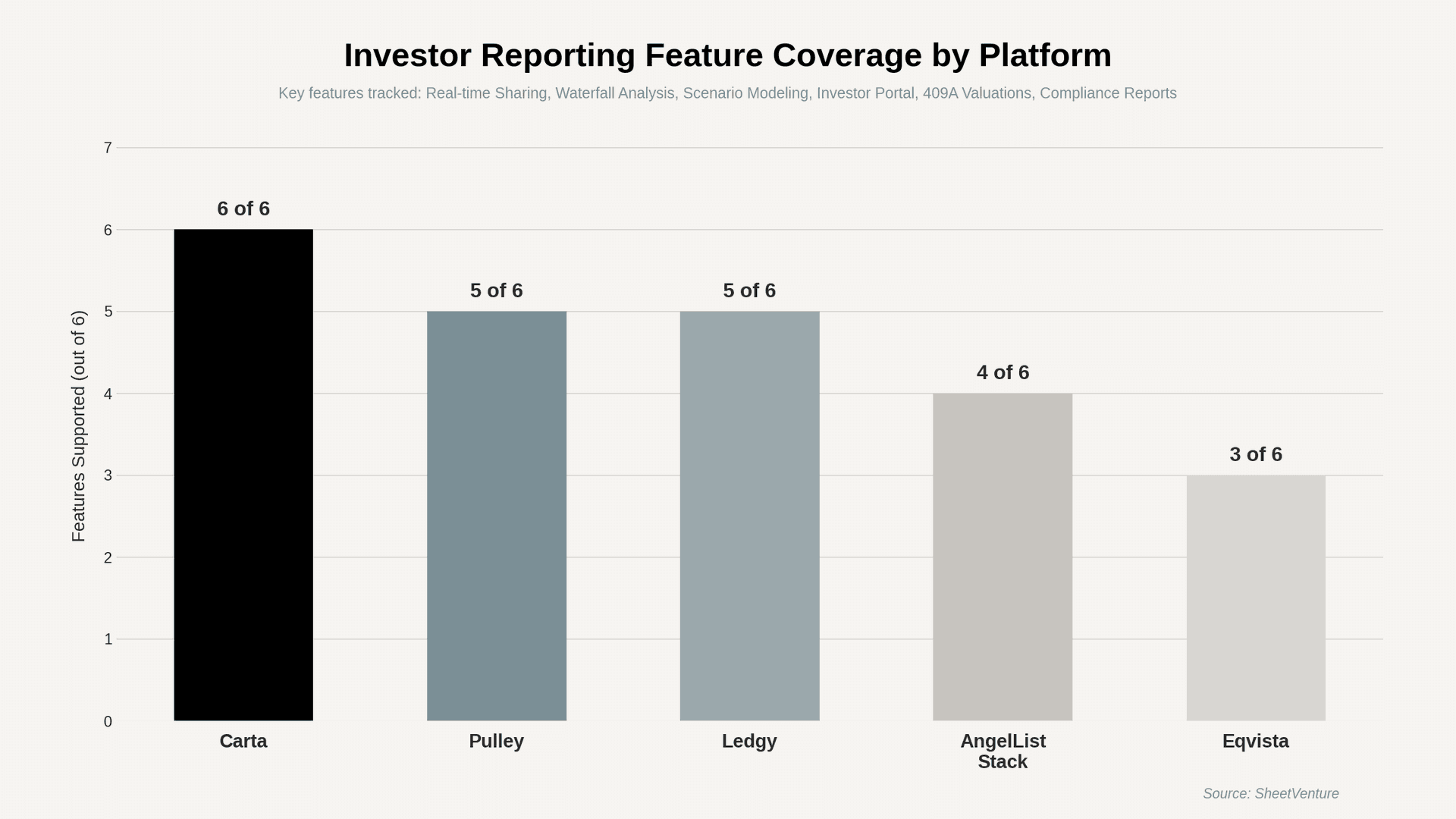
Only 5 cap table platforms offer investor reporting features strong enough to satisfy VC expectations: Carta, Pulley, AngelList Stack, Ledgy, and Eqvista. Over 60% of spreadsheet-based cap tables contain errors that delay fundraising by 2 to 8 weeks.
Cap table management is not just about tracking ownership. Investors expect real-time access to equity data, waterfall analysis, and scenario modeling before writing a check. The gap between what founders use and what VCs expect remains wide. 58% of investors want monthly updates, but fewer than 40% of startups send them consistently.
Choosing the right tool means choosing one that handles both equity tracking and investor-facing reporting in a single workflow. The wrong choice costs time during due diligence and erodes investor confidence before term sheets arrive.
5 Tools That Actually Meet Investor Reporting Standards
Carta dominates with 40,000+ companies. It offers a full investor portal, in-house 409A valuations, waterfall analysis, round modeling, and automated compliance reports. Pricing starts around $3,000/year for early-stage startups. The trade-off: cost scales fast, and a 2024 data controversy shook founder trust.
Pulley serves 4,000+ companies, mostly YC-backed startups. It includes an investor portal, 409A valuations at $500 to $1,500 (far below Carta), waterfall analysis, and scenario modeling. G2 ratings average 4.7/5 versus Carta's 4.5/5. Free tier available for under 25 stakeholders.
AngelList Stack provides free cap table management with integrated investor portals, round modeling, and investor update tools. Best for founders already raising through AngelList SPVs or rolling funds.
Ledgy is the strongest option for European and multi-jurisdiction startups. It supports EU tax compliance, HMRC/EMI for UK companies, and board-level reporting dashboards. Pricing starts around $2,000/year.
Eqvista competes on price with a free basic tier and 409A valuations starting at $990. Solid for pre-seed and seed-stage companies that need core reporting without enterprise costs.
What Investors Actually Want From Cap Table Reports
VCs filter cap table reports the same way they filter pitch decks. Speed and clarity win. These are the reporting features that move deals forward:
• Real-time cap table sharing eliminates version confusion during due diligence.
• Waterfall analysis shows who gets paid at various exit prices.
• Scenario modeling projects dilution under different term sheet structures.
• Investor portal access lets stakeholders self-serve holdings, tax forms, and documents.
• 409A valuations satisfy IRS compliance and set defensible strike prices for stock options.
• Automated compliance reports (Form 3921, state filings) reduce legal cleanup costs.
The penalty for getting 409A wrong is 20% additional tax plus interest on affected option holders. This is not optional.
Why Spreadsheets Fail Investor Reporting
65 to 70% of seed-stage startups still manage cap tables in spreadsheets. Academic research on spreadsheet accuracy shows 88% of complex spreadsheets contain errors. When startups migrate to dedicated tools, over 50% discover at least one material error.
Common mistakes include incorrect share counts from missed conversions, vesting schedule errors, phantom shareholders from departed employees, and SAFE conversion math mistakes. Legal fees to fix cap table errors at Series A range from $10,000 to $100,000.
Investors treat messy cap tables as a signal of operational disorganization. If your equity data looks unreliable, VCs question everything else. Understanding what fundable signals investors look for helps founders prepare before due diligence begins.
How Reporting Frequency Affects Investor Confidence
58% of VCs prefer monthly updates. Founders who send consistent updates receive more introductions, more follow-on support, and close follow-on rounds roughly 30% faster. Yet fewer than 40% of startups maintain regular reporting.
The best cap table tools automate this cycle. Carta, AngelList, and Ledgy include investor update features. But most founders still pair their cap table tool with a standalone update platform. How investors interpret investor updates during fundraising rounds often determines whether conversations continue or stall.
Building a disciplined reporting habit starts before fundraising. Use market intelligence platforms to identify which investors respond to structured outreach and consistent data sharing. Having a clean investor list before your raise gives you a head start on who to prioritize.
The Bottom Line
Five cap table platforms satisfy investor reporting needs: Carta, Pulley, AngelList Stack, Ledgy, and Eqvista. Each varies in price, compliance depth, and portal features. Spreadsheets fail at scale because errors compound and investors notice. The right tool eliminates reporting friction, speeds due diligence, and signals operational maturity to every VC reviewing your round.
Pick the tool that matches your stage, jurisdiction, and budget. Then use it consistently.
SheetVenture helps founders connect cap table readiness with the right investors, so fundraising moves from preparation to closed rounds faster.
Last Update:
Everything you need to understand private markets
Understand your market in real-time.
Filter by stage, sector, and exact geography.
Access 30,000+ verified, daily-updated active