Free investor databases hide critical gaps that cost founders months. Discover exactly what's missing before your outreach backfires.
Free investor databases typically lack real-time activity status, verified contact details, check size ranges, and thesis specificity. These gaps mean founders waste 40–60% of outreach on investors who are inactive, mismatched, or unreachable.
The appeal of free databases is obvious. Thousands of investor profiles at zero cost. But the information inside them is often outdated, incomplete, or too generic to drive effective outreach. Founders who rely on free tools alone end up building target lists full of blind spots that only surface after weeks of silence.
What Data Do Free Investor Databases Actually Provide
Free platforms like Crunchbase (free tier), AngelList, and public SEC filings offer a starting point. But that starting point is narrow.
What you typically get:
• Firm name, general website URL, and headquarters location
• Broad sector labels like "Technology" or "Healthcare."
• Some historical deal records for well-known firms.
• High-level partner names without current role verification.
What looks complete but is often stale:
• Investment stage preferences listed from years ago.
• Portfolio data is missing recent exits or failures.
• Partner directories that include people who left the firm.
• Fund descriptions copied from original launch press releases.
The surface data creates a false sense of coverage. Founders assume they have enough to start outreach. The missing layers are what actually determine response rates.
Which Critical Fields Are Missing From Free Databases
The most damaging gaps are the fields that free databases never collect or stop updating after launch.
Data Field | Free DB Coverage | What's Actually Missing |
Fund deployment status | Rarely tracked | Whether the fund is actively writing checks right now |
Verified partner emails | Rarely | Direct partner contacts vs. generic info@ addresses |
Current check size | Occasionally listed | Today's preferred range vs. the outdated historical average |
Thesis specificity | Surface level | Detailed sub-sector, geography, and stage preferences |
Last investment date | Sometimes present | Recency and frequency of actual deal activity |
LP composition signals | Never included | Whether fund economics allow the bets you need |
Decision timeline | Never tracked | Typical days from first meeting to term sheet |
Geographic preferences | Often outdated | Current willingness to invest outside the home market |
Without these fields, founders pitch investors who stopped deploying capital months ago. Knowing how to identify investors who match your specific industry is far more effective than blasting a generic list.
How Do Data Gaps Affect Founder Outreach
The downstream impact of incomplete data compounds quickly.
Wasted outreach volume:
• 35–50% of emails go to inactive or mismatched investors.
• 20–30% of contacts use outdated email addresses that bounce.
• 15–25% of pitches reach firms that already backed a competitor.
Founders using unverified free data spend nearly 5x more hours per booked meeting. The cost of "free" is measured in months of runway lost. Understanding why most cold emails fail connects directly to these data quality problems.
Data Quality Level | Avg. Response Rate | Meetings per 100 Emails | Wasted Hours / Month |
Free database only | 1.2% | 0.8 | 45–60 hrs |
Free + manual research | 3.5% | 2.1 | 25–35 hrs |
Verified paid database | 7.8% | 5.4 | 8–12 hrs |
Curated + AI scored list | 12.3% | 9.1 | 3–5 hrs |
How Do Free and Paid Investor Databases Compare
The gap is not about the number of listings. It is about the depth and freshness of each record.
Free databases excel at:
• Providing broad awareness of which firms exist in the market.
• Historical deal records for top-tier, well-covered funds.
• Basic firmographic data that helps with initial research.
Free databases fail at:
• Tracking which funds are in active deployment right now.
• Providing verified, current partner contact information.
• Scoring investor fit based on real recent deal patterns.
• Updating records after partner changes, fund closes, or thesis shifts
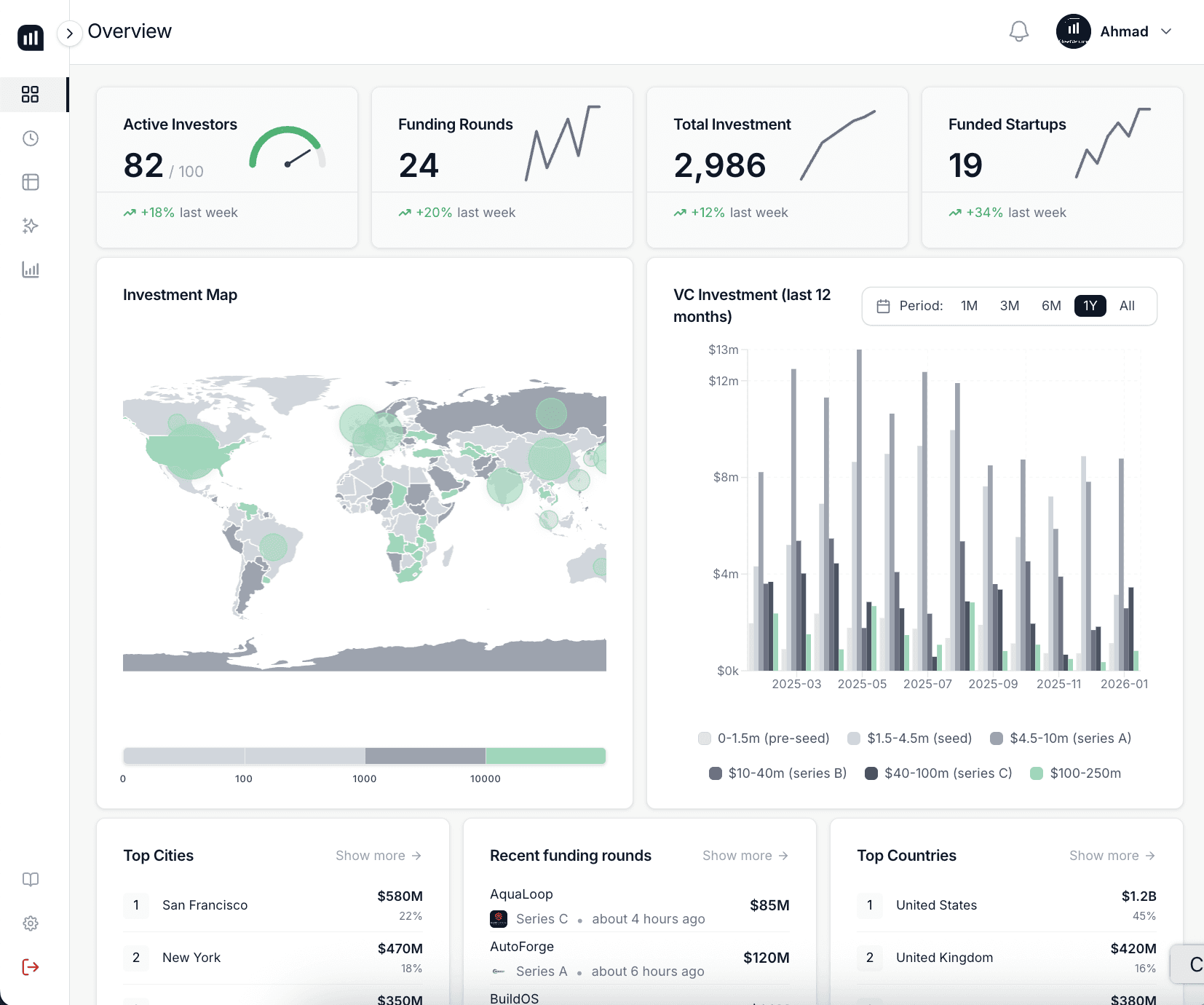
An investor database like SheetVenture closes these gaps by tracking real-time activity signals, filtering by current fund status, and matching investors to founders by stage, sector, and check size.
Founders who build target lists using verified intelligence see response rates 5–10x higher than those relying on free tools alone.
The Bottom Line
Free investor databases give founders a starting point but leave them blind to the data that actually drives responses. Fund activity status, verified contacts, current check sizes, and thesis specificity are exactly the fields that determine outreach success. They are also the fields that free platforms fail to maintain.
The real cost of relying on free data is not the subscription you avoided. It is the months of outreach that went nowhere because you were pitching the wrong investors with the wrong information.
SheetVenture helps founders close the gap between free listings and real investor intelligence, so every email reaches an active, relevant investor ready to deploy capital.
Last Update:
Everything you need to understand private markets
Understand your market in real-time.
Filter by stage, sector, and exact geography.
Access 30,000+ verified, daily-updated active