Not every pitch deck gets funded. Discover the exact slide structure that funded startups consistently used to close.
Most funded startups follow a 10-to-12 slide sequence that answers investor questions before they are asked. The structure shifts by stage, but the core logic stays the same: problem, solution, market, traction, team, ask. Design matters far less than what each slide proves.
Investors see hundreds of decks. The ones that close rounds follow the same internal logic, not because founders copied each other, but because investors ask the same questions every time. Slide sequence is how founders answer those questions without being in the room.
The Sequoia template, the Airbnb seed deck, and Uber's Series B have all been studied in depth. What they share is not a color scheme or font. It is a flow that builds conviction one slide at a time.
The Core Slide Sequence Most Funded Decks Share
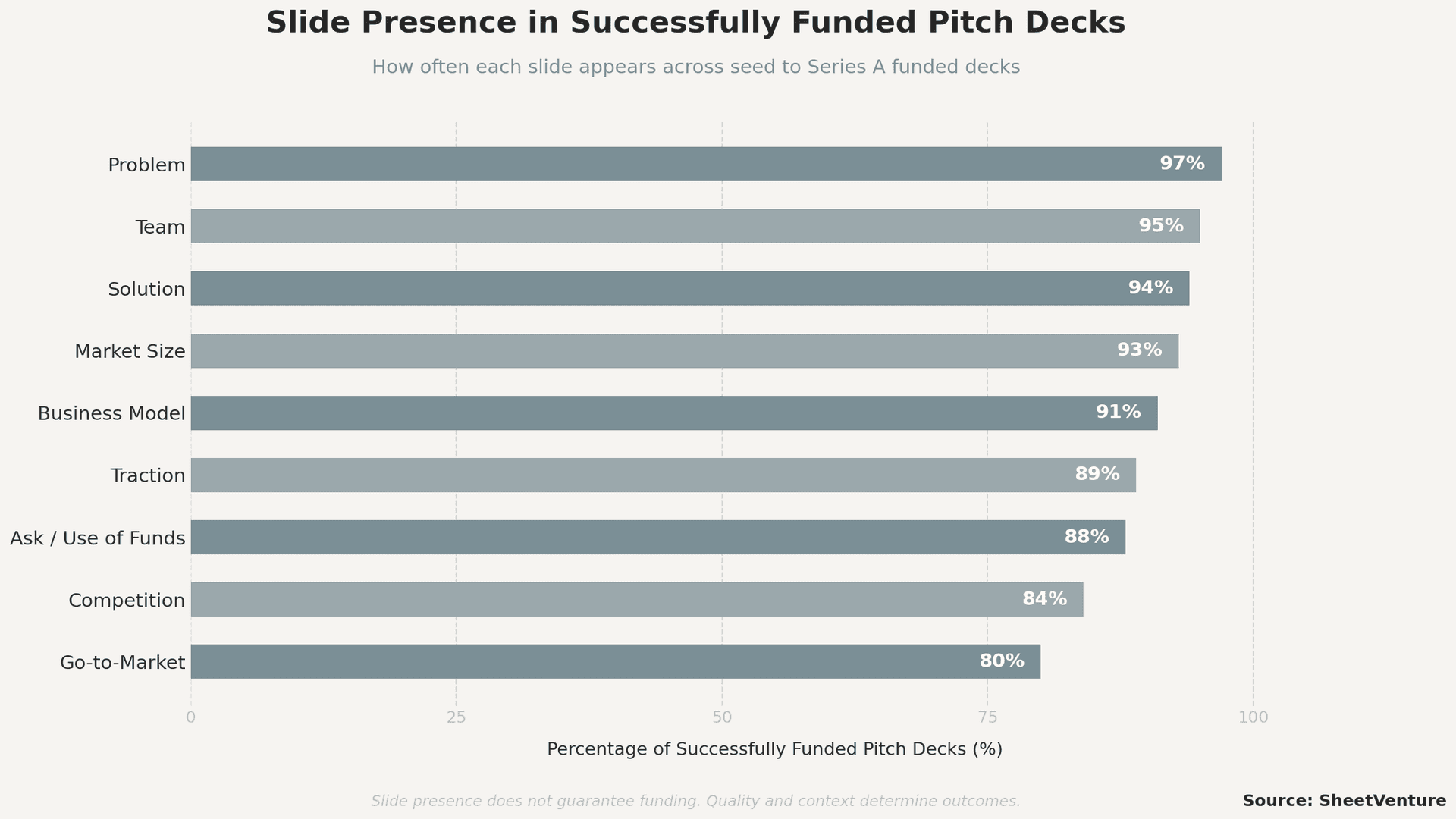
Across pre-seed and Series A closes, the same ten slides appear in nearly every funded deck:
• Cover: Company name, one-liner, contact. Nothing else.
• Problem: What is broken, who feels it, and why it matters now.
• Solution: Show the product. Do not describe it.
• Market size: TAM, SAM, and SOM with sourced estimates. Investors check the math.
• Traction: Revenue, MoM growth, retention, or signed letters of intent. The most scrutinized slide.
• Business model: One clear path to revenue, not five possibilities.
• Go-to-market: How you reach customers at scale, not just the first ten.
• Competition: A 2x2 matrix works if the axes are defensible and honest.
• Team: Why this group, for this problem, at this moment?
• The ask: Amount, use of funds, and milestones the capital will hit.
Decks that skip the competition slide or bury traction past slide eight tend to stall. Investors notice what is missing before they notice what is there.
What the Sequoia Template Gets Right
The Sequoia framework is the most referenced early-stage starting point in venture. Its logic:
• Why now: What changed in the market that makes this the right moment?
• Purpose before product: Start with why the company exists, then the pain point.
• Product after market: The product slide comes after problem and market size, not before.
• Team near the end: Placed late, after the investor has already bought into the idea.
Founders often lead with the team when the team is the headline. When the idea carries the weight, follow Sequoia's order.
How the Template Shifts by Funding Stage
The same deck does not work at every stage. Here is where the emphasis moves:
• Pre-seed: Problem and team carry most of the weight. Traction can be customer interviews or early letters of intent. Slide count: 8 to 10.
• Seed: Traction becomes non-negotiable. MoM growth, retention cohorts, or pilot revenue. Go-to-market replaces vague growth language. Slide count: 10 to 12.
• Series A: Every metric is benchmarked: CAC/LTV, churn, net promoter score. The why-now slide expands into a macro thesis. Slide count: 12 to 15.
Using SheetVenture's investor intelligence, founders can identify which firms are actively deploying at their specific stage before tailoring the deck.
Slide Mistakes That Sink Strong Decks
These patterns appear repeatedly in decks that do not close:
• Traction buried after slide eight. By then, investors have already formed a view.
• Market size calculated without explaining the method. Bottom-up estimates must show their work.
• Competition slide showing no direct competitors. Investors do not believe it.
• Solution slide listing features instead of showing what the product does.
• Team bios listing credentials but skipping why this team for this problem.
• The ask slide is missing milestones. Capital without a named outcome raises questions immediately.
Founders building from scratch benefit from understanding how to create a compelling pitch deck before choosing a template.
What Investors Actually Check Slide by Slide
Before a first meeting, investors scan for specific signals. The investor data expectations shift by stage, but some checks stay constant:
• Problem: Is this a real pain or a founder assumption?
• Traction: Is growth organic or paid? Retention tells more than revenue alone.
• Market: Is the TAM believable or just large?
• Team: Has anyone here done something hard before?
For founders raising without strong revenue numbers, the deck needs to compensate with other signals. Understanding pre-revenue signals criteria helps founders decide which slides to weight more heavily.
The Bottom Line
The best pitch deck templates are not templates at all. They are a logical answer to the question every investor silently asks: why this, why now, why you? Slide sequence, data quality, and honest competitive positioning matter more than visual polish.
SheetVenture helps founders identify which investors are actively deploying at their stage and sector, so the deck they build reaches the right people before the window closes.
Last Update:
Everything you need to understand private markets
Understand your market in real-time.
Filter by stage, sector, and exact geography.
Access 30,000+ verified, daily-updated active