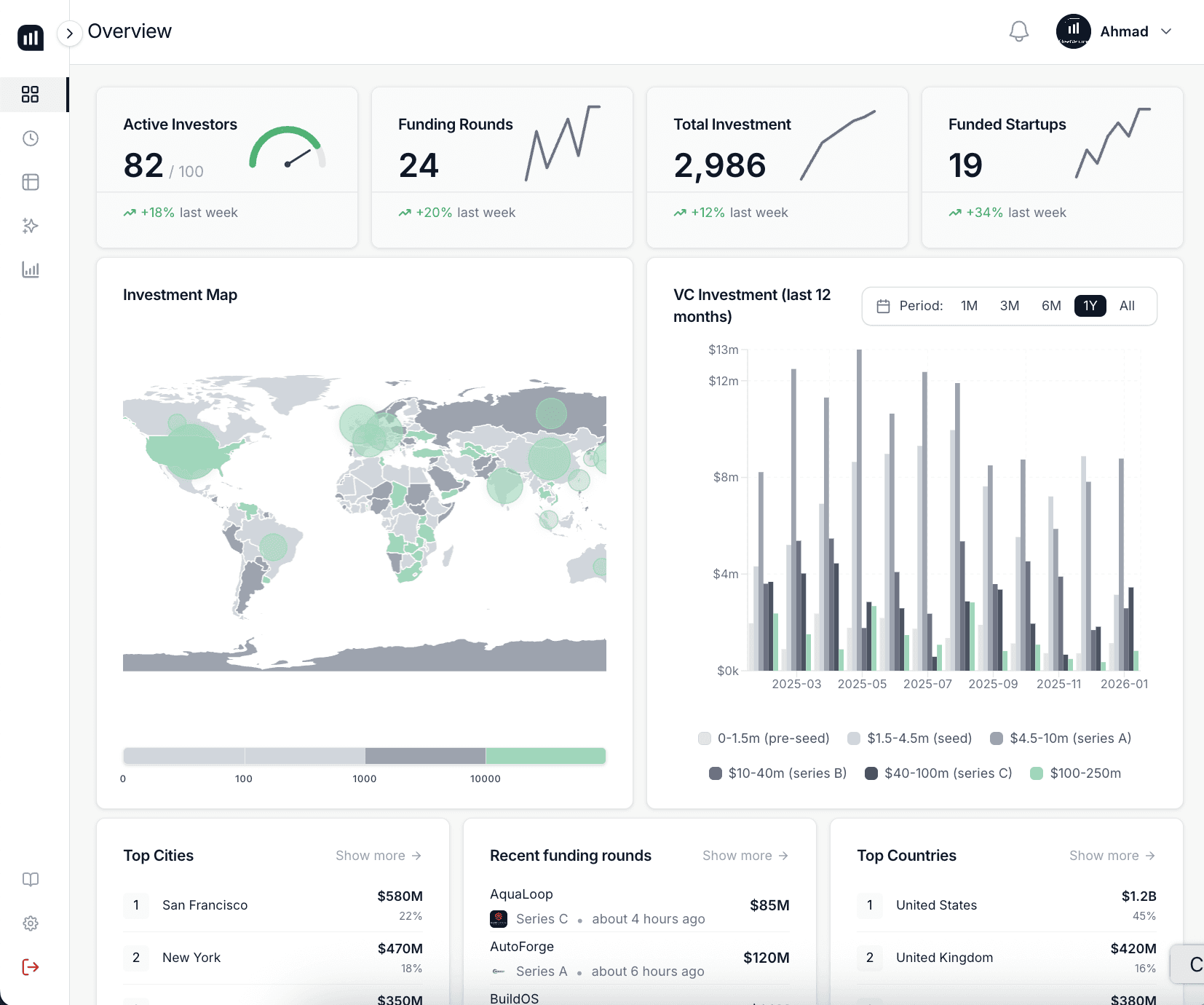
Most founders waste weeks searching broadly. Five proven shortcuts reveal sector-specific active investors before competitors find them.
Five shortcuts consistently work: filtering by recent sector deals, tracking portfolio patterns, monitoring LP reports, using sector-specific deal databases, and reverse engineering competitor cap tables. Founders who apply these methods cut investor search time by 60 to 70% and triple their meeting conversion rates.
Sector-specific investors already signal where they deploy capital through recent deals, hiring activity, and fund announcements. The shortcut is learning to read those signals instead of searching blindly.
Why Do Generic Investor Searches Waste Time
Most founders start with broad VC lists and narrow from thousands of names. This fails because it ignores recent activity in your specific sector.
• 78% of cold outreach goes to investors with no sector interest.
• Founders spend an average of 4.2 weeks building initial investor lists.
• Only 12% of generic list contacts result in a first meeting.
• Sector-matched outreach converts 3.4x higher than broad campaigns.
Every email sent to the wrong investor is time stolen from building your product. SheetVenture tracks active deal flow so founders skip the guesswork entirely.
What Are the Five Fastest Shortcuts to Find Sector Investors
1. Filter by Recent Sector Deals
Investors who closed a deal in your sector within six months are 4x more likely to take a meeting.
• Check recent funding announcements in your vertical.
• Track which firms led rounds, not just participated.
• Note check sizes and stage preferences from those deals.
• Prioritize firms with two or more sector deals in the past year.
2. Reverse Engineer Competitor Cap Tables
Your competitors already did the research. Their backers are pre-qualified for your sector.
• Review Crunchbase profiles of 5 to 10 closest competitors.
• Identify investors who backed multiple companies in your space.
• Focus on firms that invested early; they understand sector risk.
3. Monitor Portfolio Hiring Patterns
When a VC’s portfolio company in your sector hires aggressively, it signals the investor believes in the vertical’s growth.
• Track job postings from portfolio companies in your space.
• Growing teams indicate the fund is doubling down on the thesis.
• Reach out when their portfolio companies show hiring momentum.
4. Use Sector Specific Deal Databases
Generic databases list thousands of inactive profiles. Sector-filtered investor intelligence platforms surface only names that matter right now.
• Filter by investment vertical, stage, and recency.
• Cross-reference with actual deal announcements.
• Verify check size ranges before outreach.
• Export targeted lists instead of browsing endlessly.
5. Track LP Reports and Fund Announcements
New fund launches and LP disclosures reveal exactly where capital flows next.
• New funds with sector mandates are the most active buyers.
• Follow GP interviews for thesis signals.
• Fund size indicates check size range and stage focus.
• First-time funds in your space often move fastest.
Find actually active investors using recency as your primary filter.
How Much Time Does Each Shortcut Save
Shortcut Method | Avg. Days for 50 Names | Meeting Rate | Cost (Time) | Best For |
Sector Deal Databases | 1 to 2 days | 22 to 28% | Lowest | All stages |
Competitor Cap Table Analysis | 2 to 4 days | 20 to 25% | Low | Crowded verticals |
Recent Sector Deals Filter | 3 to 5 days | 18 to 22% | Low | Series A and B |
LP Report Monitoring | 4 to 6 days | 15 to 20% | Medium | Pre seed, Seed |
Portfolio Hiring Tracking | 5 to 7 days | 14 to 18% | Medium | Deep tech, SaaS |
Combining two or three methods produces the strongest results. Founders who stack shortcuts build qualified lists in under a week.
Which Sectors Have the Most Accessible Investor Data
Not all sectors are equally transparent. Some verticals have rich public data trails that make investor identification significantly faster.
Sector | Data Accessibility | Top Signal Source | Active Funds (2024–2025) |
Fintech | High | Regulatory filings, funding news | 320+ |
Health Tech | High | FDA databases, clinical partnerships | 280+ |
Climate Tech | Moderate | Grant disclosures, policy announcements | 190+ |
Enterprise SaaS | High | Product launches, hiring data | 410+ |
Consumer | Moderate | Retail partnerships, social traction | 210+ |
Deep Tech / AI | Low to Moderate | Research publications, patent filings | 350+ |
The more data available in your sector, the faster these shortcuts work. Understanding industry-relevant investors ensures every outreach email lands with the right VC fit.
The Bottom Line
Finding sector-specific active investors does not require months of research. Five shortcuts compress weeks into days: filter by recent deals, study competitor backers, monitor portfolio hiring, use sector databases, and track fund announcements. Prioritize recency over reputation and focus outreach on investors already deploying capital in your vertical.
The founders who raise faster are not better networkers. They use better filters.
SheetVenture helps founders pinpoint sector-specific active investors in minutes so every outreach email reaches someone already investing in their space.
Last Update:
Everything you need to understand private markets
Understand your market in real-time.
Filter by stage, sector, and exact geography.
Access 30,000+ verified, daily-updated active