An investor leaked your startup data. Here is exactly what every founder must do to protect their business.
If an investor leaks your confidential information, document everything immediately, consult a startup attorney, and assess whether the disclosure was intentional or accidental. Your NDA is your first line of protection, but how you respond in the first 48 hours shapes every option that follows.
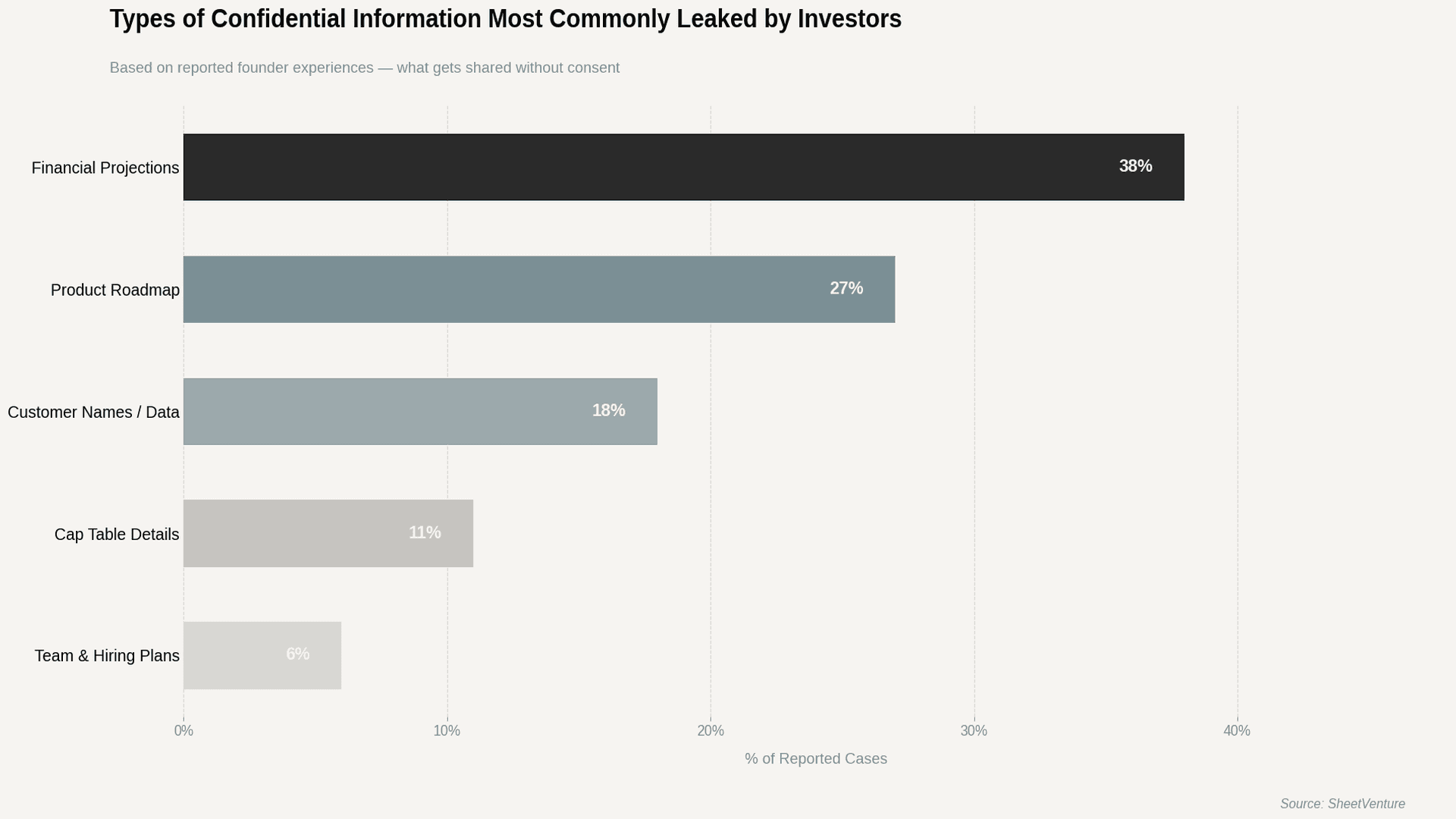
Most founders assume confidentiality is automatic the moment they send a pitch deck. It is not. Investors receive hundreds of decks and rarely apply the same information hygiene that your legal team would expect. A leak might look like a competitor mentioning a feature you prototyped months ago, or a journalist calling with questions only an investor could have answered. Knowing your options before this happens saves time, leverage, and legal fees.
What Actually Counts as a Leak
Not every slip is actionable. Understanding the threshold matters before you make accusations.
Clear violations:
• Sharing your financial projections with a competitor.
• Forwarding your deck to another firm without permission.
• Discussing your business model in a public setting or article.
• Passing your cap table structure to another investor without consent.
Gray areas:
• General market commentary that mirrors your thesis.
• A portfolio company is suddenly building a similar feature.
• An investor discussing your sector publicly without naming you.
If you signed an NDA before sharing materials, a clear violation gives you real legal standing. Without one, your options narrow considerably, but do not disappear.
Step 1: Document Before You Do Anything Else
Before calling anyone, capture evidence. Screenshot the post, article, or message. Note the date, the source, and what specific information was disclosed. If the leak happened in a conversation, write down exactly what was said and who heard it.
This timeline matters. In any legal or negotiation context, whoever builds the clearest factual record first holds the advantage.
Step 2: Consult a Startup Attorney Immediately
This is not the time for general legal advice from a family friend. You need a startup attorney who handles VC transactions and IP disputes. Many work on flat fees for early consultations.
Your attorney will assess:
• Whether your NDA was properly executed.
• What damages are recoverable?
• Whether injunctive relief is an option if the leak is ongoing.
• How to formally notify the investor without burning a bridge prematurely.
Understanding investor red flags during diligence can help you spot problematic patterns before they escalate to this point.
Step 3: Contact the Investor Directly (With Care)
Before filing anything, a direct conversation often resolves more than you expect. Investors leak information unintentionally more often than maliciously. A partner might mention something offhand in a portfolio call without realizing the sensitivity.
Reach out professionally. State what you believe happened, reference your NDA, and ask for an explanation. Keep the tone measured. How they respond tells you whether this was negligence or something deliberate.
For guidance on VCs to avoid, track patterns before you ever send materials.
Step 4: Assess the Actual Damage
Some leaks cause reputational harm. Others hand a competitor a roadmap. Quantifying the damage honestly shapes your response.
Ask:
• Has a competitor changed behavior since the leak?
• Has press coverage affected your fundraising momentum?
• Have potential investors mentioned the disclosed information?
The answers determine whether this is worth pursuing legally or better resolved through a formal apology and a documented assurance of no further disclosure.
Use investor intelligence to track which investors have reputations for poor information handling before you enter conversations.
Step 5: Protect Future Disclosures
Once this happens, your processes change. Before sharing sensitive materials going forward:
• Use a custom NDA tailored for VC conversations, not a generic template.
• Send decks through tracked links so you know who opens what and when.
• Redact specific financials until due diligence begins.
• Understand VC deal internals so you know when to disclose what.
A watermark on every document page does not stop a determined actor, but it creates immediate evidence of the source if something leaks.
The Bottom Line
A confidentiality breach by an investor is serious, but it is not the end of your fundraising. Document everything, get legal counsel fast, and approach the investor directly before escalating. Most cases resolve without litigation, but your response speed determines your leverage.
SheetVenture helps founders identify which investors have clean track records and strong confidentiality practices before sensitive information ever changes hands.
Last Update:
Everything you need to understand private markets
Understand your market in real-time.
Filter by stage, sector, and exact geography.
Access 30,000+ verified, daily-updated active