Investors evaluate market cycles and startup timing catalysts. Learn how timing affects valuations, decisions, and fundraising success.
Investors evaluate timing on two levels: market cycle timing (bull vs. bear markets affecting capital availability and valuations) and startup timing (why your specific opportunity exists now).
During bull markets, capital flows freely with higher valuations and faster decisions. During bear markets, investors tighten criteria, valuations compress 30–50%, and fundraising takes 2–3x longer. For startup timing, VCs look for catalysts, technology shifts, regulatory changes, or behavioral trends, that explain why your solution will succeed now when it might not have before.
Why Timing Matters to VCs
Timing affects both fundraising dynamics and startup success potential:
For fundraising:
Capital availability fluctuates dramatically with market cycles
Valuations swing 30–50% between bull and bear markets
Investor risk appetite varies with economic conditions
For startup success:
Being early is as problematic as being late
Market readiness determines adoption speed
Timing catalysts enable new business models
Investors have seen great ideas fail due to poor timing and mediocre ideas succeed because timing was right.
Market Cycle Dynamics
Bull Markets (Expansion Phase)
Characteristics:
Abundant capital seeking deployment
Higher valuations (often 20–50% premium)
Faster decision timelines
More competition for deals
Lower bar for investment criteria
Fundraising implications: Raise quickly, secure premium terms, build war chest for potential downturn.
Bear Markets (Contraction Phase)
Characteristics:
Capital preservation mentality
Compressed valuations (30–50% decline typical)
Extended decision timelines (2–3x longer)
Focus on existing portfolio over new deals
Higher bar for metrics and traction
Fundraising implications: Expect longer processes, lower valuations, more diligence, and tougher negotiations.
Transition Periods
Market sentiment shifts create uncertainty. Investors may pause deployment while assessing direction, leading to deal delays and renegotiations.
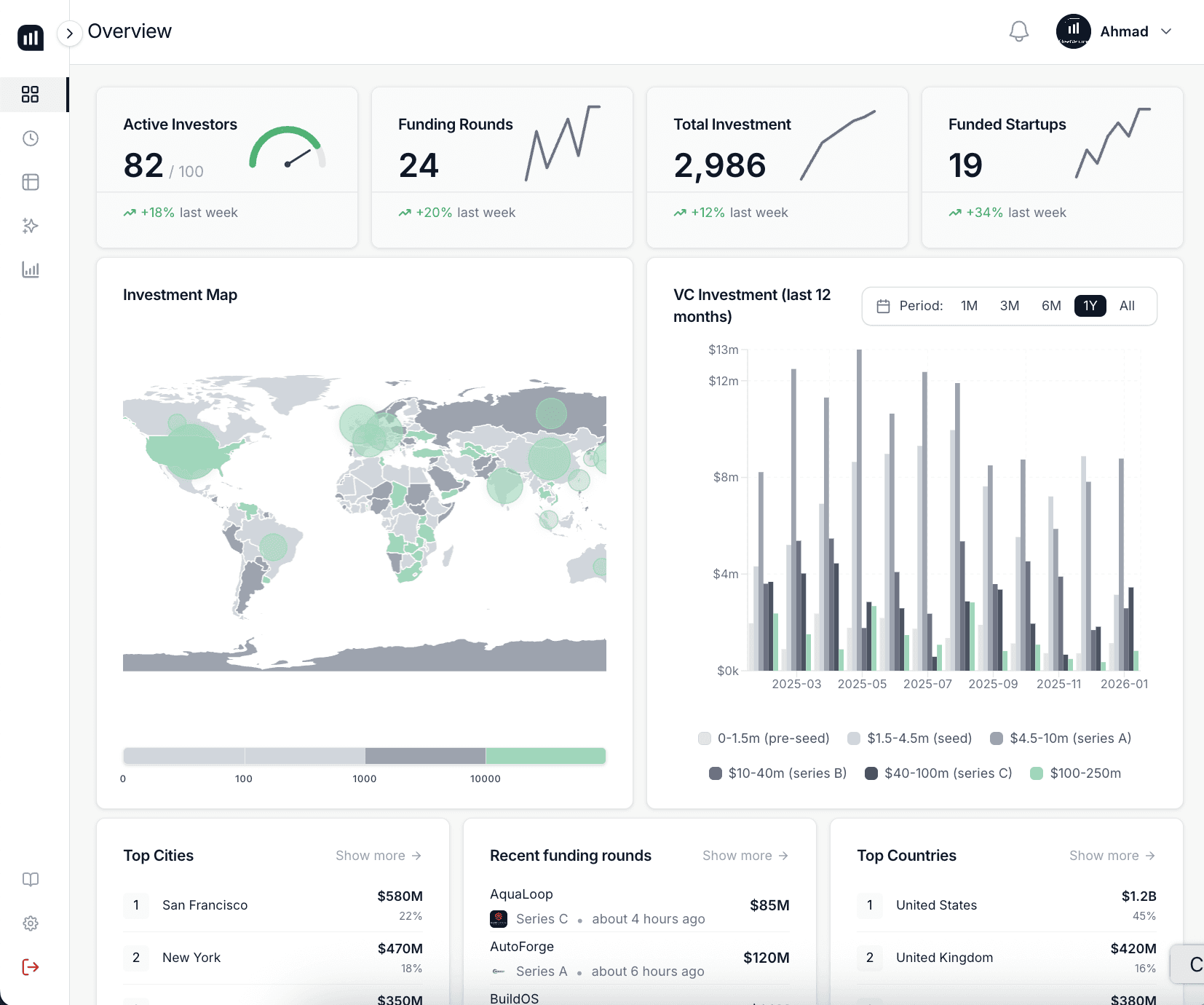
Track current market conditions using SheetVenture's insights to time your fundraise strategically.
Startup Timing: The "Why Now" Question
Beyond market cycles, investors assess why your specific opportunity is timely:
Technology Catalysts
Examples:
AI/ML capabilities enabling new applications
Cloud infrastructure reducing costs
Mobile penetration reaching critical mass
API economy enabling integrations
Investor question: What technology shift makes your solution possible or dramatically better now?
Regulatory Catalysts
Examples:
New regulations creating compliance requirements
Deregulation opening previously closed markets
Policy changes affecting industry dynamics
Data privacy laws creating new needs
Investor question: What regulatory change creates your opportunity?
Behavioral Catalysts
Examples:
Shifting consumer preferences
Workforce changes (remote work, gig economy)
Generational adoption patterns
Industry practice evolution
Investor question: What behavioral shift drives demand for your solution?
Economic Catalysts
Examples:
Cost curves crossing viability thresholds
Labor market changes affecting unit economics
Infrastructure investments enabling new models
Understanding how investors compare startups helps you position your timing advantage.
Common Timing Mistakes
Being too early: Market isn't ready, customers don't understand the problem yet.
Being too late: Winners established, market saturated, opportunity closed.
Ignoring cycle position: Raising at peak then facing down rounds.
Weak "why now" narrative: If opportunity existed for years, why will it work now?
How to Navigate Timing Successfully
Monitor market conditions: Understand cycle position before launching a raise.
Build runway buffers: Raise more than minimum; markets shift mid-process.
Articulate "why now" clearly: Connect opportunity to specific catalysts.
Move quickly in bull markets: Windows close faster than expected.
Be patient in bear markets: Build more traction; returns will be better.
The Bottom Line
Investors evaluate timing through market cycles (affecting valuations and capital availability) and startup-specific catalysts (explaining why now). Bull markets offer easier raises at higher valuations; bear markets demand stronger metrics and patience. Strong "why now" narratives, technology, regulatory, or behavioral catalysts, differentiate well-timed opportunities from poorly-timed ones.
Time your raise to match market conditions and your traction reality.
SheetVenture helps founders understand market timing and investor activity cycles, so you raise when conditions favor you.
Last Update:
Everything you need to understand private markets
Understand your market in real-time.
Filter by stage, sector, and exact geography.
Access 30,000+ verified, daily-updated active