Recent portfolio exits and write-downs quietly reset how aggressively VCs chase new early-stage startup deals. Here is why.
Recent portfolio outcomes are the single biggest hidden driver of how aggressively a VC pursues new investments. Funds that recently celebrated strong exits (IPOs, acquisitions at 10x+ returns) become measurably more willing to back unproven founders and riskier markets.
Funds carrying multiple write-downs or flat portfolios tighten criteria, extend diligence timelines, and default to safer bets. Understanding where a fund sits on this spectrum before you pitch can be the difference between a quick term sheet and months of silence.
Why Portfolio Performance Changes Everything
VCs operate inside a feedback loop that founders rarely see. Every portfolio company outcome, whether exit, write-down, or stagnation, recalibrates internal risk tolerance for the next deal.
A strong exit validates the investment thesis and creates LP confidence, giving partners more room to take bigger swings on new deals.
Write-downs trigger internal scrutiny from LPs and advisory boards, pushing GPs toward consensus picks and lower-risk profiles.
Flat portfolios (no major wins or losses) create indecision, often resulting in longer diligence and delayed term sheets.
Fund-level returns directly influence how a VC's next fund raise goes, meaning today's outcomes shape the capital available for tomorrow's bets.
This is why two VCs with identical sector focus and stage preference can behave completely differently. Their recent track records create divergent risk profiles. Founders who research active investors with recent exit momentum gain a measurable advantage in outreach timing.
How Do Exits vs. Write-Downs Shift VC Behavior?
The contrast in behavior between winning and losing funds is stark. Here is what changes at each end of the spectrum:
Portfolio Signal | VC Behavior Shift | What Founders Experience |
Multiple 10x+ exits in the last 18 months | Higher risk tolerance, faster decisions, willing to lead pre-revenue rounds | Faster response times, fewer diligence rounds, more aggressive term sheets |
One strong exit with a stable portfolio | Moderate confidence, open to conviction bets if thesis aligned | Standard 2-4 week process, clear feedback, fair terms |
Flat portfolio, no recent exits | Cautious deployment, consensus-driven decisions, longer holds | Extended timelines (6-10 weeks), more partner meetings, and delayed decisions |
Recent write-downs (2+ companies) | Defensive posture, preference for proven models, tighter criteria | Higher bar for traction, more references checked, smaller check sizes |
Fund-level underperformance vs. peers | Survival mode, avoiding anything LP committees might question | Low response rates, vague passes, and reluctance to lead rounds |
What Signals Should Founders Watch Before Pitching?
You can decode a VC's current risk posture without asking directly. These public and semi-public signals reveal where a fund's appetite stands:
Recent portfolio exits. Check if any portfolio companies IPO'd, were acquired, or raised major follow-on rounds in the last 12 months.
New fund announcements. A freshly closed fund signals dry powder and pressure to deploy, which usually means a higher risk appetite.
Public write-down disclosures. Markdowns on prominent portfolio companies often ripple into more conservative deal screening.
Partner departures or additions. Turnover at the GP level often reflects internal tension about portfolio performance and strategy direction.
Deal with pacing changes. If a fund that made 12 investments last year has made only 2 this year, risk appetite has likely contracted.
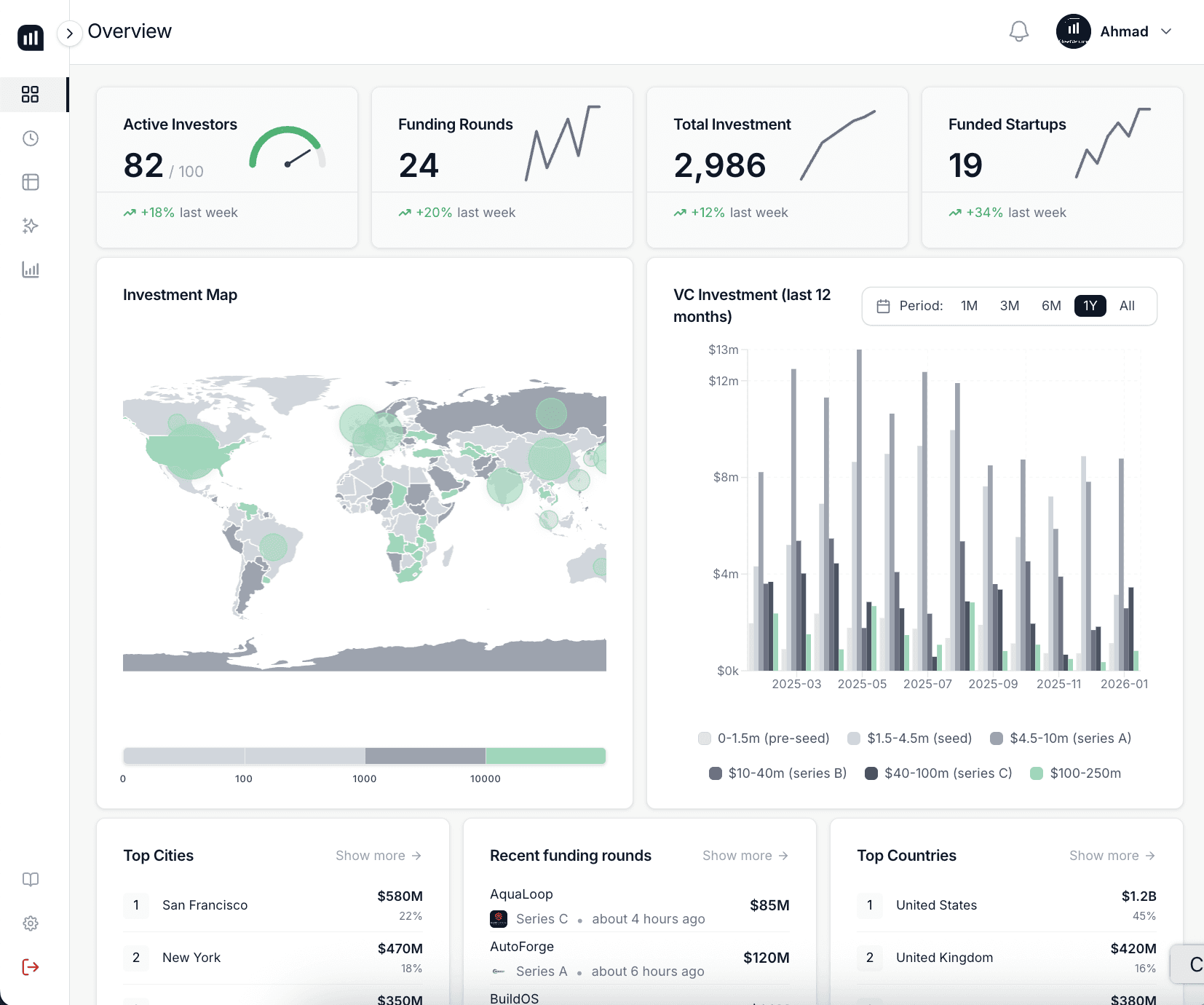
Tracking these signals is exactly where a venture capital database becomes essential. Real-time data on fund activity, portfolio movement, and deployment pace gives founders the ability to time outreach to the moment a fund is most receptive.
How Does LP Pressure Amplify the Effect?
Behind every VC sits a group of limited partners who evaluate fund performance quarterly. LP sentiment creates a second layer of risk calibration that founders rarely consider:
Strong portfolio returns make LP re-commitment easier, giving GPs confidence to back unconventional founders.
Weak returns put the next fund raise at risk, making every new investment a potential LP talking point.
Some LPs impose concentration limits or sector restrictions after underperformance, directly reducing the deals a GP can pursue.
Funds in their final investment period with poor results often slow to a near-halt on new deals entirely.
Understanding this dynamic explains why some VCs become unreachable despite having capital left. Learn how to research VCs before your pitch to identify funds in an expansionary rather than defensive cycle.
When Do Portfolio Outcomes Matter Most to Risk Appetite?
The recency and magnitude of outcomes determine how much they shift behavior:
0 to 6 months after a major exit: Maximum risk appetite. Partners are energized, LPs are supportive, and the internal narrative favors bold moves.
6 to 12 months post-exit: Elevated but normalizing. The confidence premium fades as the team refocuses on current portfolio challenges.
0 to 6 months after a write-down: Maximum caution. Internal reviews dominate, and new deal approvals slow significantly.
12+ months after any outcome: Effect diminishes. The next set of portfolio signals begins to dominate decision-making.
Founders raising in crowded markets should pay special attention to timing. VCs evaluating competitive landscapes are already applying tighter filters, and a defensive portfolio posture compounds that caution.
The Bottom Line
Recent portfolio outcomes quietly shape every investment decision a VC makes. Funds riding exit momentum take bigger swings, move faster, and back less proven founders. Funds absorbing write-downs retreat to safety, extend timelines, and raise the bar on traction. Founders who treat all VCs as equally available are ignoring the single most predictive factor in whether a pitch gets a real look.
The smartest founders map fund performance before building target lists. They time outreach to match deployment windows. They avoid wasting months pitching funds that are functionally closed for new risk.
SheetVenture helps founders track real-time fund activity and portfolio signals so every pitch targets a VC whose risk appetite matches your stage, sector, and timing.
Last Update:
Everything you need to understand private markets
Understand your market in real-time.
Filter by stage, sector, and exact geography.
Access 30,000+ verified, daily-updated active