Pitching inactive VCs wastes precious months. Discover how to identify investors who recently funded startups in your sector.
Filter investor databases by deal date and sector tags, then cross-reference with public funding announcements. VCs who closed deals in the last 90 days are actively deploying capital, which means faster responses, clearer thesis alignment, and shorter decision cycles for founders who reach them at the right time.
The 90-day window matters because it separates funds that are writing checks from funds that are evaluating, pausing, or fully deployed. Most founders waste weeks emailing investors who have already closed their fund or shifted focus entirely. Targeting recent investors in your specific vertical compresses outreach cycles and dramatically improves response rates. The difference between a live fund and a dormant one can mean the difference between a reply in 48 hours and silence that stretches for months.
Why Does Recent Investment Activity Matter When Targeting VCs?
Recent deal activity is the strongest signal that a fund has available capital and active interest in a sector. It tells you three things at once: the fund has money, the partners are engaged, and the investment committee is meeting regularly.
Funds that were invested in the last 90 days are likely mid-deployment, meaning they still have dry powder allocated for your stage and sector.
Recent deals reveal live thesis priorities, not what a VC website claims from two years ago when the fund first launched.
Investors with fresh portfolio companies in your space are already doing market diligence, so your pitch requires less context setting.
Response rates from recently active investors average 3x higher than from dormant ones, because your email arrives while the sector is top of mind.
Understanding dry powder signals helps you prioritize funds that can actually write checks right now.
How Do You Track Which VCs Invested Recently in Your Sector?
There are several methods founders can layer together for the most complete picture.
Public data sources:
Crunchbase and PitchBook track recent rounds, but many deals appear 30 to 60 days after close, which reduces real-time usefulness.
SEC filings (Form D) capture U.S. raises, though filings often lag by weeks and miss international deals entirely.
TechCrunch, The Information, and sector-specific newsletters surface deals weekly, sometimes within hours of announcement.
Founder networks:
Ask other founders in your vertical who recently raised, which investors were active, responsive, and moving fast.
Slack communities and founder Discords often surface real-time deal intel well before databases update.
Investor intelligence platforms:
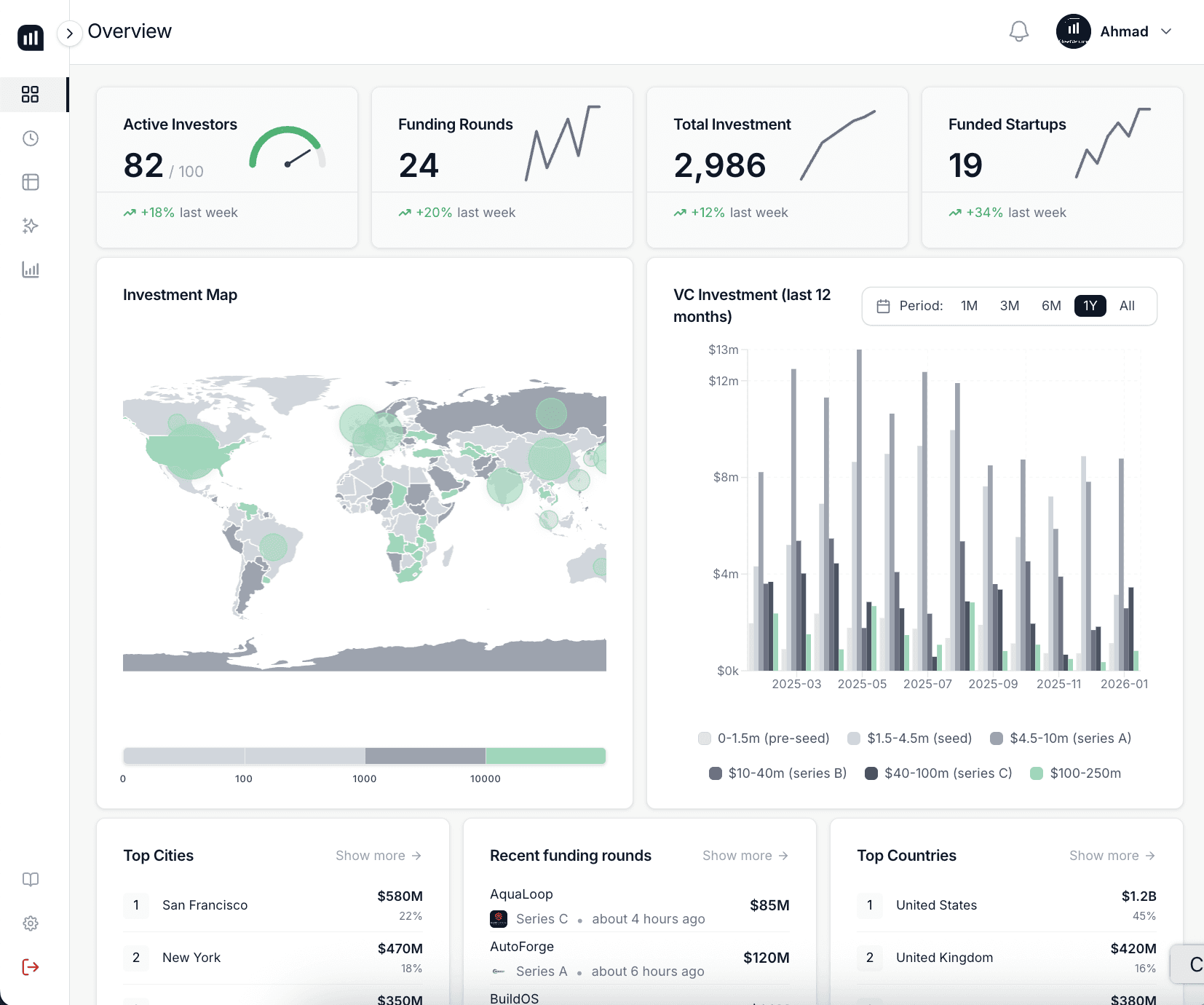
SheetVenture tracks real-time VC deal activity filtered by sector, stage, and recency so founders skip stale data entirely.
Look for platforms that let you filter by last deal date and sector focus simultaneously to eliminate guesswork.
Direct signals:
Follow VCs on LinkedIn and X; portfolio announcements often go live before database updates.
Monitor fund-specific blogs and newsletters for investment thesis updates and new partner hires that signal expansion into your vertical.
Use investor intelligence tools that filter by deal date, sector, and check size simultaneously for the most efficient targeting.
What Should Founders Look for Beyond Deal Date?
Not every recent investor is a fit. Layer these filters on top of recency to avoid wasting meetings on misaligned funds.
Filter | What to Check | Why It Matters |
Sector match | Did they invest in your exact vertical or an adjacent one? | Adjacent sector investors need more education, slowing decisions by weeks |
Stage alignment | Was the recent deal at your funding stage? | A seed fund doing a one-off Series B is an outlier, not a repeatable pattern. |
Check size | Does their typical check match your raise? | Mismatched check sizes create term sheet friction and negotiation drag |
Geographic focus | Do they invest in your region or remotely? | Some funds still prefer local portfolio companies for easier board access |
Portfolio overlap | Do they already back a direct competitor? | Competing investments limit their ability to lead your round |
Decision speed | How quickly did their last deal close? | Funds closing in under 60 days signal efficient internal processes |
Finding investors who are actually active now requires combining recency data with stage and sector filters. Without this layering, founders end up with long lists of technically relevant but practically unreachable investors.
How Often Should Founders Refresh Their VC Target List?
Static investor lists decay fast. A list that was accurate six weeks ago may already be 30% outdated because funds close, partners rotate focus areas, and new entrants emerge constantly. Here is how to keep yours current.
Refresh sector-specific VC activity data every two to four weeks during an active raise.
Remove investors who have gone quiet for 90+ days; their deployment window may have closed, or their thesis may have shifted.
Add new investors the moment public deal announcements surface in your vertical.
Prioritize investors who completed two or more deals in your sector in the last quarter, because repeat activity confirms sustained interest rather than a one-off exploration.
Founders who find active VCs systematically instead of relying on outdated lists close rounds 40% faster on average.
The Bottom Line
The fastest path to a funded round starts with investors who are already writing checks in your space. Filter by 90-day deal activity, match on sector and stage, and layer in check size and geographic fit. Static lists filled with dormant funds burn months of outreach energy. Dynamic, recency-filtered targeting gets you in front of investors who are ready to move.
Stop guessing which VCs are active. Start with the ones who just proved it.
SheetVenture helps founders identify which investors deployed capital in their sector in the last 90 days, so every outreach email lands with a fund that is actively writing checks.
Last Update:
Everything you need to understand private markets
Understand your market in real-time.
Filter by stage, sector, and exact geography.
Access 30,000+ verified, daily-updated active