Dry powder means deployable capital. Learn how to verify if VCs can actually invest before wasting time pitching.
Pitching a VC without capital to deploy is like applying for a job that doesn't exist. Here's how to verify before you reach out.
"Dry powder" refers to uncommitted capital that investors have available to deploy into new deals. A VC with dry powder is actively looking for investments. A VC without it is effectively closed for new business, even if they take your meeting.
Identifying which investors actually have capital ready separates efficient fundraising from months of wasted effort.
Why Dry Powder Matters
VC funds operate in cycles. When a fund raises capital from limited partners (LPs), they typically deploy 50–60% into new investments over the first 2–3 years. The remaining capital is reserved for follow-on investments in existing portfolio companies.
A fund raised in 2021? Most new investment capital is likely deployed by now.
A fund raised in 2024? They're actively hunting for deals.
Reaching out to funds without dry powder generates polite meetings but no term sheets. These investors might genuinely like your company, but they can't write checks even if they wanted to.
Signals That a VC Has Dry Powder
1. Recent Fund Announcement
The clearest signal is a recent fundraise. When VCs announce a new fund, they're signaling to founders: "We have fresh capital and we're open for business."
Where to find this:
Press releases and tech news coverage
VC firm websites and blog announcements
Industry databases tracking fund activity
Funds raised within the last 18–24 months are typically in active deployment mode.
2. Active Recent Investments
VCs with dry powder are making deals. Check their recent portfolio activity:
Have they announced new investments in the past 6 months?
Are they leading rounds or just participating?
Is their investment pace consistent or slowing down?
A firm that made 10 investments last year but only 2 this year may be running low on deployable capital.
For a comprehensive guide on identifying investing patterns, read our article on how to find active VCs for your startup.
3. Public Statements from Partners
VCs often signal their investment appetite publicly:
Conference talks mentioning "actively looking" for specific sectors
Blog posts describing their current thesis and focus areas
Social media engagement with founders and deal announcements
Podcast appearances discussing recent investments
Partners who are actively marketing themselves to founders typically have capital to deploy.
4. Fund Size vs. Portfolio Count
Simple math reveals deployment status. If a $100M fund has already made 20 investments averaging $4M each, they've deployed $80M. Their remaining dry powder is limited.
Compare stated fund size against known investments to estimate remaining capacity.
Red Flags: Signs They're Out of Dry Powder
Watch for these warning signals:
No new investments in 6+ months. Active funds deploy continuously. Long gaps suggest capital constraints.
Only follow-on investments. If a fund is only backing existing portfolio companies, they're likely reserving capital rather than seeking new deals.
Fund age exceeds 3 years. Most funds complete primary deployment within 3 years. Older funds are typically in maintenance mode.
Partners leaving or fund restructuring. Internal changes often indicate fundraising challenges or strategic shifts away from new investments.
Vague responses about timeline. When asked about investment capacity, evasive answers suggest constraints they won't admit publicly.
How to Verify Dry Powder Efficiently
Manually researching every investor's fund status takes hours. Smarter founders use tools that track this automatically.
SheetVenture's investor database monitors 30,000+ investors, filtering for those who have made investments within the last 18 months. You can verify activity status instantly rather than guessing.
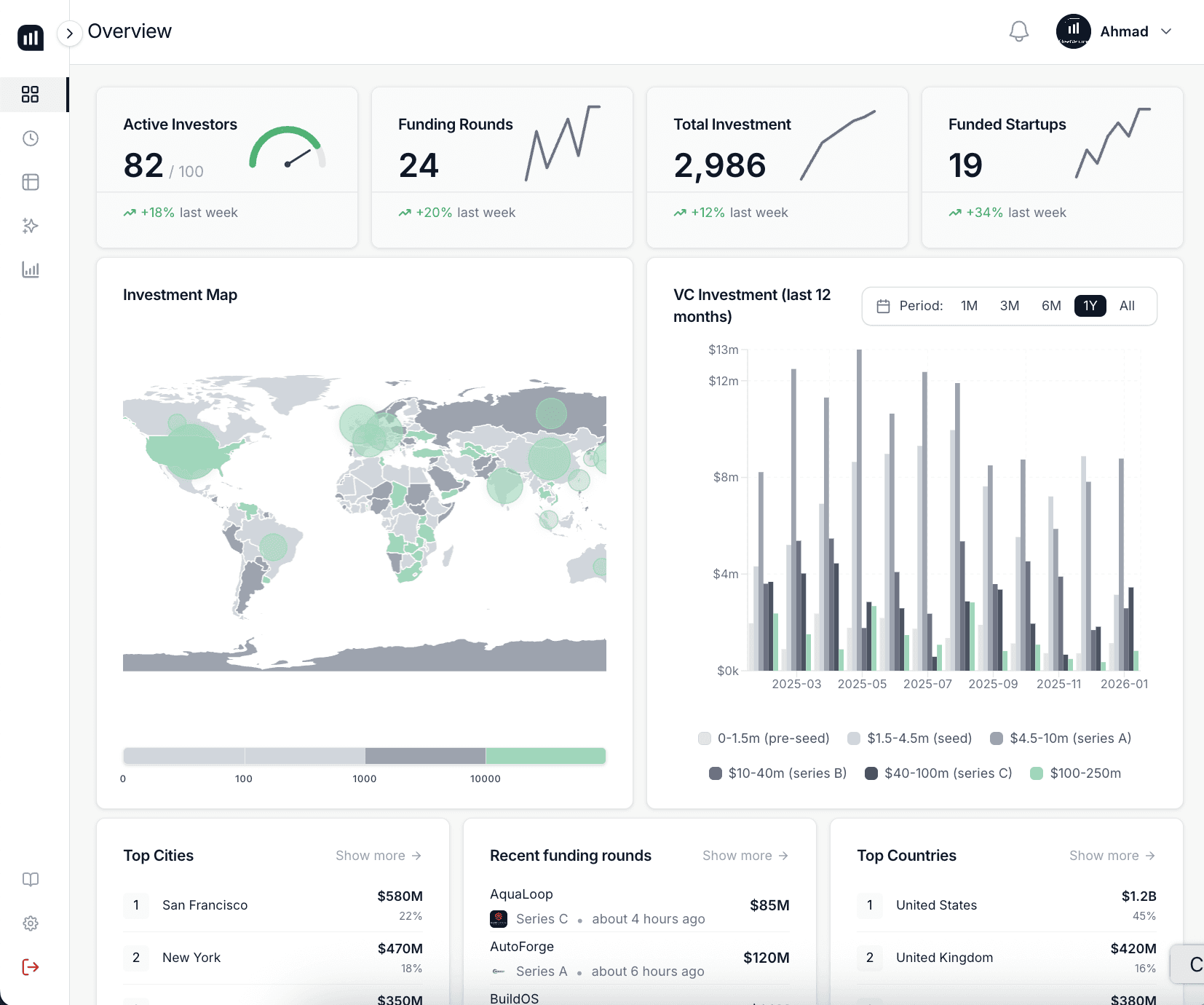
Our coverage dashboard shows which investors are actively deploying across stages and sectors, so you target funds with confirmed capital availability.
The Bottom Line
Dry powder determines whether an investor can actually invest, regardless of how much they like your company. Founders who verify capital availability before outreach avoid wasted meetings and focus energy on investors who can actually write checks.
The best-targeted list isn't the longest. It's the one where every investor has capital ready to deploy.
SheetVenture tracks active investors with verified recent deals, so you never waste time pitching funds that can't invest.
Last Update:
Everything you need to understand private markets
Understand your market in real-time.
Filter by stage, sector, and exact geography.
Access 30,000+ verified, daily-updated active