Most founders pitch VCs with no capital left to deploy. Five signals reveal who just raised new funds.
Investors who just closed new funds deploy 3x faster than those managing mature portfolios. Track SEC filings, LP announcements, team expansions, and fund launch press to find VCs with fresh capital ready to invest.
The difference between a quick yes and months of silence often comes down to one thing: whether the investor has money to spend. VCs operate in cycles. When a fund is newly raised, partners are actively sourcing deals, moving faster on decisions, and writing bigger checks. When a fund is nearly deployed, even interested investors stall because they physically cannot write new checks until the next fund closes.
Knowing which investors recently raised capital is one of the most overlooked advantages in fundraising. Yet most founders skip this step entirely and pitch blindly, wasting months on VCs who have no capacity to write checks.
Why Does New Fund Timing Matter for Founders
Fresh capital changes investor behavior in measurable ways.
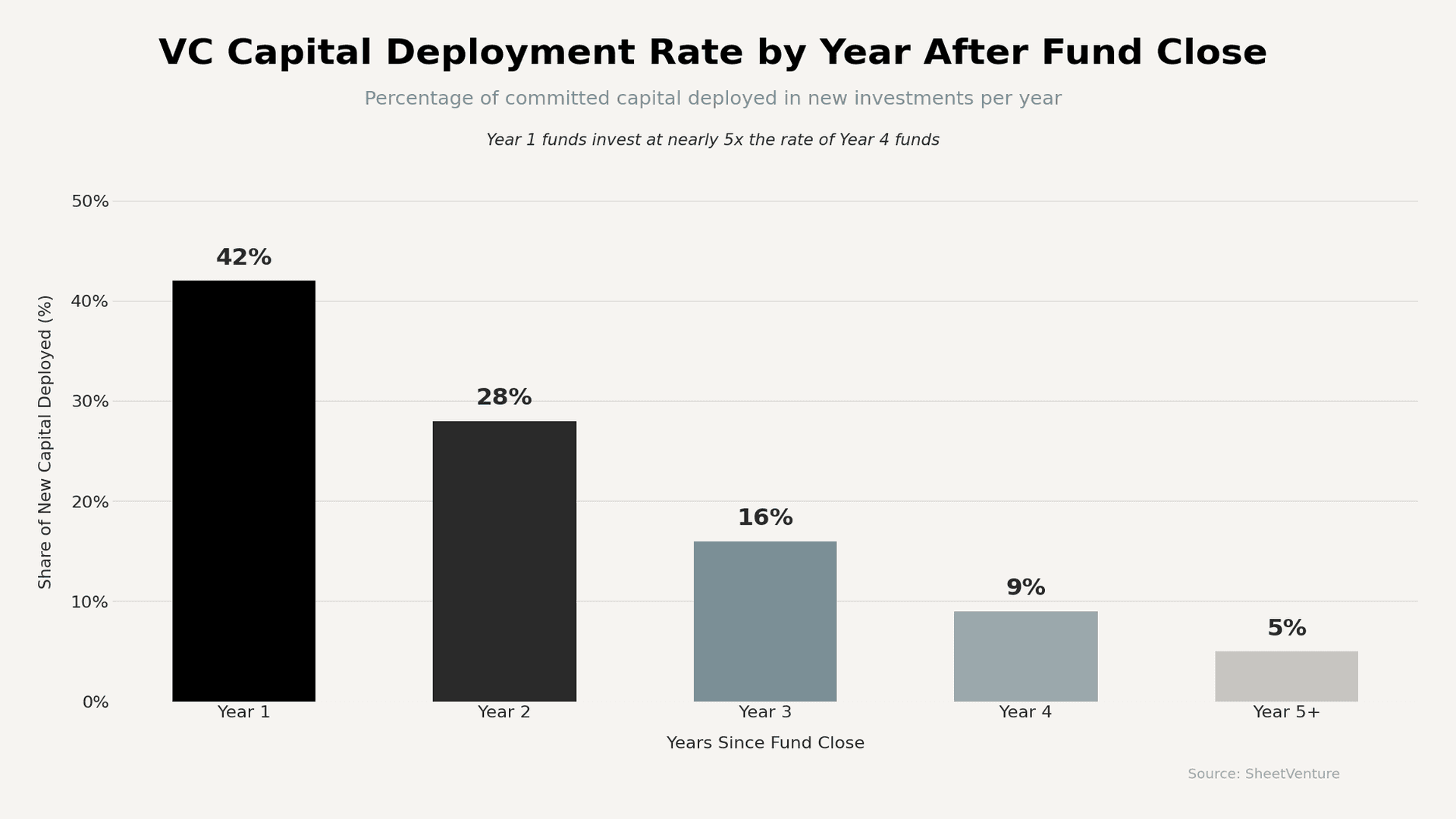
• VCs in year one of a new fund invest at 2x to 3x the pace of year three or four.
• Decision timelines shorten because partners need to build portfolio momentum early.
• Check sizes tend to be larger during the first 18 months of fund deployment.
• Partners are more open to cold outreach when they need deal flow for a new fund.
• Competition among founders for that capital is lower before announcements go mainstream.
The deployment curve drops fast. By year three, most funds have allocated 60 to 70% of committed capital. By year four, new investments slow dramatically, with remaining capital reserved for follow-on rounds in existing portfolio companies.
How Do You Track Which VCs Raised New Funds
Five reliable signals reveal fresh fund activity.
SEC Form D filings. Every U.S.-based fund must file with the SEC when raising capital. Search the SEC EDGAR database for recent Form D filings under "Pooled Investment Fund" to find newly registered venture funds. Filing dates tell you exactly when capital was raised. Sort by date and filter by fund size to surface the most relevant new vehicles.
LP announcement press releases. Limited partners like university endowments, pension funds, and foundations often publish annual reports listing new commitments. These disclosures reveal which firms received fresh allocations, sometimes months before the VC announces publicly.
Firm hiring and team expansion. New funds mean new deals to source. Watch for junior partner hires, new associates joining the team, or scout program launches. Hiring activity within 3 to 6 months of a fund close is one of the strongest signals of active deployment.
Public fund announcements. Many firms announce new funds through press releases, blog posts, or interviews. Set alerts for phrases like "raised," "closed," "new fund," and "committed capital" alongside firm names you track using market intelligence tools.
Portfolio pacing changes. If a firm that made two investments per quarter suddenly increases to four or five, a new fund has likely closed. Track portfolio additions on their website or through databases that monitor active investors in real time.
What Signals Confirm a Fund Is Still in Early Deployment
Not every new fund means open checkbooks. Confirm deployment status with these checks.
• Fund closed within the last 12 to 18 months (peak deployment window).
• The firm has made fewer than 30 to 40% of the expected total investments.
• Partners are attending conferences, hosting office hours, and actively publishing content.
• New sector focus areas or geographic expansions announced alongside the fund.
• Firm is engaging with founders on social media more frequently than usual.
Founders who understand dry powder dynamics can separate VCs who want to invest from those who simply want to stay visible.
How Should Founders Use This Information in Outreach
Timing your pitch to coincide with new fund deployment changes everything.
• Reference the new fund directly in your outreach to show you did research.
• Align your ask with the fund’s stated thesis and stage focus.
• Reach out within the first 6 months of a fund announcement for the highest response rates.
• Prioritize firms where your sector matches newly announced investment themes.
• Use SheetVenture to filter investors by recent fund activity and deployment stage.
Learning how to find active VCs before your competitors do is often the difference between a funded round and a stalled process.
The Bottom Line
Investors with freshly raised funds move faster, write larger checks, and respond to outreach at higher rates. Track SEC filings, LP disclosures, hiring patterns, and portfolio pacing to identify which VCs have new capital. The best fundraising outcomes happen when founder timing matches investor deployment cycles. Stop guessing who has money. Start tracking who just raised it.
Pitch when the money is fresh. Everything else gets harder.
SheetVenture helps founders identify which investors recently raised new funds, so every pitch reaches a VC with capital ready to deploy.
Last Update:
Everything you need to understand private markets
Understand your market in real-time.
Filter by stage, sector, and exact geography.
Access 30,000+ verified, daily-updated active