Hiding lawsuits during VC due diligence kills deals. Learn what to disclose, when, and how investors actually react.
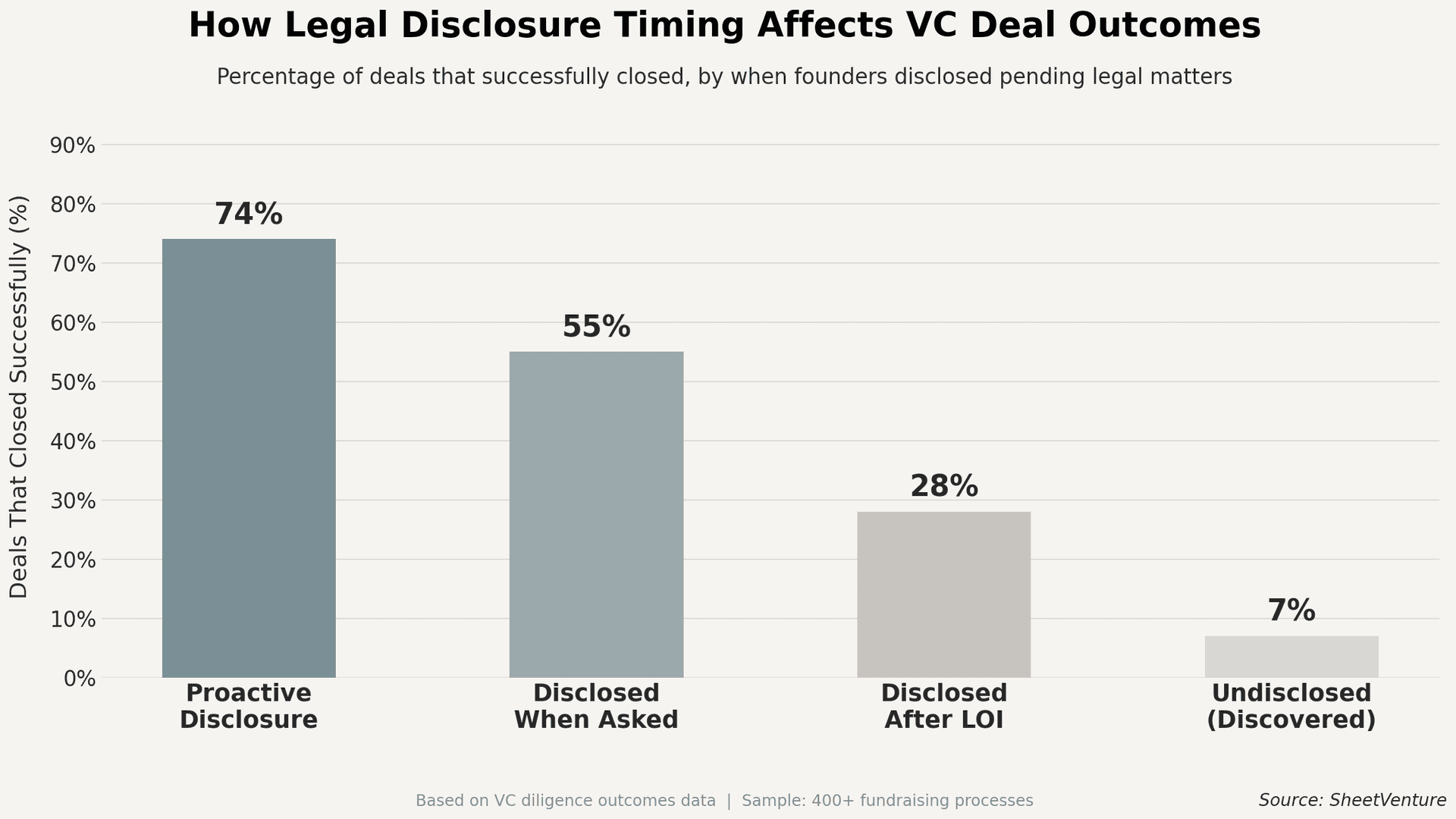
Yes, always disclose pending lawsuits during due diligence. Hiding an active lawsuit is one of the fastest ways to kill a deal, damage investor trust, and expose yourself to legal liability. Investors will find the cases. The only variable is whether they hear it from you first.
Pending litigation comes up in almost every serious diligence process. Attorneys review court filings, lien searches surface active cases, and background checks flag public records. If a VC discovers a lawsuit you never mentioned, it signals something far worse than the lawsuit itself: that you filter bad news when the stakes are high.
Founders often assume mentioning a lawsuit will scare investors away. What actually scares them is finding it themselves. A deal that collapses because an investor discovered something hidden mid-diligence is very hard to recover from.
Why Investors Treat Non-Disclosure as a Red Flag
A lawsuit on its own rarely kills a deal. Non-disclosure almost always does. Investors conducting due diligence are not just verifying facts. They are deciding whether to trust a founder with their capital for seven to ten years, and a founder who omits a pending case raises a question with no good answer: What else are they not telling us?
What investors actually think when they discover an undisclosed case:
• Is this founder honest under pressure?
• What else in the data room is incomplete or misleading?
• Do we want to be locked into this with someone who manages bad news by hiding it?
What You Must Disclose
During due diligence, proactively disclose the following:
• Active litigation: Any case that has been filed, regardless of how likely it is to proceed.
• Threatened claims: Demand letters, cease-and-desist notices, or written threats that have not yet reached court.
• IP disputes: Patent challenges, trademark conflicts, or licensing disagreements still in negotiation.
• Employment claims: Employee complaints, EEOC filings, or wrongful termination actions.
• Regulatory inquiries: Government investigations or agency notices that could escalate.
• Settled cases: Material settlements from the past three to five years with ongoing restrictions or NDAs.
When to Bring It Up
Do not wait for the investor to ask. Early, voluntary disclosure lands better than forced disclosure mid-diligence.
The right moment is when you share your data room or when formal diligence begins. A short, factual note in the legal section is enough. For significant matters, address them directly in a call with the deal lead first.
What proactive disclosure looks like in practice:
• Add a litigation summary document to your legal data room folder.
• Flag the matter early in your intro call: "There is one active matter I want to walk you through before you dig in."
• Provide context, not spin: what the case is, what you believe the exposure is, and what your legal counsel says.
Founders who handle this well almost always come across as more fundable, not less. Investors have seen hundreds of companies with legal friction. They back founders who manage problems well, not founders with spotless histories. Review what investor confidence signals actually look like from the VC side so you know where your disclosures land.
How Investors Evaluate the Risk
Investors look at pending lawsuits through the lens of financial exposure and operational distraction. Their typical questions:
• What is the realistic worst-case financial outcome?
• Does this dispute touch core IP, key revenue streams, or major customers?
• Is the founding team distracted by this, or is it being handled cleanly by counsel?
• What does your legal team say about the likely resolution timeline?
A $40,000 dispute with a former contractor rarely stalls a deal. A patent challenge targeting your core product from a well-funded competitor is a different conversation. Understanding common investor red flags helps founders know how much weight any specific legal issue actually carries going into a room.
Use investor intelligence to understand what serious diligence looks like at your stage, so you walk into the process prepared rather than reactive.
The Bottom Line
Disclose pending lawsuits during due diligence. Always and early. A lawsuit that investors hear about from you, with context and counsel notes attached, is a managed risk. A lawsuit they discover on their own is a trust problem. Read what investor red flags actually look like before you enter a diligence process, so you control the narrative instead of losing it.
SheetVenture helps founders prepare for due diligence with the right investor intelligence, so every disclosure lands as a sign of strength rather than a last-minute surprise.
Last Update:
Everything you need to understand private markets
Understand your market in real-time.
Filter by stage, sector, and exact geography.
Access 30,000+ verified, daily-updated active