Pitch Deck:
Pitch Deck Details:
INCYMO.AI Pitch Deck: A Breakdown for Founders Studying Early-Stage Decks
This is a pre-seed deck from INCYMO.AI, a startup building AI tools to improve game monetization through better ad creatives. The deck is 12 slides, designed for a $300k raise targeting a clear Series A milestone. It's a useful reference point for any founder studying how to structure a lean, metric-forward pitch.
What the Deck Does Well
The opening slide wastes no time. "Increase revenue of games with AI products" is the entire value prop, and it lands immediately. No three-paragraph company backstory.
The problem slide is sharper than most. Instead of a founder claiming there's a pain, the deck uses a stat: 100% of UA gaming leads surveyed said finding the right ad creative idea is a 10/10 pain. That's a number investors can work with.
Other strengths:
The business model is presented as a single number, $4k per game per month, with the math laid out cleanly.
Traction is shown with logos (SayGames, Eidolon, AdQuantum), not just claim language
The roadmap ties each phase to a specific revenue number, not just a vague milestone
Founders who want to understand what data investors expect in a first pitch deck will find this deck a practical model.
Where the Deck Has Gaps
No deck is flawless at the early stage, and this one has a few areas that would draw questions in a room.
The market size slide ($71.5B TAM) uses a top-down calculation that jumps quickly from app store counts to total addressable revenue; bottom-up validation is missing
The competitive landscape slide isn't included, which leaves investors guessing about moats
"100% successful cases" is a strong claim, but based on only four clients, and that asterisk gets buried
The team slide is strong on pedigree (ex-Deloitte, ex-Playrix, EPAM), but the advisory section could use more specificity on what each advisor is actually contributing. Founders raising right now can learn how investors assess founding team dynamics before going into rooms where those questions will come up.
The Ask and How It's Framed
The final slide asks for $300k to hit the KPIs required by a16z for Series A. This is an unusual framing; most decks just state the raise amount and use of funds. Tying the ask directly to a named fund's requirements is a bold move. It either signals real traction with that fund or introduces a dependency that could make investors nervous if the a16z conversation isn't as advanced as implied.
Use of funds is not broken out line by line, which is a gap. Investors who want to understand how founders should handle capital allocation will often push on this immediately.
This Pitch Deck is taken from bestpitchdeck.
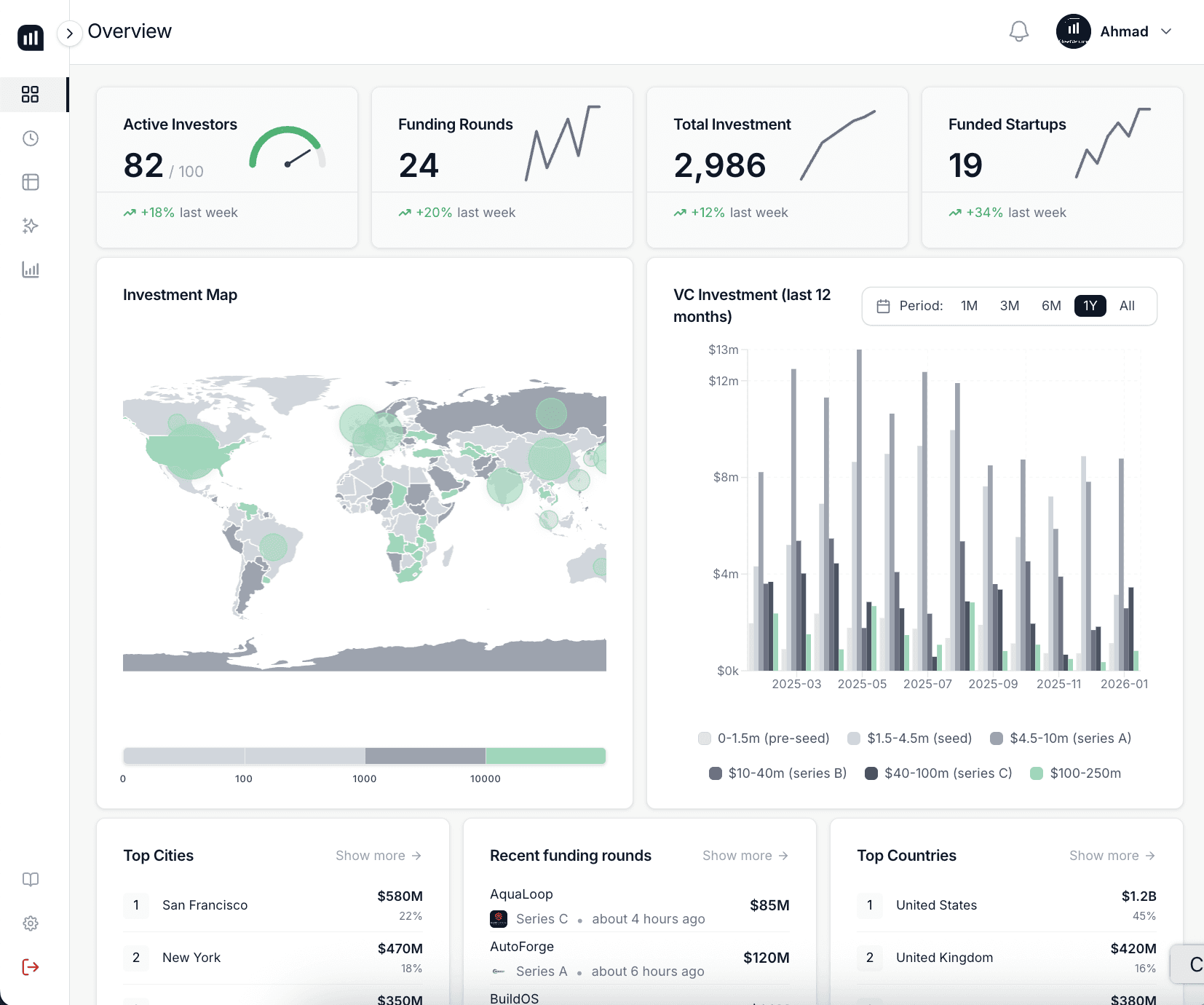
SheetVenture helps founders identify the right investors before they even open a deck, using real-time data from the market's most active private equity database.
FAQ:
Have questions,
We got answers.
Can't find your answer?
Get in touch with our support team, they a re friendly!
What makes the INCYMO.AI deck stand out structurally?
The deck leads with a validated pain point backed by a concrete survey stat, which cuts through the usual problem-slide filler. The traction section uses client logos and specific MRR figures rather than vague growth language.
What's the weakest part of this pitch deck?
The market sizing relies on a top-down formula without bottom-up validation, which experienced investors will challenge. The competitive slide is also absent, leaving a gap the team would need to fill verbally.
How does SheetVenture help founders find the right investors for their stage?
SheetVenture is a private market intelligence platform that gives founders access to active investor data filtered by stage, sector, and check size. It removes the guesswork from building a target list so outreach goes to investors who are actually deploying capital right now.
Others:









Everything you need to understand private markets
Understand your market in real-time.
Filter by stage, sector, and exact geography.
Access 30,000+ verified, daily-updated active