Pitch Deck:
Pitch Deck Details:
Softr Pitch Deck: What Founders Can Learn From It
The Softr pitch deck is a tight, use-case-driven presentation that opens with a single, sharp problem statement and builds credibility through customer proof before asking for anything.
Most founders bury their product in slides four or five. Softr doesn't. Page one states the premise plainly: a no-code SaaS platform for SMEs with zero learning curve. That kind of directness signals confidence. The deck doesn't explain what no-code is. It assumes the reader already gets it, then shows what Softr does better than anyone else.
The second paragraph sets up the market framing well. Rather than listing a TAM figure, the deck argues that the entire knowledge worker toolset is being rebuilt. That's a bolder, more investable claim than "the no-code market is worth $X billion."
How the Deck Builds Its Story
The structure follows a clean logic that most early-stage decks miss. The problem is implied, not stated dramatically. The product is shown doing actual things, not described in abstract terms.
Clear one-liner upfront: no jargon, no company history.
Use-case slides with real testimonials: client portals, CRMs, employee directories, marketplaces, communities.
Each use case is backed by a named customer: not generic quotes, but specific companies and roles.
Pricing shown openly: Freemium at $0, Business at $165/m, with a freemium adoption rationale explained.
The testimonials are placed on the same slide as the use case they support. That's a structural choice that keeps context intact. Investors don't have to flip back to connect a quote to a product function.
Where the Deck Is Particularly Strong
The team slide is lean and credible. Rather than listing traits, it lists past companies — PayPal, Zalando, PicsArt, and TeamViewer. The background speaks for itself.
The vision slide lands near the end: 1 million apps created on Softr by 2025. It's specific, verifiable, and big enough to matter for venture returns. It doesn't hedge with "we aim to" or "our goal is to become a leader."
Freemium as a growth strategy, explicitly named "bottom-up SaaS adoption," is called out directly.
The technology roadmap includes the component store, Softr Experts, and Template Marketplace.
No financial projections are shown; the deck focuses on product and traction, which is appropriate at this stage.
What Founders Should Take Away
The Softr deck works because it stays close to the product. Every slide earns its place by answering one question: why would someone pay for this? The answer is shown in screenshots and customer quotes, not argued in text.
Founders preparing their own decks should study how Softr sequences proof. Traction comes from customer traction quality, not just numbers, but also specificity. Softr shows named users, actual use cases, and concrete outcomes. That's what moves investors past skepticism.
This Pitch Deck is taken from bestpitchdeck.
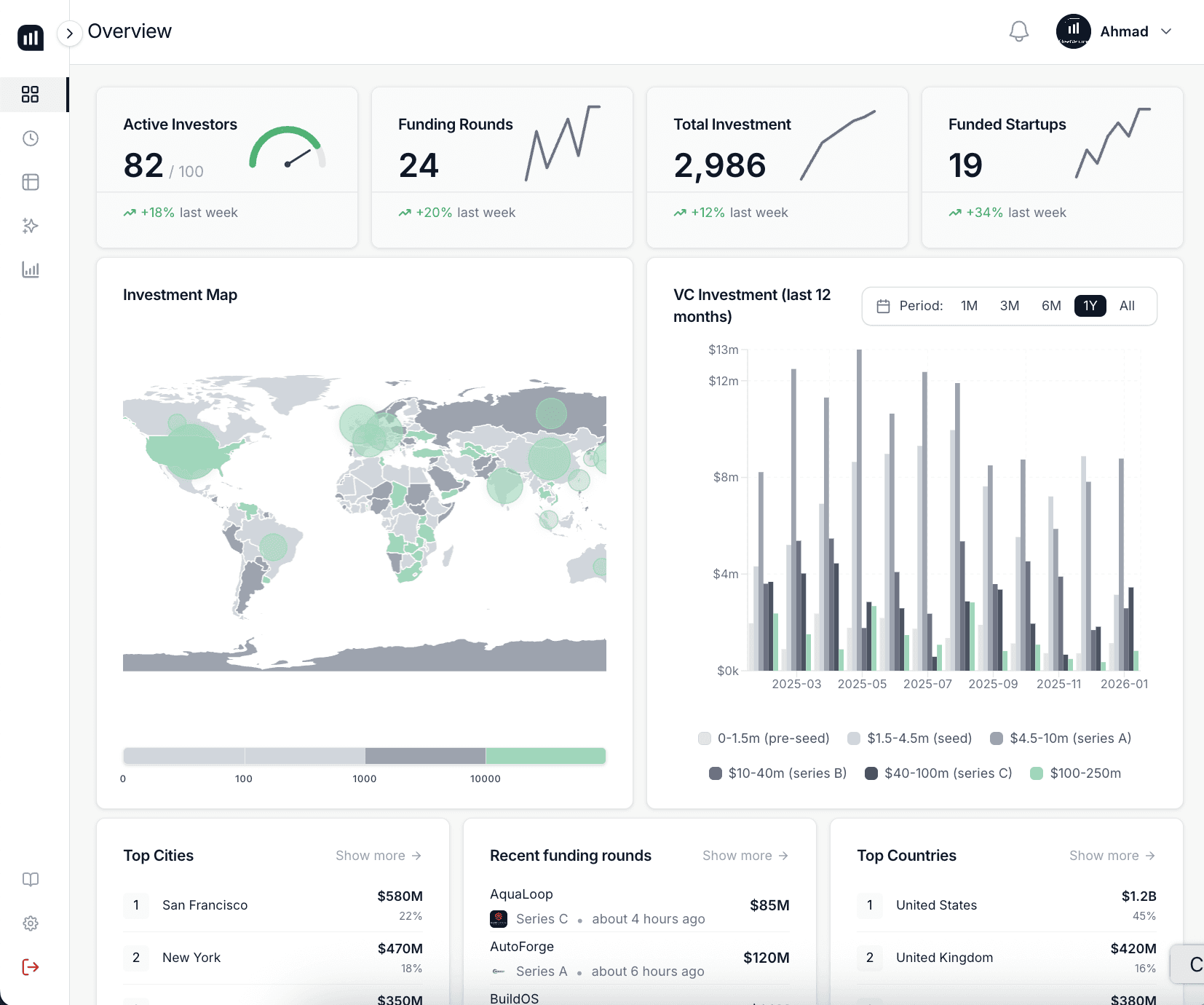
If you're working on your own deck structure, explore how investors assess founding team dynamics and review the pitch deck step-by-step guide before finalizing your slides. SheetVenture helps founders identify the right investors before they even open a deck, using real-time data from the market's most active private equity database.
FAQ:
Have questions,
We got answers.
Can't find your answer?
Get in touch with our support team, they a re friendly!
How does SheetVenture help founders improve their pitch materials?
SheetVenture gives founders access to 100+ real pitch deck examples from funded companies, so you can study what worked before building your own. The platform's private market intelligence also helps founders identify the right investors before they pitch.
Does the Softr pitch deck address competition, and how?
The deck doesn't include a dedicated competitor slide, instead letting the breadth of use cases and customer quotes make the differentiation argument indirectly. At early stages, this approach can work if the product evidence is strong enough and in Softr's case, it is.
How does the Softr pitch deck use customer proof, and why does it work?
Each product use case slide includes a named customer testimonial directly alongside it, so the proof is contextual rather than isolated. This prevents investors from having to mentally connect a quote to a feature; the deck does that work for them.
Others:





Everything you need to understand private markets
Understand your market in real-time.
Filter by stage, sector, and exact geography.
Access 30,000+ verified, daily-updated active