Pitch Deck:
Pitch Deck Details:
Nanonets Pitch Deck: What It Gets Right (And Why It Works)
The Nanonets pitch deck runs 22 slides and covers everything a Series A investor wants to see without wasting their time. It opens with a clean problem statement, works through the solution with actual product screenshots, and closes with traction data that holds up to scrutiny.
The deck's biggest strength is specificity. Instead of vague claims about "AI-powered automation," it shows two real customer examples (procurement automation for a logistics company, customer support workflows for an airline) with named steps, tools, and outcomes. That's the kind of concrete proof that separates fundable decks from forgettable ones.
How the Deck Structures the Problem
The problem slide doesn't overexplain. It breaks the challenge into three clean categories:
Trapped in applications: data lives across disconnected tools.
Trapped in volume: teams can't find what they need fast enough.
Trapped in structure: no consistent format across data sources.
This framing works because it speaks directly to the buyer's pain. Operations and finance managers don't think in terms of "AI solutions." They think about wasted hours and messy data. The deck meets them there.
What the Traction Slides Actually Show
Decks often hide weak traction in the narrative. Nanonets doesn't need to. The ARR chart shows steady upward growth from January 2022 through the January 2025 projection. Traffic grew 3.7x in 12 months. 34% of Fortune 500 companies have used the product.
The metrics that stand out:
Finance & Accounting makes up 25% of RPA use cases by revenue.
Accounts payable automation alone accounts for 33% of finance-specific revenue.
Payroll automation adds another 27% of the finance segment.
The deck cites Y Combinator (2017) and Elevation Capital ($10M Series A, 2021) as backing.
These aren't projection numbers. They're outcome numbers, which is a different thing entirely.
Where the Deck Shows Strategic Thinking
The "Lands and Expand" slide is the deck's sharpest business model explanation. It shows a clear path from a low-cost data extraction entry point ($0xx per extraction) to high-value workflow automation contracts ($0.0x per step per workflow). The pricing ladder is logical, and the expansion motion is easy to follow.
The "5-person $1B company" vision slide ties everything together without overpromising. It frames the product as infrastructure, not a point solution.
This Pitch Deck is taken from bestpitchdeck.
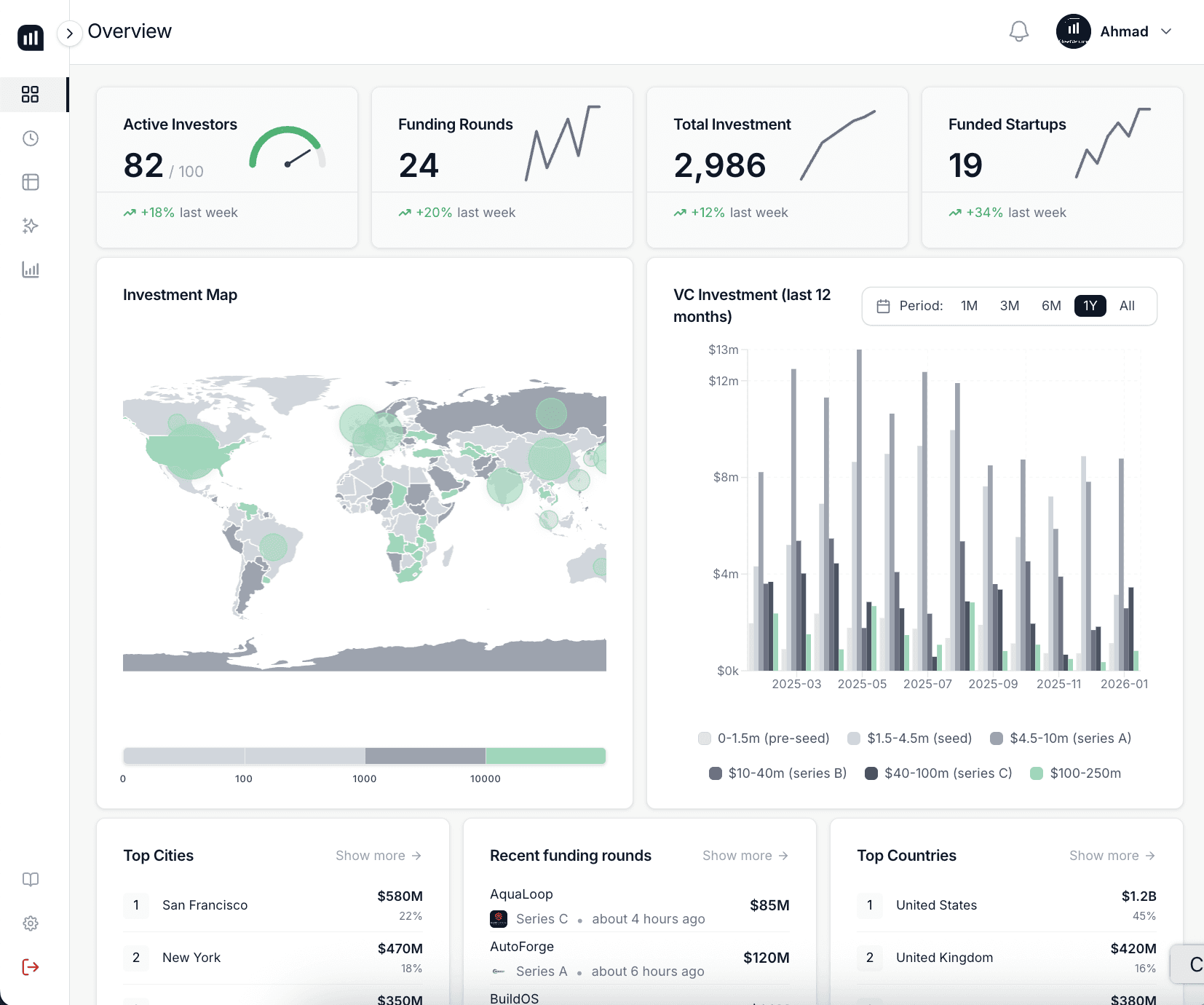
SheetVenture helps founders identify the right investors before they even open a deck, using real-time data from the market's most active private equity database.
FAQ:
Have questions,
We got answers.
Can't find your answer?
Get in touch with our support team, they a re friendly!
What is the most effective structural choice in the Nanonets deck?
The two customer case studies (procurement and airline support) do more work than any amount of feature explanation, because they show the product solving specific business problems step by step. Most decks describe what a product does; this one shows it working.
Does the Nanonets deck address competitive differentiation clearly?
The deck focuses on deep learning-based data extraction as the technical edge, contrasting it with rule-based RPA competitors. It reinforces this through the SaaS vs. in-house development comparison, showing faster time-to-value and lower failure risk.
How can SheetVenture help founders preparing to pitch investors?
SheetVenture gives founders access to a curated investor database with real-time data on active VCs, check sizes, and investment theses. Using SheetVenture's private market intelligence platform, founders can identify the right investors before building their deck, not after.
Others:









Everything you need to understand private markets
Understand your market in real-time.
Filter by stage, sector, and exact geography.
Access 30,000+ verified, daily-updated active