Pitch Deck:
Pitch Deck Details:
Presentation analytics track investor engagement through slide-by-slide time data, return visit rates, link forwarding signals, and call-to-action clicks. The metrics that matter most are time spent per slide, session count, and whether the viewer shared your deck internally.
When a founder sends a pitch deck, the silence afterward feels impossible to read. Presentation analytics tools solve that by turning passive document sharing into a live signal stream, showing which slides held attention and which ones lost it.
Most founders pour their energy into crafting the deck. The sharper move is building a system to read what happens after you hit send. That data changes how you follow up, what you revise, and which investors you prioritize.
Which Slide Metrics Reveal the Most About Investor Interest?
Time-on-slide data is the clearest window into investor thinking. When a reader spends 90 seconds on your market size slide, that is worth acting on. When they skip your traction page in five seconds, something is not landing. Investors now average under three minutes on a pre-seed deck, giving each slide roughly 15 seconds to earn attention.
Key slide-level metrics to monitor:
• Time per slide: Average dwell time reveals which sections generate scrutiny and which get skipped entirely.
• Drop-off point: The slide where viewers stop reading is often the exact objection blocking your round.
• Revisit rate per slide: Returning to financials or the ask slide signals active evaluation, not casual browsing.
• Slide sequence deviation: Investors who jump directly to the team slide often signal a founder-first evaluation style.
Reviewing pitch deck data expectations helps you design decks that hold attention at the slides that matter most.
What Does Session and Return Data Tell You?
A single view tells you very little. Multiple sessions from the same viewer reveal a great deal. Funded decks attract roughly twice the return visit rate of unfunded ones, making repeat engagement one of the strongest leading indicators in pitch analytics.
• Session count: Two or more views from the same link suggest the investor returned to re-read, which correlates with active consideration.
• Session duration: a full 3-to-5-minute read versus a 30-second scan signals completely different intent levels.
These patterns inform how founders should time investor updates during an active round. Knowing a deck was reviewed twice before a meeting changes the conversation entirely.
How Does Link Forwarding Signal Internal Interest?
Forwarded links are the strongest engagement signal short of a meeting request. Funded decks are forwarded at two to three times the rate of unsuccessful ones, making internal sharing the highest-intent signal you can track.
• New viewer from same domain: a different email address at the same fund means a partner or associate has been looped in
• Geographical spread: views from multiple cities within hours suggest the deck is moving through offices or investment committees
• Unique viewer count: three people from one fund viewing your deck means active diligence; one viewer means it is still at screening
Founders using investor intelligence can cross-reference forwarding data with fund structures to identify exactly which decision-maker reviewed the deck.
What Are the High-Intent Engagement Signals?
Certain micro-behaviors predict response rates more reliably than total view time alone.
• CTA clicks: On a calendar link or data room link is a direct expression of intent, not passive reading
• PDF downloads: downloading signals intent to review offline, often before a partner meeting or investment committee discussion
• Full completion rate: Investors who read every slide are statistically more likely to respond within 48 hours of viewing
Combined with a disciplined cold email strategy, these signals let founders follow up when attention is closest rather than guessing from a calendar.
Which Analytics Platforms Track This Data?
DocSend remains the institutional standard, providing per-slide dwell time, viewer identification, forwarding detection, and real-time open alerts. Slidebean offers deck creation and analytics at a lower price point. Pitch and Storydoc serve founders who want interactive formats with scroll and click tracking built in. Most platforms support custom links per investor, letting you compare engagement across your full outreach pipeline.
This Pitch Deck is taken from PitchDeckHunt.
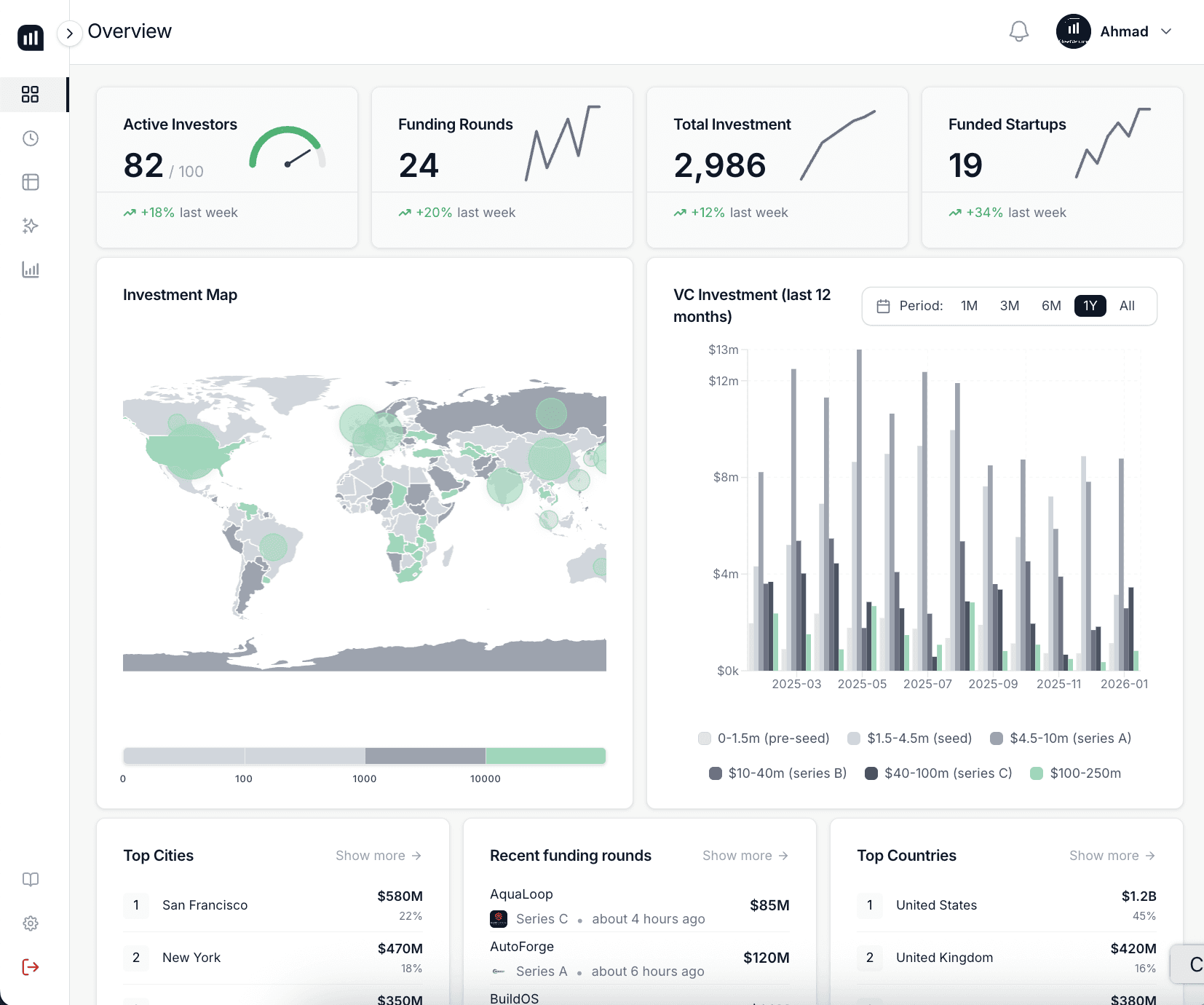
Access comprehensive investor data and startup funding intelligence through SheetVenture's platform
FAQ:
Have questions,
We got answers.
Can't find your answer?
Get in touch with our support team, they a re friendly!
Why did Sonder choose to lease rather than own the properties it operates?
Leasing kept capital requirements low while still giving Sonder full control over the guest experience something pure marketplace models like Airbnb couldn't guarantee. It also meant the company could scale into new markets without the balance sheet constraints of real estate ownership, and negotiate directly with developers who valued a reliable, compliant commercial tenant over individual short-term renters.
What was Sonder's actual competitive moat, and was it defensible?
The moat was operational, not technological. Sonder's edge came from being the largest, best-capitalized operator in a fragmented category, which gave it better lease terms, cheaper financing, and preferred access to Class A buildings. The risk was that scale advantage is replicable with enough capital and the deck's own "Sonder Flywheel" slide implicitly admitted the moat only holds as long as Sonder stays ahead on unit count and brand recognition.
The deck shows strong NPS and occupancy, so why did Sonder eventually struggle after going public?
The Series D metrics were real, but the model had a structural tension the deck understated: Sonder held long-term lease obligations regardless of occupancy, which meant any demand shock turned fixed costs into a direct hit on cash flow. When COVID collapsed travel in 2020, those lease liabilities became existential. The business was built for a world of steady or growing demand, and the unit economics that looked compelling at 77% occupancy looked very different at 40%.
Others:










Everything you need to understand private markets
Understand your market in real-time.
Filter by stage, sector, and exact geography.
Access 30,000+ verified, daily-updated active