Pitch Deck:
Pitch Deck Details:
Waygo's pitch deck is 13 slides. That alone is worth noting. Most early-stage decks run long, cramming in context the investor never asked for. Waygo does the opposite: it opens with a street-level photo of Hong Kong signage that nobody can read, then asks "Lost?" and the problem is established in two slides without a single word of explanation.
That kind of visual storytelling is what makes this deck work. By slide 3, you already understand the pain. By slide 5, you've seen a live demo screenshot. The product does its own selling before the team ever appears.
What the Deck Does Well
A few structural choices stand out:
Problem-first framing. The deck doesn't open with team credentials or a mission statement. It drops you into the user's frustration immediately.
Traction before revenue. The 50% month-over-month growth chart comes before the pricing slide. This is smart sequencing: prove demand exists, then show how money follows.
Short slides, real numbers. Every slide carries one primary point. The revenue model slide shows three price tiers. The traction slide shows one number: 30,000 users by February. No padding.
The distribution strategy is explicit. Many decks skip past go-to-market with vague claims. Waygo names a confirmed partner (EF Education) and three pipeline partners with logos. That specificity builds credibility.
The ask is honest. The final slide shows $500K raised with $315K already closed. Showing partial close removes ambiguity and creates social proof without overstating progress.
Where Founders Can Learn From This Format
The Waygo deck is a clean example of a product-led pitch. It's built for a founder who has early proof and wants capital to accelerate, not validate. The team slide comes near the end, after traction, distribution, and the market size math. That ordering reflects confidence in the product over credentials.
The market framing is also worth studying. Instead of citing a generic TAM figure, the deck frames it as 10 million annual English speakers visiting China, multiplied by three price tiers. The math is simple enough to follow on a single slide, which is exactly the point.
If there's a gap, it's in the competitive landscape. The deck doesn't address it at all. For some investors, that's fine at this stage; for others, it's a question left open.
This Pitch Deck is taken from PitchDeckHunt.
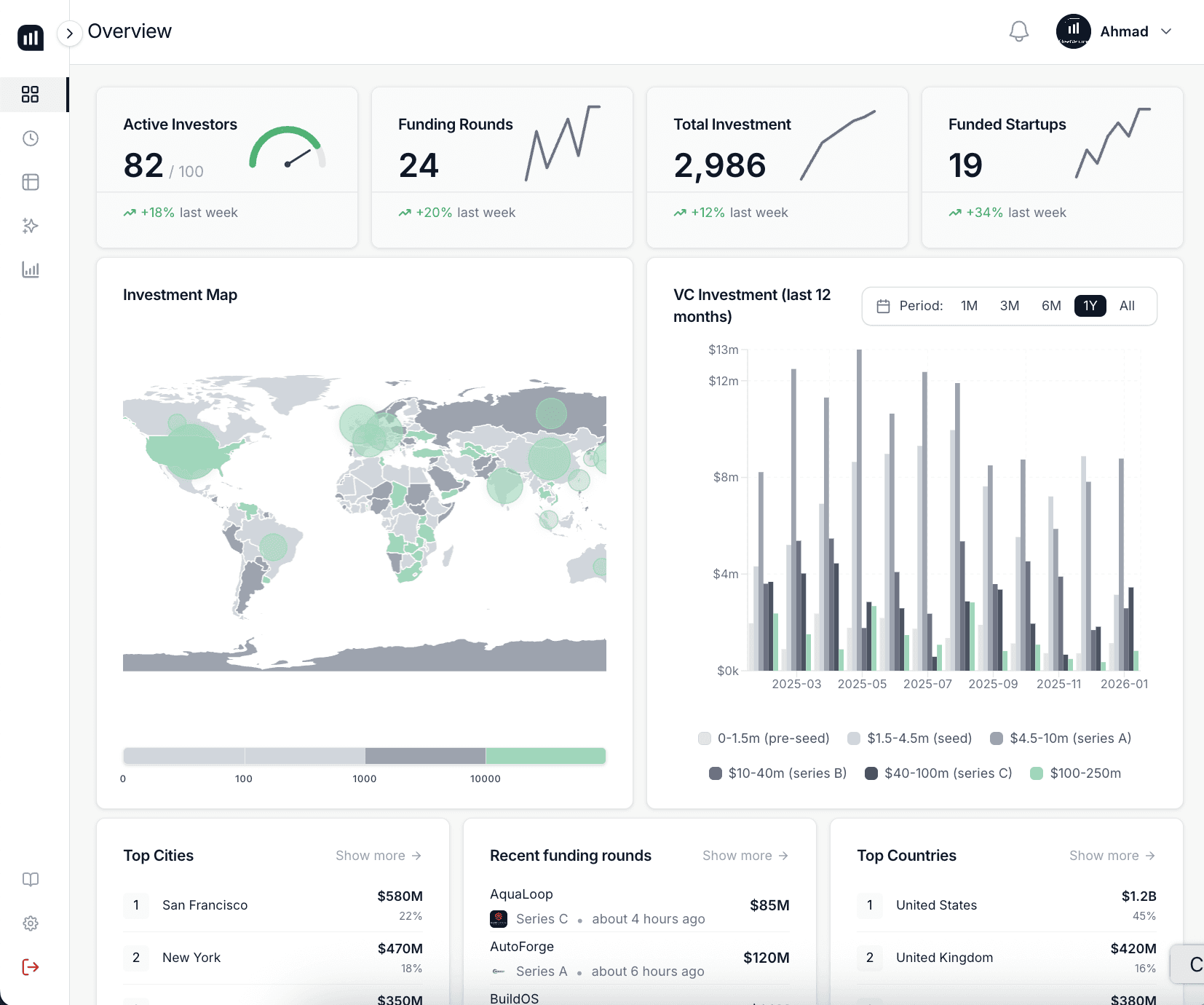
SheetVenture helps founders identify the right investors before they even open a deck, using real-time data from the market's most active private equity database.
FAQ:
Have questions,
We got answers.
Can't find your answer?
Get in touch with our support team, they a re friendly!
What makes the Waygo pitch deck effective at communicating product value quickly?
The deck leads with a visual problem (unreadable foreign signs) before showing the solution, so the product's value is felt before it's explained. This cuts the cognitive load on the investor in the first 10 seconds.
How does Waygo's traction slide support its funding ask?
It shows 50% month-over-month user growth from August through February, giving investors a data trend rather than a single snapshot. Pairing that with a partial close ($315K of $500K) adds urgency without manufactured pressure.
How does SheetVenture help founders identify the right investors for a deck like Waygo's?
SheetVenture's investor database filters active VCs and angels by stage, sector, and check size, so founders aren't guessing who funds consumer deeptech at pre-seed. That targeting precision is what separates a 2% response rate from a 10% one.
Others:









Everything you need to understand private markets
Understand your market in real-time.
Filter by stage, sector, and exact geography.
Access 30,000+ verified, daily-updated active