Pitch Deck:
Pitch Deck Details:
What It Gets Right
The Worklete pitch deck does something most early-stage decks fail at: it leads with numbers investors can actually use. Before the product explanation, before the team slide, the deck drops $801,684 in booked revenue from named enterprise clients. That ordering is intentional, and it works.
The deck runs through the standard sections cleanly, but what separates it from generic fundraising material is how each slide feeds the next. Problem, proof, customer, outcome. Nothing feels random.
How the Deck Frames the Problem
The problem slide is one of the deck's strongest. Instead of describing musculoskeletal injuries in abstract terms, it anchors the pain in two hard numbers: $213 billion in annual US injury costs and 149 million lost work days. These are not soft claims. They put an immediate dollar value on inaction, which is exactly the pressure an early investor needs to feel before they look at anything else.
A few things the deck does well on problem framing:
Quantifies the pain before showing the solution.
Ties the problem directly to specific customer segments (deskless, physical workers).
Uses a real employee testimonial ("if I had known 16 years ago, I could have avoided 2 back surgeries") to put a human face on the data.
If you want to understand what data investors expect before they take a deck seriously, Worklete's problem setup is a solid reference.
How Traction and Social Proof Are Delivered
The Hub Group case study is the deck's most effective slide. It shows injury costs at $546,000 in 2015 and $0 in 2016, after Worklete was deployed in pilot locations. No projections. No extrapolations. A real client, real numbers, year over year. That kind of before-and-after story is hard to argue with.
Nestle Waters and Penske appear early as named clients, not just logos. The booked revenue number ties them together. Combined, these elements give the deck the kind of customer validation that investors weigh heavily when evaluating early-stage B2B companies.
Revenue attributed to real, named enterprise clients.
Case study data shows measurable ROI, not just usage.
Testimonials add emotional credibility alongside financial proof.
Where the Deck Leaves Gaps
No pitch deck is complete, and Worklete's is no exception. A few things founders reviewing this deck should notice:
The competitive landscape is not addressed directly.
Unit economics and customer acquisition cost are absent.
The founding team slide, if it exists, is not prominent in this version.
These gaps are not fatal at early stages, but investors asking how to build a compelling pitch deck will know these slides matter as the round progresses.
This Pitch Deck is taken from PitchDeckHunt.
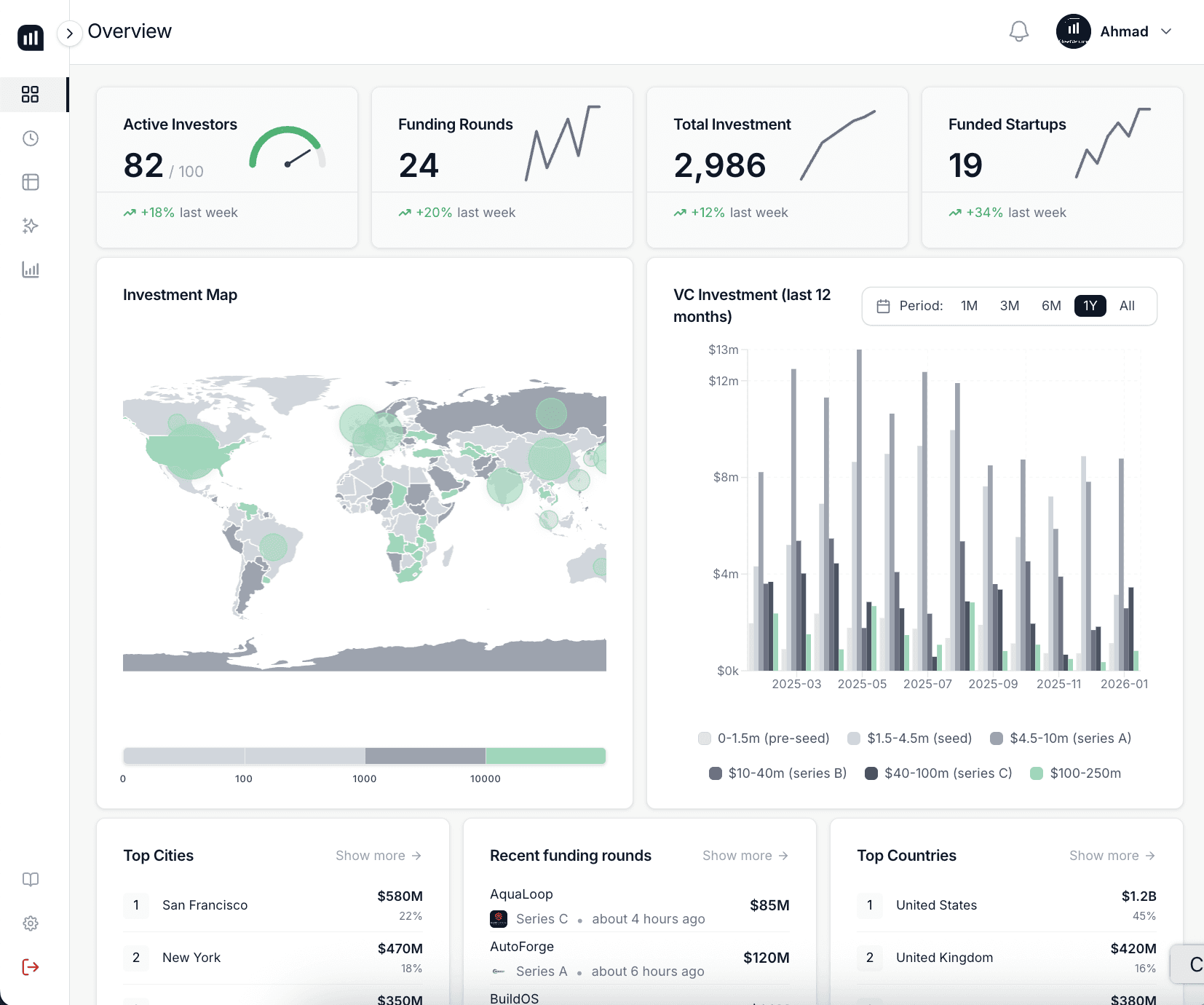
SheetVenture helps founders identify the right investors before they even open a deck, using real-time data from the market's most active private equity database.
FAQ:
Have questions,
We got answers.
Can't find your answer?
Get in touch with our support team, they a re friendly!
How does SheetVenture help founders find the right investors before pitching?
SheetVenture gives founders access to a private market intelligence platform that tracks active investors by stage, sector, and check size. That means less time guessing and more time pitching people who are actually writing checks in your space.
Is the Worklete deck a good template for pre-Series A founders?
It works well as a reference for structure and customer proof, but it leaves out competitive positioning and unit economics. Founders should treat it as a traction-forward model, not a complete blueprint.
What makes the Worklete pitch deck effective for enterprise B2B investors?
It leads with named customers and attributed revenue, removing speculation about whether the product can sell. The Hub Group case study turns anecdotal proof into a data-backed ROI argument.
Others:










Everything you need to understand private markets
Understand your market in real-time.
Filter by stage, sector, and exact geography.
Access 30,000+ verified, daily-updated active