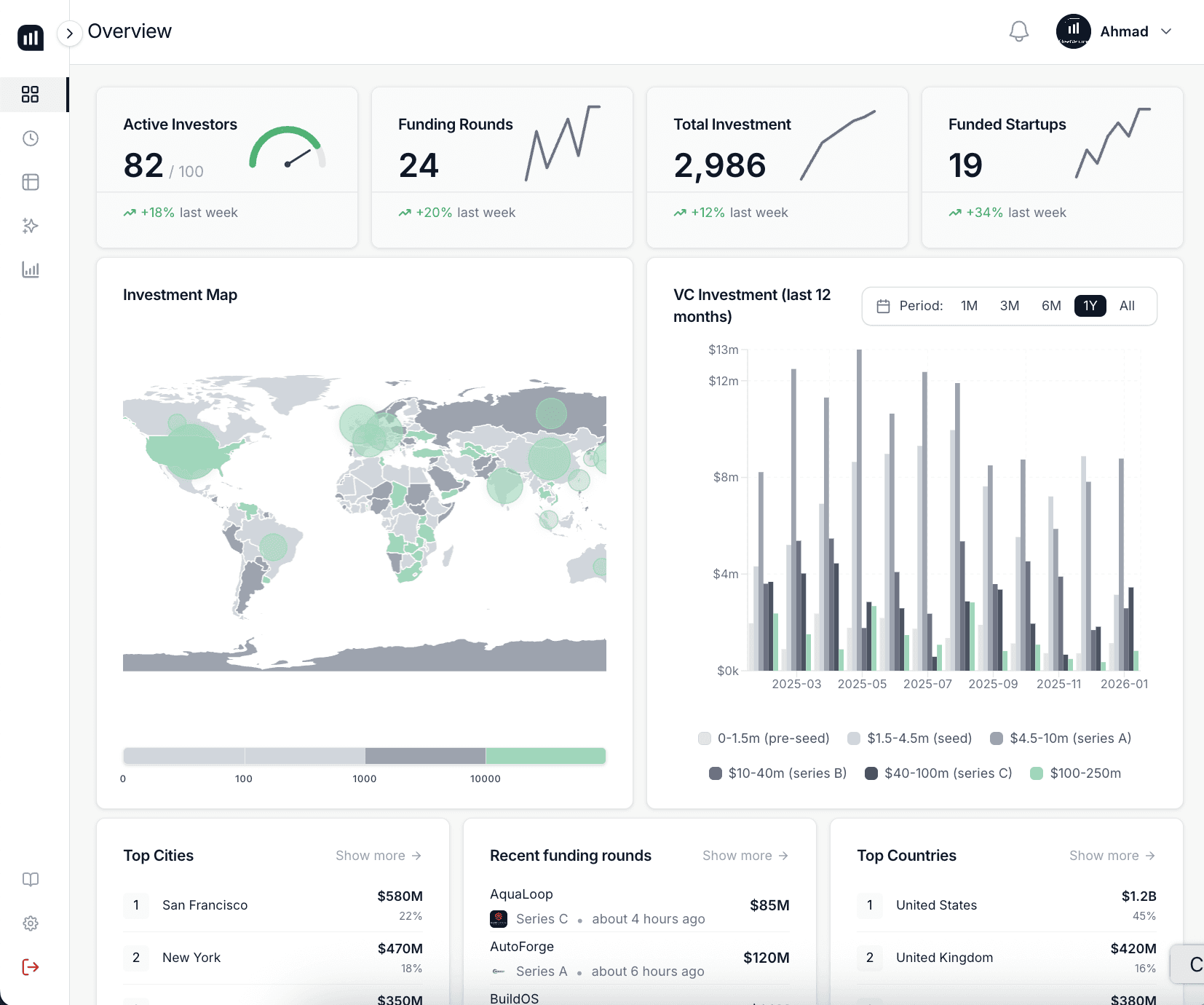
Most investor databases include inactive VCs. Here is exactly how savvy founders verify real investor activity before outreach.
Most investor databases are 12 to 24 months behind reality. Founders verify activity by cross-referencing recent deal announcements, portfolio updates, fund vintage dates, and LinkedIn signals before sending a single outreach email.
A database saying an investor is "active" means very little on its own. Funds stop deploying capital. Partners shift focus. Firms raise new vehicles with different mandates. By the time a database updates its records, the deployment window has often closed.
The founders who get meetings are the ones who verify before they reach out.
Why Do Database Claims About Investor Activity Go Stale?
Investor databases pull data from public filings, news sources, and self-reported updates. None of those inputs are real-time. The result is that a meaningful share of listed investors are either between funds, winding down, or have shifted their thesis entirely. Common reasons database claims go stale:
• Fund is fully deployed with no new vehicle announced yet.
• Partner left the firm, but profile still listed as active.
• Thesis shifted after one or two losses in a specific sector.
• Fund in extension mode, supporting the existing portfolio only.
• Firm raising a new fund and pausing all new deal activity.
Stale data costs time. A month of outreach to inactive investors is a month you are not talking to someone who can write a check.
How Do You Verify If an Investor Is Actually Deploying Capital?
Check the fund vintage first. Most VC funds deploy capital over three to four years. If a fund closed in 2020 or earlier, there is a real chance active deployment has ended. Look for a Fund II or Fund III announcement before you spend time on the outreach.
Review portfolio updates. Active investors announce new investments. If the last portfolio company on their website or LinkedIn is from 2022 or earlier, that is a signal worth taking seriously.
Cross-reference Crunchbase and LinkedIn together. A deal on Crunchbase from eight months ago, paired with a partner LinkedIn post about that same company, confirms both recent activity and communication style.
Look for fund commitment signals. LP announcements, 13F filings, and press releases around new fund closes confirm that capital is available and being deployed right now.
Use SheetVenture investor filters to surface only investors who have made a deal in the last 18 months. That single filter removes most of the noise before you write a single email.
Verification Signals Ranked by Reliability
Verification Signal | Reliability | Time to Check | Score |
New fund announcement (recent) | Very High | ~5 min | 94% |
Portfolio company added in the last 12 months | Very High | ~5 min | 91% |
LinkedIn deal post by partner | High | ~3 min | 84% |
Crunchbase deal recorded in the last 18 months | High | ~3 min | 79% |
Conference appearance last year | Medium | ~5 min | 62% |
Website portfolio page recently updated | Medium | ~5 min | 57% |
Database "active" label alone | Low | Instant | 38% |
What Red Flags Should Founders Watch for in Database Profiles?
Some profiles look legitimate but carry signals that most founders miss. Knowing how to read them saves weeks of wasted outreach.
Red Flags in Investor Database Profiles
Red Flag in a Database Profile | What It Usually Means |
The last deal listed is 2+ years ago | The fund may be fully deployed, no new vehicle yet |
No partner social activity for 12+ months | The partner may have left or quietly shifted focus |
The portfolio page has not been updated since the fund's close date | Firm in maintenance mode, not writing new checks |
Fund size listed, but no close date shown | Raise may have stalled, or the thesis has changed |
"Sector agnostic" listed as current thesis | Often signals no active deployment at all |
No press releases or LP announcements recently | New fund likely not yet closed; wait before outreach |
Where Should Founders Look When Databases Fall Short?
When a database gives conflicting signals, go with the primary. Static platforms update quarterly at best. These sources update in near real-time:
• A partner's personal LinkedIn is the most reliable live feed of new deal activity.
• Firm Twitter / X accounts often announce investments before any database registers the round.
• AngelList and Carta carry more recent early-stage activity than most commercial venture capital database products.
• Portfolio company press releases name lead investors and confirm round timing.
For structured market-level intelligence, investor intelligence tools that track active deployment in real time replace manual cross-referencing entirely. They update on deal flow, not press cycles.
Learn how to confirm whether a VC is actively investing this year and whether they have dry powder available before you spend time writing the email.
For a practical approach to sourcing only verified names, read how to find active VCs for your specific stage and sector.
The Bottom Line
Database claims about investor activity are a starting point, not a verdict. Cross-reference fund vintage, recent portfolio additions, partner LinkedIn activity, and deal records across at least two sources before committing outreach resources to any name on a list.
Founders who verify first spend significantly less time on dead ends and more time in conversations with investors who can actually move on a deal.
SheetVenture helps founders identify which investors are in active deployment right now, so outreach reaches people who can actually write a check at your stage.
Last Update:
Everything you need to understand private markets
Understand your market in real-time.
Filter by stage, sector, and exact geography.
Access 30,000+ verified, daily-updated active