Not every VC is actively deploying capital. Learn how to verify investor activity status before wasting time on outreach.
Check for recent deal announcements, new fund raises within 24 months, and active public engagement.
VCs who have made investments in the past 6–12 months, raised fresh capital recently, and are visibly engaging with founders are actively deploying. Avoid investors with no new deals in 12+ months or funds older than 4 years, they're likely not writing new checks.
Why Verifying VC Activity Status Matters
Not every VC in a database is actively investing. Fund cycles, market conditions, and internal dynamics all affect whether an investor is genuinely open for new deals. Founders who don't verify activity status waste weeks chasing investors who were never going to respond.
Learning to identify truly active VCs separates efficient fundraisers from frustrated ones.
Why Activity Status Changes
VC investing isn't constant. Several factors cause investors to pause:
Fund lifecycle. VCs deploy capital over 3–4 years. A fund raised in 2021 has likely deployed most capital by 2025.
Reserve strategy. Most funds reserve 40–50% for follow-on investments. Available capital for new deals shrinks as funds mature.
Market conditions. During downturns, VCs slow deployment or pause while waiting for valuations to reset.
Internal transitions. Partner departures or restructuring can temporarily halt new investments.
Signals That a VC Is Actively Investing
1. Recent Deal Announcements
The clearest indicator is recent investment activity. Check:
Have they announced new portfolio companies in the past 6 months?
Are they leading rounds or just participating?
Is their pace consistent with previous years?
A firm that made 15 investments last year but only 2 this year may be slowing down—or already fully deployed.
2. New Fund Announcement
VCs raising new funds signals fresh capital ready for deployment. Look for:
Press releases about fund closes
SEC filings for new fund vehicles
Partner announcements about fundraising success
Funds raised within 24 months are typically in active deployment mode.
3. Public Activity and Engagement
Active investors stay visible. Positive signals include:
Partners speaking at conferences about their investment thesis
Blog posts describing what they're looking for
Active engagement on LinkedIn or X with founders and deals
Participation in demo days and pitch events
Investors actively marketing themselves to founders usually have capital to deploy.
4. Portfolio Page Updates
Check the VC's website:
When was the last portfolio company added?
Are recent investments from this year or years ago?
Does the page look maintained or abandoned?
A portfolio page frozen since 2022 suggests limited recent activity.
5. Direct Confirmation
Sometimes the simplest approach works: ask. Early in conversations, inquire:
"Are you actively deploying from your current fund?"
"How many new investments have you made this year?"
"What's your typical timeline from first meeting to term sheet?"
Evasive answers often indicate constraints they won't admit publicly.
Red Flags: Signs They're Not Active
Watch for these warning signals:
No new investments in 12+ months. Active funds deploy continuously. Extended gaps suggest capital constraints or strategic pauses.
Only follow-on activity. If a fund is exclusively backing existing portfolio companies, they're likely in harvest mode, not seeking new deals.
Fund age exceeds 4 years. Most funds complete primary deployment within 3–4 years. Older funds rarely make new investments.
Vague responses about capacity. When asked directly about investment activity, unclear answers suggest they're not actively deploying.
Partner departures without replacements. Teams in transition often pause new investments until roles stabilize.
How to Verify Activity Efficiently
Manually researching each VC's activity status takes significant time. For a target list of 100 investors, you could spend 20+ hours just verifying who's actually active.
Smarter founders use tools built for this purpose.
SheetVenture tracks over 30,000 investors who have made investments within the last 18 months. Every investor in our database has verified recent activity, eliminating guesswork from your targeting.
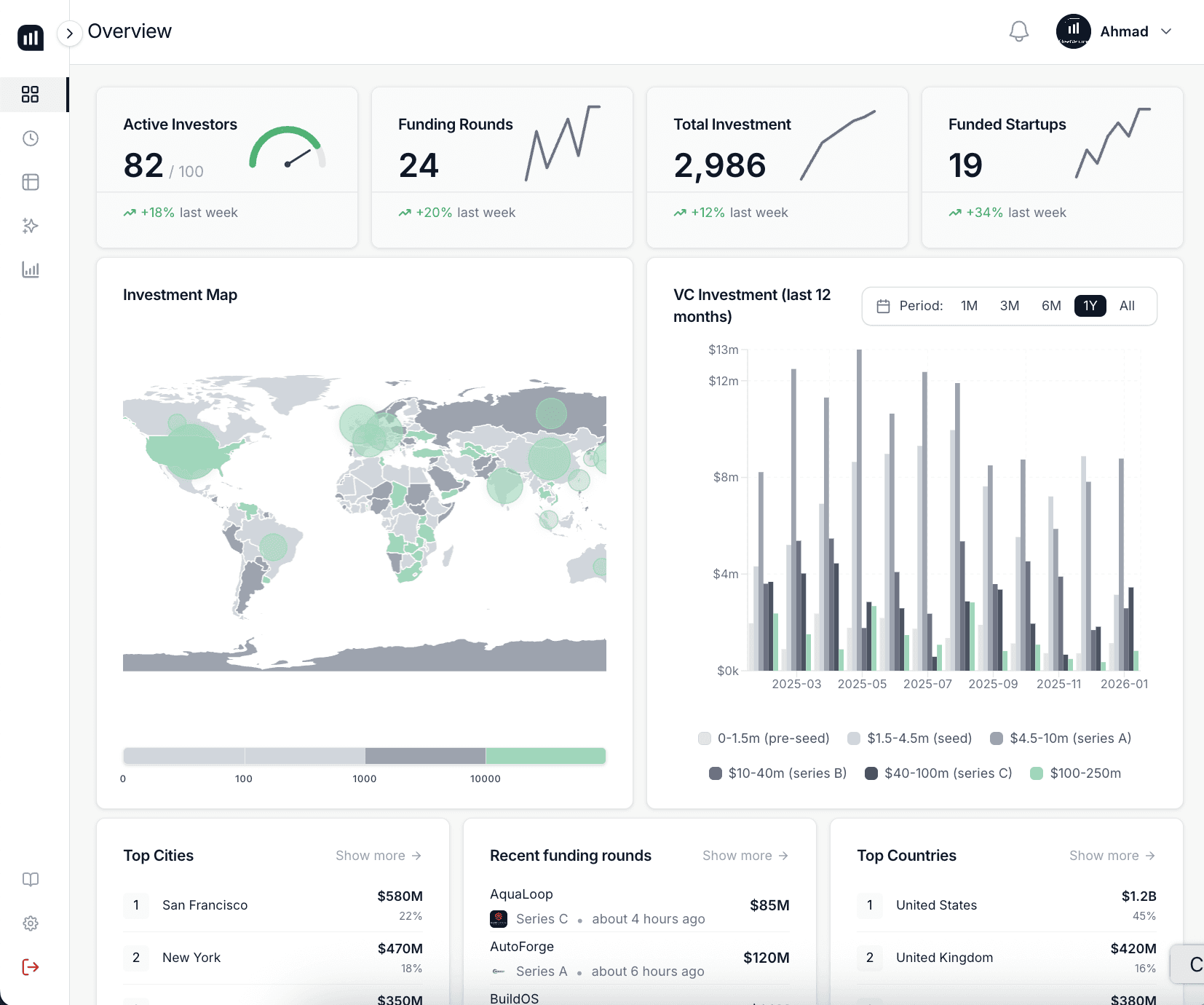
Our coverage dashboard shows real-time investor activity across stages and sectors, helping you identify exactly who's deploying capital right now in your specific space.
Instead of hours of manual research, you can filter by stage, sector, geography, and recent activity, then export a qualified list in minutes.
The Bottom Line
A VC's presence in a database doesn't mean they're actively investing. Fund cycles, market conditions, and internal dynamics all affect deployment activity. Founders who verify activity status before outreach save weeks of wasted effort.
The most efficient fundraisers don't just build big lists, they build accurate lists of investors who are genuinely deploying capital right now.
Want to learn more about how we track investor activity? Learn about our approach.
SheetVenture monitors 30,000+ investors with verified recent activity, so every name on your list represents a real opportunity.
Last Update:
Everything you need to understand private markets
Understand your market in real-time.
Filter by stage, sector, and exact geography.
Access 30,000+ verified, daily-updated active