Early-stage valuations depend on team, market, and traction, not financial models. Learn how investors think about startup valuation.
Early-stage valuations are driven by team quality, market size, traction, competitive dynamics, and comparable deals, not traditional financial metrics.
Pre-seed valuations typically range from $2M–$6M, seed from $5M–$15M, and Series A from $15M–$40M pre-money. Investors work backward from ownership targets (15–25%) and use market benchmarks rather than DCF models. Strong founder backgrounds, hot markets, and competitive rounds push valuations up; weak traction, small markets, and desperate fundraising push them down.
Why Early-Stage Valuation Is Different
Traditional valuation methods (DCF, revenue multiples, EBITDA) don't work for early-stage startups because:
No meaningful revenue: Pre-seed and seed companies often have minimal or no revenue
Unpredictable futures: 5-year projections are highly speculative
Binary outcomes: Most startups fail; winners generate massive returns
Instead, early-stage investors use heuristics, comparables, and ownership math to arrive at valuations.
For a complete breakdown of valuation mechanics, read our guide on how startup valuation works.
The Key Valuation Drivers
1. Team Quality
At pre-seed and seed, team often determines 50%+ of valuation:
Premium for: Repeat founders with exits, domain experts, technical depth, strong networks Discount for: First-time founders, incomplete teams, part-time commitment
A repeat founder with a successful exit might command 2x the valuation of a first-time founder with the same traction.
2. Market Size and Timing
Investors pay more for large, growing markets:
Premium for: $10B+ TAM, strong market tailwinds, clear "why now" Discount for: Niche markets, unclear timing, headwinds
The same company in a hot market (AI, climate) may get higher valuations than in a crowded or declining space.
3. Traction and Metrics
Evidence of product-market fit drives valuation:
Revenue-based benchmarks:
Pre-seed: Often pre-revenue, valued on potential
Seed: $10K–$100K MRR might justify $8M–$15M pre-money
Series A: $1M+ ARR typically required, valued at 10–30x ARR
Non-revenue signals: User growth, engagement, retention, waitlists
Stronger traction = higher valuation and more negotiating leverage.
4. Competitive Dynamics
Multiple interested investors inflate valuations:
Hot round: Several VCs competing can push valuations 20–50% above market Cold round: Single interested investor = they set terms
Creating competitive tension is the most effective valuation lever founders have.
5. Comparable Transactions
Investors benchmark against recent similar deals:
Same sector and stage
Similar traction levels
Recent timeframe (last 6–12 months)
Market conditions shift, 2021 valuations don't apply in 2024. Recent comparables matter most.
How Investors Calculate Valuation
Ownership-Based Approach
Most VCs work backward from target ownership:
Example:
Investor wants 20% ownership
They're willing to invest $2M
Implied post-money valuation: $10M
Implied pre-money valuation: $8M
If their ownership target is fixed, your valuation depends on how much they invest.
Market Benchmark Approach
Investors compare your metrics to recent funded companies:
"Companies at $50K MRR in your space are raising at $10M pre-money"
"Repeat founders in fintech are getting $6M pre-seed valuations"
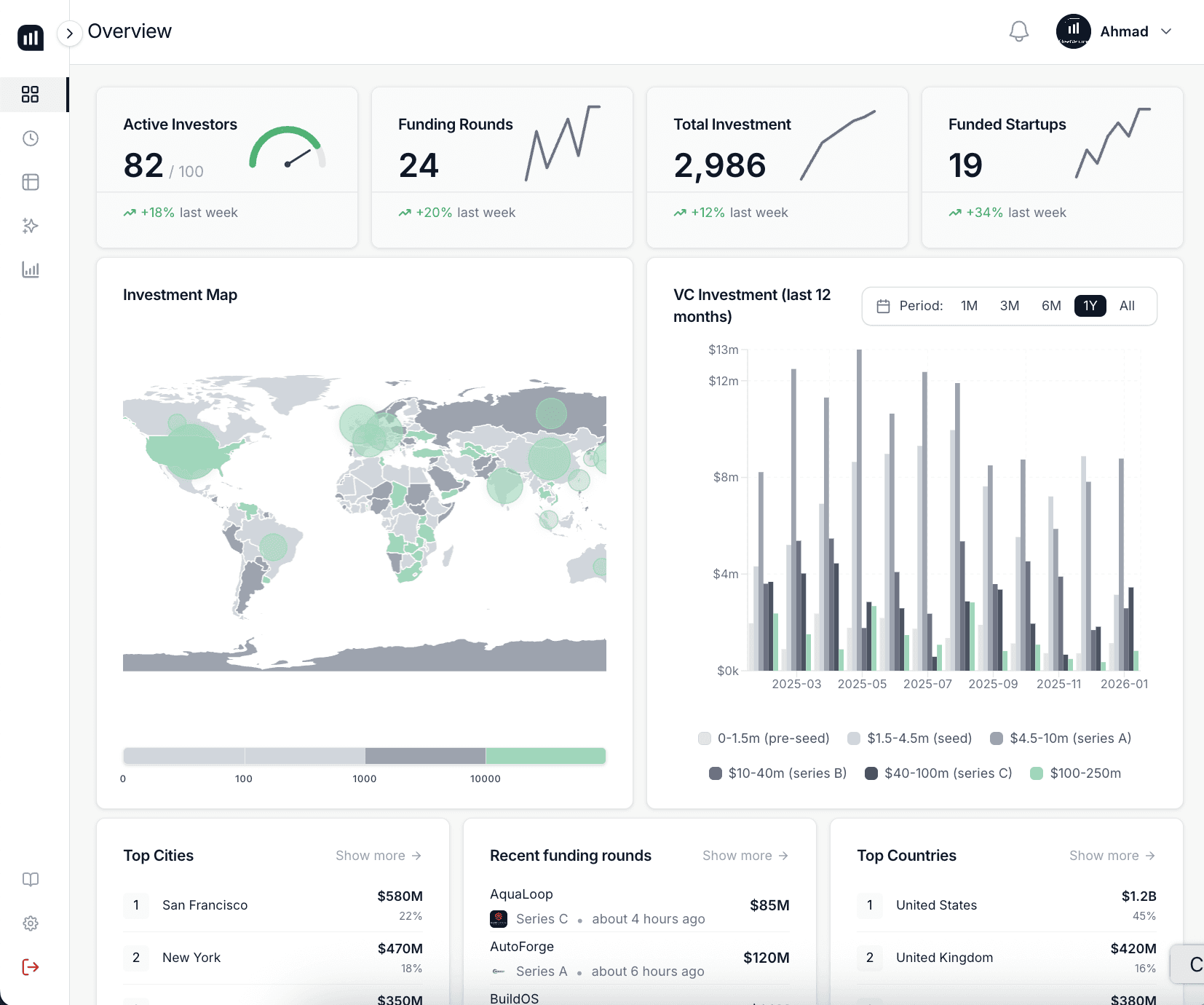
Use SheetVenture's intelligence tools to see recent valuations for companies at your stage and sector.
Valuation Ranges by Stage
Pre-Seed: $2M–$6M pre-money
Mostly team and idea
Minimal traction expected
Seed: $5M–$15M pre-money
Working product required
Early traction evidence
Series A: $15M–$40M+ pre-money
Clear product-market fit
Strong growth metrics
These ranges shift with market conditions, up in bull markets, down in bear markets.
What Founders Should Know
Valuation isn't everything: Terms, investor quality, and dilution matter equally.
Don't over-optimize: A lower valuation with a great investor beats a high valuation with a bad one.
Market sets the range: Your negotiation happens within market-determined bounds.
Traction is the lever: Improve metrics to improve valuation.
Check SheetVenture's resources for valuation benchmarks and negotiation frameworks.
The Bottom Line
Early-stage valuations are driven by team, market, traction, competition, and comparables, not financial models. Understand market ranges, create competitive dynamics, and focus on building traction to maximize your negotiating position.
SheetVenture helps founders understand valuation benchmarks, so you negotiate from informed confidence.
Last Update:
Everything you need to understand private markets
Understand your market in real-time.
Filter by stage, sector, and exact geography.
Access 30,000+ verified, daily-updated active