
What Fund Vintage Indicates a VC Is in Active Deployment Mode?
On this page
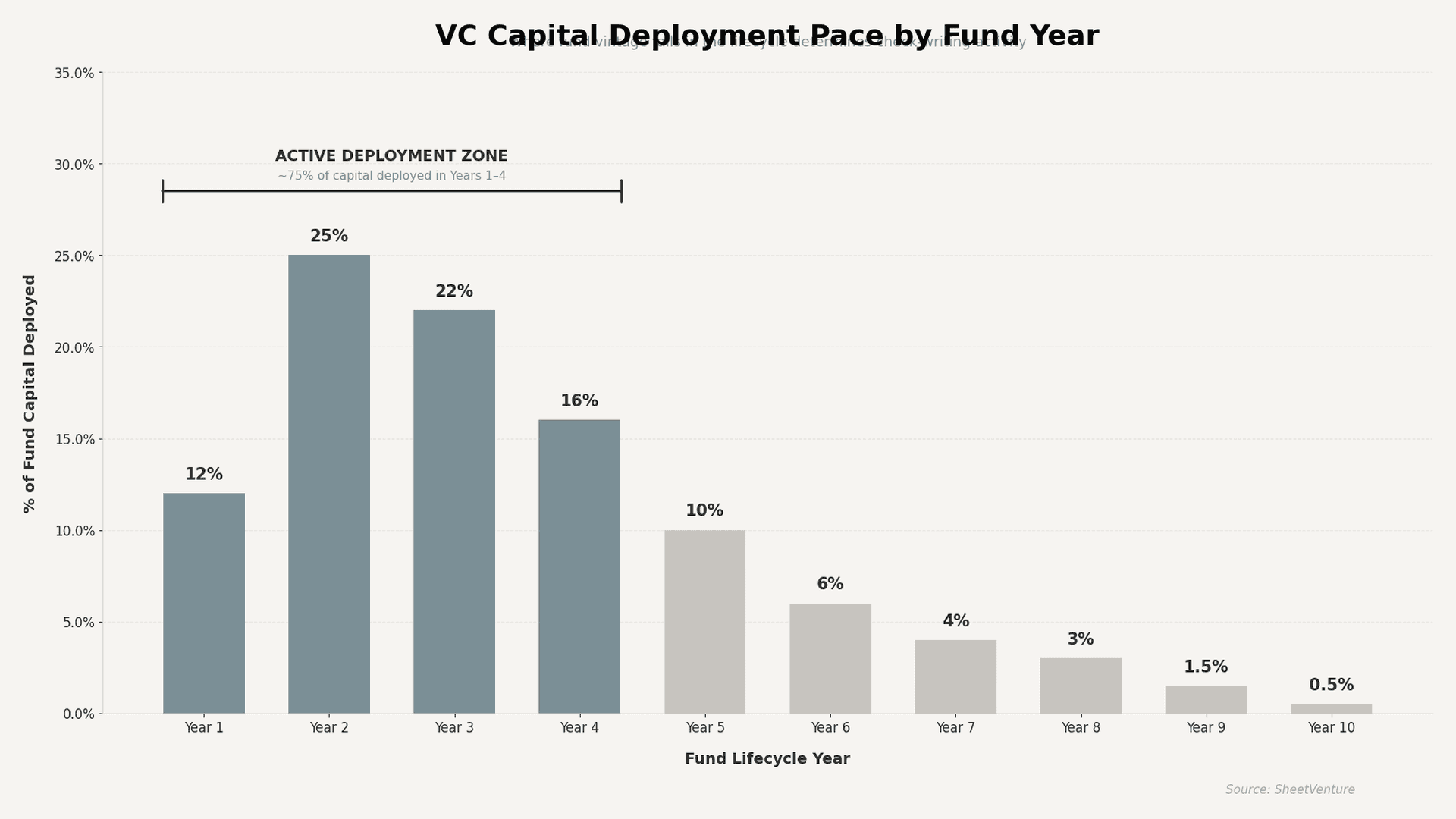
A VC fund vintage between years one and four typically signals active deployment mode. Funds deploy 70–80% of committed capital during this window, with peak check writing in years two and three.
The vintage year of a fund, meaning the year it officially closed, tells founders where that fund sits in its lifecycle. A 2023 vintage fund in 2026 is in year three: peak deployment. A 2019 vintage fund is in year seven: follow-on mode, not writing new checks. This one data point saves weeks of wasted outreach.
How Does Fund Vintage Affect VC Investment Activity
Every venture fund runs on a 10-year lifecycle. The first half deploys capital into new deals. The second half manages portfolio companies and returns capital to LPs.
• Years 1 to 2: Initial deployment begins, fund actively sources deals and writes first checks.
• Years 2 to 3: Peak deployment, highest volume of new investments, and most aggressive check writing.
• Years 3 to 4: Active deployment continues, but pace slows as reserves get allocated for follow-ons.
• Years 4 to 5: Transition period, new deals become selective, and follow-on investments increase.
• Years 5 to 7: Follow-on mode, fund supports existing portfolio rather than sourcing new companies.
• Years 7 to 10: Harvest period focused on exits and returning capital to LPs.
Founders should verify where a fund sits in this cycle. Platforms offering investor intelligence track fund activity in real time.
What Vintage Years Signal a VC Is Writing New Checks
The clearest signal is a fund vintage one to three years old relative to the current year.
• A 2024 or 2025 vintage fund is in early deployment, hungry for deal flow and building its portfolio.
• A 2023 vintage fund is in its sweet spot, deploying at peak pace with investment thesis in action.
• A 2022 vintage fund is still active but becoming more selective, reserving capital for existing deals.
• Anything older than a 2021 vintage is likely past its primary deployment window.
Funds raised in 2024 and 2025 carry the most undeployed capital. These managers need to put money to work, making them more responsive. Understanding whether a VC has dry powder directly ties to vintage position.
Why Do Some VCs With Recent Funds Still Pass
A recent vintage does not guarantee investment. Several factors limit deployment even during active years.
• Fund thesis may not match your sector, stage, or geography.
• GP may have allocated reserved capital for follow-on commitments.
• Fund size may be too large or small relative to your raise.
• Market conditions can slow deployment across the industry.
• Internal deal pipeline may already be full for the quarter.
Even VCs in deployment mode filter aggressively. Founders who verify whether a VC is actively investing avoid pitching funds that look open but are functionally closed.
How Can Founders Identify Fund Vintage Before Outreach
Most VCs do not list fund vintage on their website. Founders need to research this before reaching out.
• Check SEC filings for Form D notices listing fund closing dates and amounts raised.
• Monitor VC trade publications that report new fund closings regularly.
• Use private market intelligence platforms like SheetVenture that track fund deployment status in real time.
• Study recent portfolio: if the last new investment was 18+ months ago, the fund may be deployed.
• Ask directly in intro conversations because experienced VCs expect this question.
Founders who find active VCs before sending a single pitch significantly improve meeting conversion rates.
How Fund Size Changes the Vintage Window
Fund size affects how quickly capital gets deployed. Smaller funds run through capital faster, narrowing the target vintage window.
• Micro VCs (under $100M): Deploy in one to two years, vintage window closes fast.
• Mid market ($100M to $500M): Standard three to four year deployment cycle.
• Large funds ($500M+): Extended four to five-year deployment, wider outreach window.
• Mega funds ($1B+): May deploy over five to six years with multiple strategies.
Smaller funds with recent vintages are the most time-sensitive opportunities. These GPs need to deploy quickly or risk returning capital unused.
The Bottom Line
Fund vintage is the single most reliable indicator of whether a VC is actively writing checks. Funds in years one through four are in deployment mode. Peak activity lands in years two and three. Founders who target VCs with 2024 and 2025 vintages reach investors with the most undeployed capital and the strongest incentive to say yes.
Before you send another cold email, check the fund vintage. It tells you whether that investor is open for business or just managing what they already own.
SheetVenture helps founders identify which fund vintage is in active deployment at every stage, so outreach strategy matches both timeline reality and capital quality.
Find investors who are actually writing cheques
Explore live coverage, or book a walkthrough of the product.